Wrongful Convictions | 60 Minutes Full Episodes
In a Nutshell
Wrongful convictions destroy multiple lives: prosecutors admitted stacking the deck with weak evidence, no Black jurors, and incompetent defense counsel, sending Glenn Ford to death row for 30 years before exoneration and release with stage-four cancer and no compensation. The Hasty Mart case shows how coerced testimony from a paid informant and ignored confessions from actual perpetrators led to two innocent men serving 22 years. Healing Justice retreats reveal that wrongful convictions inflict lifelong trauma on both exonerees and crime victims, who must confront each other's parallel suffering to begin recovery.
These notes were generated by AI and may contain inaccuracies.
There may be no greater miscarriage of justice than to wrongfully convict a person of murder and sentence him to death. This happened to Glenn Ford, who spent nearly 30 years on death row in solitary confinement in Louisiana's notorious Angola prison until new evidence revealed he did not commit the murder. He was one of 149 inmates freed from death row since the US Supreme Court reinstated capital punishment in 1976.
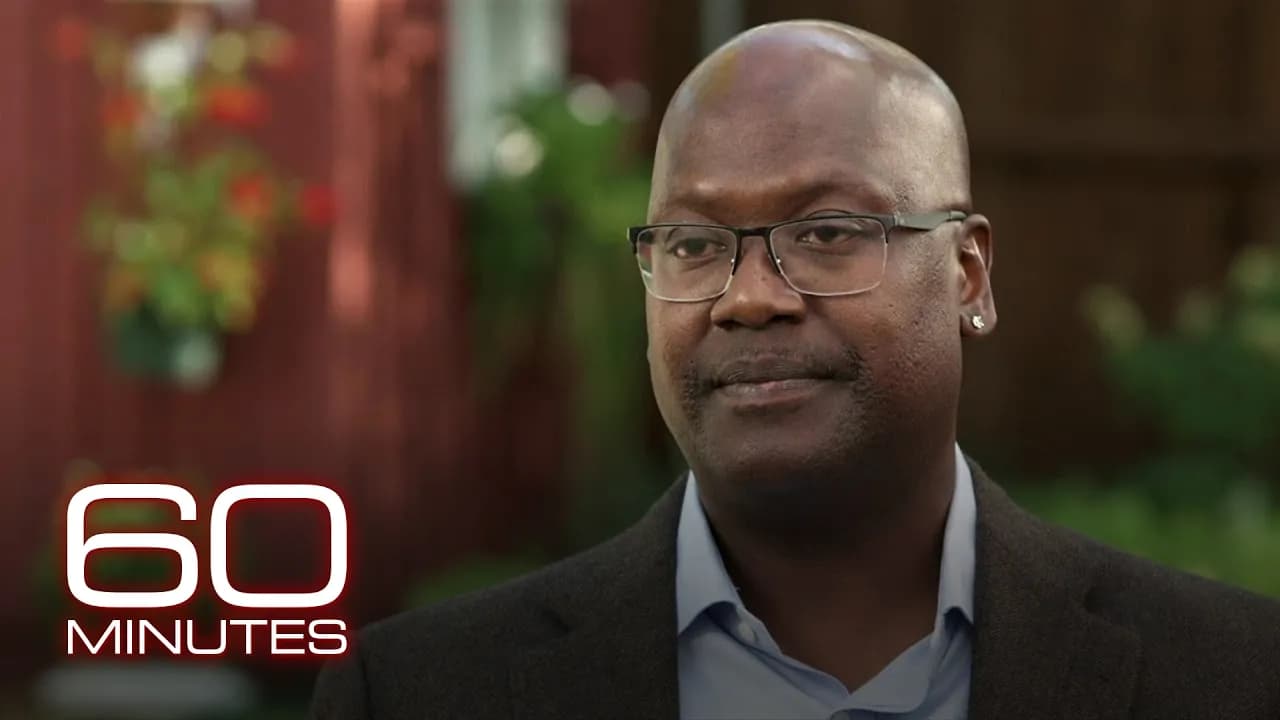
In all those exonerations, prosecutor Marty Stroud admitted his role and apologized for his mistakes in sending an innocent man to death row. Stroud speaks of an injustice he calls so great it destroyed two lives, Glenn Ford's and his own.
I ended up without anybody else's help putting a man on death row who didn't belong there. I mean, at the end of the day, beginning, end, middle, whatever you want to call it, I did something that was very, very bad.
It was 1983 in Shreveport, Louisiana, and 32-year-old prosecutor Marty Stroud was assigned his first death penalty case. A local jeweler named Isadore Rosman had been robbed and murdered. Stroud zeroed in on Glenn Ford, who had done yard work for Rosman and was known to be a petty thief. Ford admitted he had pawned some of the stolen jewelry, which was enough to make him the primary suspect. Stroud knew a conviction would boost his career.
I was arrogant, narcissistic, caught up in the culture of winning.
Stroud now admits there was a question about other people's involvement that he should have followed up on but didn't. He describes his failure as cowardness.
I think my failure to say something can only be described as cowardness. I was a coward.
Stroud admits the cards and the system were stacked against Ford from the beginning. His court-appointed lawyers had never practiced criminal law. One had general civil practice and another did successions, wills, and estates. At the time, Stroud saw nothing wrong with this arrangement.
trial in Louisiana where a man was on trial for his life. And at the time, I saw nothing wrong with that. In fact, I snickered from time to time saying that, you know, this was going to be we were going to get through this case pretty quickly.
Stroud's case wasn't strong. There was no physical evidence linking Ford to the crime. The main witness incriminating Ford admitted in court she'd been coerced by police to make up her testimony. Stroud admits the composition of the jury was deliberately manipulated.
There were no African-Americans on the jury.
At the time of the case, we excluded African-Americans because we I felt that they would not consider a death penalty where you had a black defendant and a white victim. I was a person that made the final call on the case with respect to jurors. And I was I was wrong.
Caddo Parish, Louisiana is predominantly white, yet 77% of those given the death penalty there in the last 40 years have been black.
So, when Glenn Ford walks into that courtroom, he's got a count of 0 and 2 against him and a fastball's coming right at his head for strike three.
It took the jury less than 3 hours to find Glenn Ford guilty. Afterwards, Stroud and his legal team went out and celebrated, sending Ford to death row.
I had drinks. I slapped people on the back. We sang songs. That was utterly disgusting. You know, you see Mother Justice sometimes and a statue and she has a blindfold over her eyes. She was crying that night. Because that wasn't justice. That wasn't justice at all.
Ford was put in solitary confinement in Angola prison. Death row consisted of 5 by 7-foot cells where inmates spent 23 hours per day, getting out only 1 hour daily. Summer temperatures on death row commonly exceeded 104°. Ford became one of the country's longest-serving death row inmates.
Stroud went on to a successful legal career until one of the initial suspects, Jake Robinson, told a police informant he had killed the jeweler three decades earlier. Robinson is now in prison for another murder. A court review found credible evidence that Glenn Ford was neither present at nor a participant in the robbery and murder of Isadore Rosman.
I thought I was going to throw up. Nauseous. As in and I felt my face was just turning like a fever. But then the horror of knowing that yours truly had caused him all this pain.
Last year Ford was exonerated and released from Angola. When asked what it was like to step outside the walls of prison:
Like stepping in a brand new world. Like breathing fresh air for the first time. I felt good.
Shortly after being released, Ford learned he had stage four lung cancer. Doctors told him he only had a few months to live. He came within a week of an execution date because the judge said he was retiring and wanted to put a death date on him.
Dale Cox, the acting district attorney of Caddo Parish, got Glenn Ford released after receiving the informant's information. Cox maintains the justice system worked and no one, including Marty Stroud, did anything wrong.
I don't know what it is he's apologizing for. I think he's wrong in that the system did not fail Mr. Ford.
Because he's not on death row, and that's how I can say it.
Cox believes society should employ the death penalty more rather than less, and between 2010 and 2014, his Caddo Parish office put more people on death row per capita than anywhere else in the country. When asked if he's sure he's gotten it right all the time:
I'm reasonably confident that that I've gotten it right.
According to Louisiana law, Glenn Ford was entitled to $330,000, about $11,000 for every year of wrongful imprisonment. The state denied him the money because prosecutors originally claimed Ford knew a robbery was going to take place but didn't report it. Ford was never charged with that crime, but the state used it as reason to deny compensation.
The statute only requires that Mr. Ford prove he didn't do these other crimes.
So, he's guilty until proven innocent in this case.
No, because it's not a question of guilt or innocence, it's a question of whether he's entitled to money. Taxpayer money.
It is supposed to provide justice.
Ford was given a $20 gift card the day he left Angola prison, which lasted for one meal of chicken, tea, and french fries, leaving him with $4 and change.
Marty Stroud went to see Ford to apologize for taking 30 years of his life.
Well, there's no books you can read to do that. I just went in and apologized.
When asked if Ford forgives Stroud:
No. He didn't only take from me, he took from my whole family.
Well, I don't. But, I'm still trying though.
No. If somebody had done that to me, I don't know if I could forgive them.
Stroud describes the impact on his own life:
I've got a hole in me through which the north wind blows. It's It's a sense of of coldness. It's a sense of of just disgust. There's just nothing out there that can fill in that hole. It says, "I won't It's all right." Well, it's not all right. It's not all right.
Three weeks after being interviewed, Glenn Ford died, penniless. His final months he lived off charity, and donations covered the cost of his funeral. In his will, he directs that any state money he might receive go to his 10 grandchildren so they can have a better chance than he did. Stroud asked the Louisiana Bar Association to discipline him for his role in the Ford case.
It was a trying to injustice and I was the engineer. Glenn Ford will be a part of me until the day I die.
Hardly a day goes by without receiving letters from prisoners claiming innocence. The Hasty Mart case involves two men in Louisiana who may have been wrongfully convicted and sent to prison for a robbery and murder 22 years ago.
22 years and I'm still in here and I still don't know when I'm going home, if I'm ever going home. 22 years and still going.
We refuse to give up.
Harry Granger was working in construction and David Alexander was working as a taxi driver when both were accused in 1976 of being part of a group that robbed and murdered Louis Gladue in his convenience store in New Iberia, Louisiana.
Steve Woodring, now head of the armed robbery division of the Baton Rouge Police Department, was a young and inexperienced sheriff's deputy in New Iberia working on his first murder case 22 years ago.
What was the strongest evidence that the sheriff's department had? Uh we had virtually nothing. We had nothing.
Mary Arceneaux, a convicted criminal out on parole with a charge pending against her, voluntarily told a friend and the police six days after the murder that she took part in the crime, could identify some of the robbers, and could take police to Cypress Island where guns were supposedly buried. When the guns weren't found, she admitted she had made that up.
According to Arceneaux, seven people in two cars drove to the Hasty Mart convenience store. One car, a taxi, parked in front, the other across the road. Herbert Daroune denied involvement until interrogated for hours.
It went on for hours. And the manner in which the interrogation was done was very suggestive. In other words, Captain Como would provide facts of the case through leading questions and eventually he came out and he began to parrot back some of the things that Captain Como was telling him.
Woodring had strong concerns about Daroune's confession at the time, but was not taken seriously.
Before trial, Malcolm Roy told authorities they had the wrong men, stating "Not one of them was there. None of them were involved in this robbery and this murder." Roy confessed that he drove the car while two friends went inside the Hasty Mart, and they came out excited and bloody. He says Preston admitted killing the victim.
Roy confessed after being implicated by a friend who had already confessed and led police to the gun that ballistics tests proved was the murder weapon. The sheriff's department didn't believe them and said they had evidence Roy and his friend were lying. Both later claimed they had been offered a bribe to lie and took their confessions back.
Roy confessed again at David Alexander and Harry Granger's trial, but the jury didn't believe him. Instead, they believed Mary Arceneaux and Herbert Derouen, who both testified with immunity. After a two-day trial, Alexander and Granger were convicted of armed robbery and sentenced to 99 years.
This convinced the remaining two defendants, Ronald Miller and John Nelson Collins, to plead guilty in exchange for lesser sentences. Miller and Collins served 20 months in jail and have been trying to clear their names ever since.
I didn't think I had a chance.
I said, "Well, I know I'm going home now because I don't know this lady." So, I I said I stood up. I said, "Look at me." She looked at me. And she Her head was going like this. She had tears in her eye. And then Horace Como grabbed her. And she went from this to this.
Woodring says he had doubts about the case and Arceneaux's credibility from the beginning. Nine years after the trial, he ran into Arceneaux again when Baton Rouge police were looking for a robbery suspect. Arceneaux identified the wrong man in great detail.
So I thought to myself, she's done it again. She tried to do it again.
They are absolutely innocent. They were wrongfully convicted. And I'm absolutely certain of what I'm saying.
That's the only explanation. That's the only explanation.
I think uh they were under extreme pressure. Uh and I think that they felt like they would be embarrassed uh if they had to release these guys after they charged them.
Bernard Boudreaux, the District Attorney in Iberia Parish, was not involved in the original case but is convinced Alexander and Granger are guilty. He cites their lack of credible alibis, failed lie detector tests, Alexander's car being identified at the crime scene, and what he considers corroborated, consistent, and credible testimony from Derouen and Arceneaux.
I am convinced they're guilty and I believe that the criminal justice system acted properly.
I certainly am.
When asked about race playing a role:
I think probably at that time uh there was a feeling uh that that pervaded uh much of the law enforcement community. And I'm just going to be plainspoken here. These were two two black young black men. If they didn't do that, they probably did something else. And what have we lost if they're not the right guys?
Mary Arceneaux, now living in Baton Rouge, initially reluctant to talk, eventually agreed to an interview. When asked if Harry Granger and David Alexander committed the robbery and murder:
No, they didn't.
They did not kill the people and rob them.
They didn't kill Mr. Glenn.
No, they didn't kill no Louis Glenn.
When asked if anyone paid her to say that:
All I'm a state was bribed.
I sure did.
Woodring confirmed that Arceneaux received money from the sheriff's department and that some charges against her were dismissed in St. Martin Parish.
Jim McCloskey, executive director of Centurion Ministries, has been investigating the Hasty Mart murder for 2 years with the goal of getting Alexander and Granger a new trial. Their case has been appealed to the Justice Department and numerous state and federal courts, including the US Supreme Court, all denied.
Very few cases come our way where not only do we become convinced of the complete innocence, but we also become convinced on the complete guilt of the real killers.
In the interest of justice we believe that some court in Louisiana will reassess original positions and take a look at this and see it for what it is, which is one of the worst miscarriage of justice I've seen anywhere in the 17 years I've been doing this work.
Boudreaux maintains:
I am not about to say that there has never been a miscarriage of justice in the United States or in the state of Louisiana, but in this case there has been no miscarriage of justice.
McCloskey's response to being asked about continuing the fight:
If that happens, I will continue at every opportunity to profess their innocence. These people were wrongfully convicted. There is no absolutely no doubt about it.
17 years ago, a report was done on Jennifer Thompson, a rape victim who was devastated to learn years after her assault that she and the police had identified an innocent man who was convicted and sent to prison while the actual rapist had gone on to attack several more women. Thompson knows firsthand that wrongful
Jennifer Thompson understands that wrongful convictions harm not only the innocent but also the original crime victims who are often overlooked. She leads a multi-day group retreat bringing together crime victims and innocent men from different cases for what she calls healing justice. The retreat begins with participants smashing bowls with hammers, then attempting to repair them with glue.
At one table, two women who had been raped at ages 15 and 12 sit across from two men wrongfully convicted of sexually assaulting children, each having spent more than two decades in prison. At another table, a sexual assault survivor sits beside a man exonerated for rape and murder. At a third table sits the partner and daughter of a murder victim. Everyone present is part of a case where the wrong man was imprisoned for years.
A wrongful conviction doesn't hurt like a person. It's not just Raymond Tower got hurt. Like his whole family got shrapnel. And the victims got shrapnel and the community received shrapnel because a child molester was still in the community.
Thompson describes wrongful convictions as bombs rather than single bullets, noting that hundreds of people are hurt in every wrongful conviction case.
In 1984, Thompson was a college student when a man broke into her off-campus apartment and raped her at knife point. She worked with police to create a composite sketch and identified Ronald Cotton in photo and physical lineups. She testified against him, and he received a life sentence. After 11 years in prison, DNA testing proved Cotton's innocence and identified the actual rapist whose photo had not been in the lineup.
Thompson experienced suffocating shame and apologized to Cotton in person. She began speaking to police and prosecutors about preventing wrongful convictions, sometimes appearing with Cotton.
As more than 3,800 exonerations have occurred based on new evidence including DNA, Thompson focuses on overlooked crime victims. She notes that while exonerees and families celebrate on courthouse steps, crime victims and murder victim family members experience another nightmare on top of a nightmare.
Tamisha Carrington Artist was 12 when a man broke into her bedroom, grabbed her by the throat, put a knife to her throat, and threatened to kill her and her mother if she screamed.
Penny Bernson was sexually assaulted at age 36 while running along Lake Michigan's shore. Her attacker said, "Now I'm going to kill you. Now you're going to die."
Ann Loretta Zilenger White was raped at age 15 on the way to school after missing her bus. She notes that people expect victims to put trauma behind them, not realizing it affects them for life.
All three women, like Thompson, identified suspects police showed them, only to learn years later those men were innocent.
The women faced blame from others. One was told by a friend, "I can't believe you're showing your face." Another was told she needed to go to prison for intentionally sending the wrong man to prison.
Memory experts understand how witnesses can err. Studies show that when the actual perpetrator is absent from a lineup, witnesses often pick the wrong person, who then replaces the original offender in their memory.
When DNA reveals the real perpetrator was never in the lineup, victims feel the system blames them. Thompson notes the narrative becomes "rape victim falsely accuses an innocent man and sent him to prison," when the reality is that false accusation implies deliberate lying, which victims don't do.
Andrea Harrison and her father Dwayne Jones lost Jacqueline, Andrea's mother, who was raped and murdered in 1987 when Andrea was 3. Larry Peterson spent more than 17 years in prison before DNA proved his innocence. They learned of his release only after it happened, and with the case now cold, they feel the original crime has become an afterthought.
Raymond Towler was exonerated after 29 years for the rape of 11- and 12-year-old children. Even after DNA proved his innocence, adjustment was difficult. He couldn't go out alone and felt he didn't fit in anywhere.
Chris Ochoa gave a false confession to rape and murder due to abusive interrogations.
Howard Dudley had evidence withheld by prosecutors that likely would have cleared him of child sexual abuse charges. He served more than 23 years and missed his children's lives.
Thompson founded Healing Justice in 2015 to help all groups harmed by wrongful convictions. The organization advises prosecutors' offices on dealing empathetically with crime victims in exoneration cases. This retreat is the 17th Healing Justice has conducted.
Participants from around the country spend three days sharing stories, playing games, and eating meals together. Thompson states the work is very effective because exonerees hear what victims felt, and victims hear exonerees' experiences.
Participants paint their broken bowl pieces with 24-karat gold paint using the Japanese kintsugi concept that broken places remain beautiful because people are strong at their breaks and not disposable.
In a circle using a rock to designate speakers, participants share losses with a healing justice social worker present:
- Lost part of heart
- Lost believing in self
- Lost confidence
- Lost trust
One participant noted the hardest part was hearing what exonerees endured in prison.
Participants wrote letters to themselves from their critical mind, the negative loop playing in their heads:
- "Dear Chris, you failed in life. Why did you confess?"
- "Dear Raymond, you are an angry black man. You will never know love. You will always be a prisoner."
- "Dear Loretta, you deserve to be raped and beaten. You really don't deserve to be alive."
Loretta faces an excruciating situation where DNA cleared one man but didn't identify the actual assailant. She relives the assault daily and cannot remove the exonerated man's face from her memory, feeling guilty and stuck.
Andrea had believed for years that Larry Peterson murdered her mother. She notes the justice system failed him just as it failed her family. She and her father had not previously attended retreats with exonerees present.
In Thompson's case, the actual perpetrator committed six more first-degree rapes before apprehension.
Participants then wrote second letters from their self-compassion voice:
- "Dear Raymond, you have a kind heart. You are loved. Your dreams have come true, and you are free to dream more and create."
- "Dear Loretta, you know that it's never too late to follow your dreams. You should never stop believing in yourself. You didn't deserve to be hurt by anyone or anything."
After two emotional days, participants played improv games including acting like animals. Thompson explains games invite the child to return and play, creating safety for ridiculous behavior because everyone participates.
Exonerees and victims asked each other about their experiences. Victims asked exonerees if they blamed victims. One victim told an exoneree, "You didn't do anything wrong. It's not your fault."
On the third day, participants reported feeling blessed, light as a feather, free, open, courageous, and nurtured. They removed masks and saw each other's sides of the story.
One victim asked exonerees what happened to them and shook an exoneree's hand, feeling empathy. Another victim who held guilt for 30 years was finally able to let it go after talking with Raymond Towler.
Participants clasped hands and shared wishes. Thompson notes relationships built with others harmed similarly have helped her healing journey most. Three exonerees—Howard Dudley, Chris Ochoa, and Raymond Towler—have gotten married since the story first aired.
Keep 60 Minutes in your library
Save the videos and channels worth coming back to, and find them again in one place.