Are GLP-1s Longevity Drugs? | Lifespan with Dr. David Sinclair - S2, Ep. 11
In a Nutshell
GLP-1 drugs like semaglutide are emerging as the first effective longevity treatments, slowing aging by 9% in HIV patients and extending lifespan in elderly mice beyond calorie restriction alone. Originally developed for diabetes, these drugs work through brain GLP-1 receptors to reduce inflammation, improve mitochondrial function, and affect multiple hallmarks of aging. They're now expanding beyond obesity to cardiovascular disease, Alzheimer's, and other age-related conditions, with future low-dose applications and gene therapies potentially making them accessible for preventive use.
These notes were generated by AI and may contain inaccuracies.
GLP-1 drugs may not be limited to being just treatments for obesity. Many doctors and researchers are beginning to agree that this class of drugs may be the first effective treatments for extending life in the world. According to a study, the rate of aging was 9% slower in patients who took semaglutide. History may record that GLP-1 drugs actually work through the brain, and then the brain instructs the body to fight aging.
Welcome to "Lifespan," where we discuss the latest science of aging and how to live healthier at any stage of life. Dr. David Sinclair is a scientist and professor working to understand the causes of aging and discover new ways to slow down and even reverse the aging process. In this program, he shares an inside look at the latest findings from his lab, the scientific field, and what's on the horizon.
Could a drug developed for diabetes be the first drug that truly slows down aging? Many people are taking a GLP-1 medication, know someone who is, or have wondered whether they should. Today, the discussion covers how a desert lizard helped inspire a medical revolution, how GLP-1 drugs work, and why they affect everything from heart disease to alcohol consumption and grocery bills. A new discovery from longtime friend and colleague Dana Kissman showed that semaglutide, a GLP-1 drug, prolonged the lifespan of elderly female mice with effects that cannot be explained by calorie restriction alone. The benefits, risks, and various GLP-1 drugs currently available will be discussed, as well as exciting new drugs on the horizon.
Matt and David both have PhDs, but they are not practicing physicians. Therefore, this is not medical advice, and viewers should always consult their doctor.
"Lifespan" magazine is available now, along with everything being built around it to help people live a longer, healthier life. The magazine includes a wonderful 100-page magazine, early access to episodes of "Lifespan," an email newsletter on longevity, clinical trial updates, Q&A sessions, exclusive interviews, and more. Visit lifespan.com to read the journal, see what is being built, and support medical research. There is a free copy, a membership for $8 a month, a founder's membership that grants lifetime access to the magazine, bonus materials, and some personal gifts from Dr. Sinclair.
Dr. Matthew Laplante is welcomed back to the program. He is a friend and co-author who wrote the book "Lifespan" together with Dr. Sinclair, and now they have this program. They have been working together for a decade.
GLP-1 drugs are not just for people who are obese. They potentially affect everyone. The discussion covers not only how these drugs work and why people should know about them, but also how they can change the future of the human species.
A research paper in the journal "Nature" from Danica Chen at MIT showed that in female mice, a drug that induces GLP-1 receptors can prolong life and significantly improve the quality of healthy life. Semaglutide was shown to be effective on female mice, not only in reducing their weight, but also in improving the actual health of these elderly mice. If this applies to humans, and there is plenty of evidence so far to suggest that it will, then it will truly change society.
Lotte Pieri Knudsen is one of the figures who believes that GLP-1 drugs may indeed be a life-extending medicine. She and other researchers have been working on it for decades. It wasn't initially targeting obesity. It was targeting diabetes.
The field of life extension lags behind the field of obesity by about 20 to 30 years. The full story of this class of drugs goes back about 100 years. In 1906, researchers first began testing whether factors from the gut could affect blood glucose levels and pancreatic function. Researchers have long suspected that something secreted by the intestines could affect blood sugar. However, around 1940, Andrew Ivy and his colleagues reported negative results from experiments conducted on dogs. They were testing whether the duodenum secretes a hormone that affects glucose metabolism. This completely stifled the idea, and research in this area largely ceased for more than 20 years.
Science always wins, and the facts come out. Researchers picked up where previous research left off and found that there were indeed factors in the gut that could control glucose. One of the things discovered was GLP-1, or glucagon-like peptide-1. It has been recognized since 1983. For "Star Wars" fans, that coincides with the release year of "Return of the Jedi."
Proglucagon is produced mainly in the pancreas and in intestinal cells called L cells. It is broken down into different hormones depending on the cell. In the pancreas, proglucagon is mainly cleaved into glucagon. When blood sugar levels drop, glucagon sends a signal to the liver to release glucose into the bloodstream. In the intestines, a different piece is cut, namely GLP-1. Svetlana Mishova and her colleagues helped identify the active forms of GLP-1 in the 1980s.
GLP-1 stands for glucagon-like peptide number one. It is a hormone secreted by the intestines after eating food. It works on receptors that make people feel full, slows down stomach emptying, and stimulates the release of insulin when blood sugar is high, so that the body can benefit from glucose. In its natural form, GLP-1 has a very short half-life of a few minutes.
The short half-life means constant administration would be needed, possibly every 20 minutes, which wouldn't work practically. The original drugs were not very effective in weight loss. Researchers had to figure out how to make GLP-1 last longer in the human body to satisfy hunger needs for a longer period and prevent the intake of too many calories.
There was a full-scale campaign led by Merck to create a pill that prevents the breakdown of GLP-1. These were known as DPP-4 inhibitors, with the product "Januvia." Just 10 years ago, it was a multi-billion dollar product, though it isn't much the same these days. Preventing the breakdown of GLP-1 was known to be beneficial for diabetes.
John Eng and his colleagues were studying the biologically active peptide proteins in the salivary glands of the Gila monster, a lizard that lives in the southwestern United States. They discovered a small peptide where a large portion of the amino acid sequence was identical to GLP-1. This lizard doesn't get much food in the desert. Researchers discovered that injecting this peptide into animals gives effects similar to GLP-1, and this small peptide stays in the bloodstream for hours. This was the first indication that nature had found a solution to the problem of GLP-1 degradation.
Pharmaceutical companies often draw inspiration from biology. "Liraglutide" was the name of the next step in the development of these drugs by Novo Nordisk. Dr. Sinclair visited Novo Nordisk in the early to middle part of the first decade of the twenty-first century. They were talking about how they had achieved breakthroughs in extending the half-life of these peptides, hoping it would cure diabetes.
Liraglutide is basically the same as natural GLP-1, but it has an additional fatty acid and a separator attached to it. The main change made by Novo Nordisk was the addition of a chemical bond that makes the protein not break down as much and last longer in the bloodstream. There is a fatty acid associated with amino acid number 26 in lysine. They changed the license on site 34 out of 37 so that this link would not be associated with it. They replaced lysine with arginine, making it look and function exactly the same, but not the same. This allowed them to specifically bind it to one lysine out of 37, and they placed this fatty acid consisting of 16 carbon atoms to bind to albumin, so that it travels throughout the body and is not attacked by the DPP-4 enzyme that breaks it down.
Albumin is the most abundant protein in human blood plasma. It is a major source of annoyance when examining blood proteins because its concentration is higher than most other substances. This means the drug can now be transported throughout the body and is not broken down too quickly by the DPP-4 enzyme.
When working at Novo Nordisk, they envisioned modifying amino acids further so that their effect would last not just for hours, but for weeks. This led to the next version of these drugs. By the middle to late first decade of this century, some of these drugs began to appear on the market, specifically designed for people with diabetes at that time.
Knudsen saw a bigger picture. If obesity is the underlying cause of diabetes, why don't we treat obesity? These drugs were not only necessary to help people after they developed diabetes, but they could also help them with obesity. One of the major obstacles to manufacturing these obesity drugs was that they were relatively weak in suppressing appetite, and there were also regulatory obstacles.
One of the obstacles to creating life-extending drugs is the definition of life-extending. Currently, old age itself is not considered a disease. Prior to 1997, there was no serious discussion worldwide that obesity could be treated or considered a disease. In 1997, the World Health Organization finally recognized obesity as a medical condition, i.e., as a disease. In 2004, Medicare removed the text stating that obesity could not be considered a disease. In 2013, the American Medical Association officially recognized obesity as a disease.
When obesity was declared a disease, billions of dollars would now be spent on making drugs to treat obesity. When released to the market, doctors would finally be able to prescribe it and patients would have their costs covered. Definitions and words are really important. When aging becomes a disease, doctors will be able to prescribe drugs that treat aging itself.
Just as aging isn't the sole cause of one disease, obesity isn't solely the cause of diabetes. It is a known cause of heart disease, cancer, and kidney disease. There are all these cases that are aggravated by obesity through one mechanism or another. This is one of the reasons why many doctors and researchers are beginning to agree that this class of drugs may be the first effective life-extending drugs in the world.
There are amazing societal impacts from GLP-1 drugs. They change people's spending habits, with people spending less on groceries. There is even a study that says people are more likely to get a job. In the United States, 30 million people currently take these drugs. It has already been tried by between 40 and 50 million people, and up to 45% of people would take it if it were available and cheap. This is enormous, and this is only in the United States. Entire economies have changed.
The economic value of extending life by one year in a healthy way is $38 trillion in the American economy. Goldman Sachs estimated that the widespread use of GLP-1 in the United States adds up to 1% to the economy, which is equivalent to approximately $120 billion. This money could be spent on education and combating climate change, and could even exceed $300 billion annually. Even if someone never gets obese, if their neighbor doesn't get heart disease or cost a lot of money for insurance, everyone benefits because insurance premiums will decrease, and the country will become richer.
There is also the argument of empathy, this humanitarian argument. It makes the lives of many people better, and it can make the lives of even more people better as well. We are entering a new world in which illness and disability will not be a thing of the past, but certainly much less so, and we will look back on the twentieth century and think we were all sick and obese.
There is a term called DALYs, which stands for Disability-Accounted Age Years. It combines the years lost due to premature death with the years spent with disability. One model estimated that expanding access to these drugs for eligible Americans could prevent approximately 42,000 additional deaths annually. Many people will live with less disability. We are entering a world where major killer diseases such as heart disease, stroke and diabetes will become rarer in society.
Keaton IQ is a partner that shares the commitment to science and advancing medical research. Dr. Sinclair has known the founder, Mike, for over 5 years. He has been studying the benefits of fasting for over 25 years. One of the most important molecules is beta-hydroxybutyrate or BHB, which is the primary ketone that the body makes during fasting. This is an important metabolic fuel for the brain and muscles. Scientists have shown that BHB is also an epigenetic regulator of T immune cells. Ketone IQ is a small dose containing R-1,3-butanediol, a natural molecule that the liver converts to BHB. This happens in minutes instead of the day or two it usually takes through fasting.
A study on BHB by Steven Conan and colleagues in 2016 showed that while the aging brain loses its ability to use glucose efficiently, its ability to use ketones remains largely intact. More recently, Conan and Blamont published a randomized controlled trial in 2022 in the journal Nutrients showing that ketones help maintain reaction accuracy during long and strenuous mental exercises. Dr. Sinclair uses Ketone IQ when he has a long day, records a podcast, writes, feels a little tired, or catches a virus.
One consequence of GLP-1 drugs is a decrease in food sales among users. Approximately 5% decrease in groceries overall, and especially in ice cream. There was a 1.5% decrease in total ice cream sales, and a 10% decrease among GLP-1 users. GLP-1 users cause a significant decrease in overall ice cream sales.
Alcohol consumption has also decreased among GLP-1 users. Some of this is due to social reasons, but part of that may be because one of the side effects of GLP-1 is that people don't drink as much as they used to. They drink about the same number of times a week, but excessive drinking has decreased significantly. All of this leads towards something closer to homeostatic hunger as opposed to hunger that is cravings and late-night snacking.
There are reports about people who take high doses and do not feel the same strong craving. They feel indifferent and are just not as impulsive as they used to be. This does not only mean no longer wanting to satisfy hunger, but also no longer wanting to satisfy desires to participate in activities for any other reason. There is concern about losing motivation, with reports of people not wanting to go to work. This is not proven, but it is certainly a possible side effect that needs to be monitored closely.
The drug that changed everything is semaglutide. Liraglutide was intended for diabetic patients in the first decade of the 21st century with little weight loss. Semaglutide uses a different approach with two main changes. Researchers replaced alanine with another amino acid called aminoisobutyric acid, making it resistant to the DPP-4 enzyme. They also modified the fatty acid binding so that the drug would bind more strongly to albumin. Together, these changes extended the half-life from about 13 hours with liraglutide to about a week with semaglutide. This made it possible to take the dose once a week, which led to this multi-billion dollar industry.
It seems like a minor change, but it took more than 200 attempts before they came up with this answer. Just like most things in science, even up until the discovery of OSK in the lab, it seems very easy and obvious in retrospect, but it often isn't as working through the various questions that come along. Changing that second amino acid seems obvious now, but hundreds of different attempts were made.
One of the drugs currently on the market manufactured through chemical synthesis of peptides is Terzepatide, also known as Mongaro or Ozambique. There is a different way to manufacture it in recombinant yeast cells. Researchers in Europe and China are now using yeast to manufacture these peptides cheaply, and it can grow on inexpensive materials. They do this on a very large scale with fermenters that are thousands, tens of thousands of liters in size. The cost is probably around 10 cents per dose instead of what is currently paid, which amounts to hundreds of dollars. Much of this inexpensive work is currently being done in China by Wuxi AppTech, one of the world's largest pharmaceutical companies.
There is competition between China and the United States. The U.S. government actually tried to declare Wuxi a military organization, something Wuxi has already fought in court.
A global competition is underway to produce semaglutide. The semaglutide products most familiar in the United States are Ozempic and Wegovy. Competition from China is significant because there are still a relatively small number of approved GLP-1 drugs manufactured by a relatively small number of companies in the United States.
There is a legal pathway for drug formulations called 503B, where offshore facilities registered with the FDA can manufacture certain compound drugs. However, they cannot simply import semaglutide or tirzepatide and manufacture cheaper versions of them. Currently, these drugs are not on the FDA's shortage list or the 503B list that allows the use of bulk ingredients, making this path very restrictive. This is why a gray market exists.
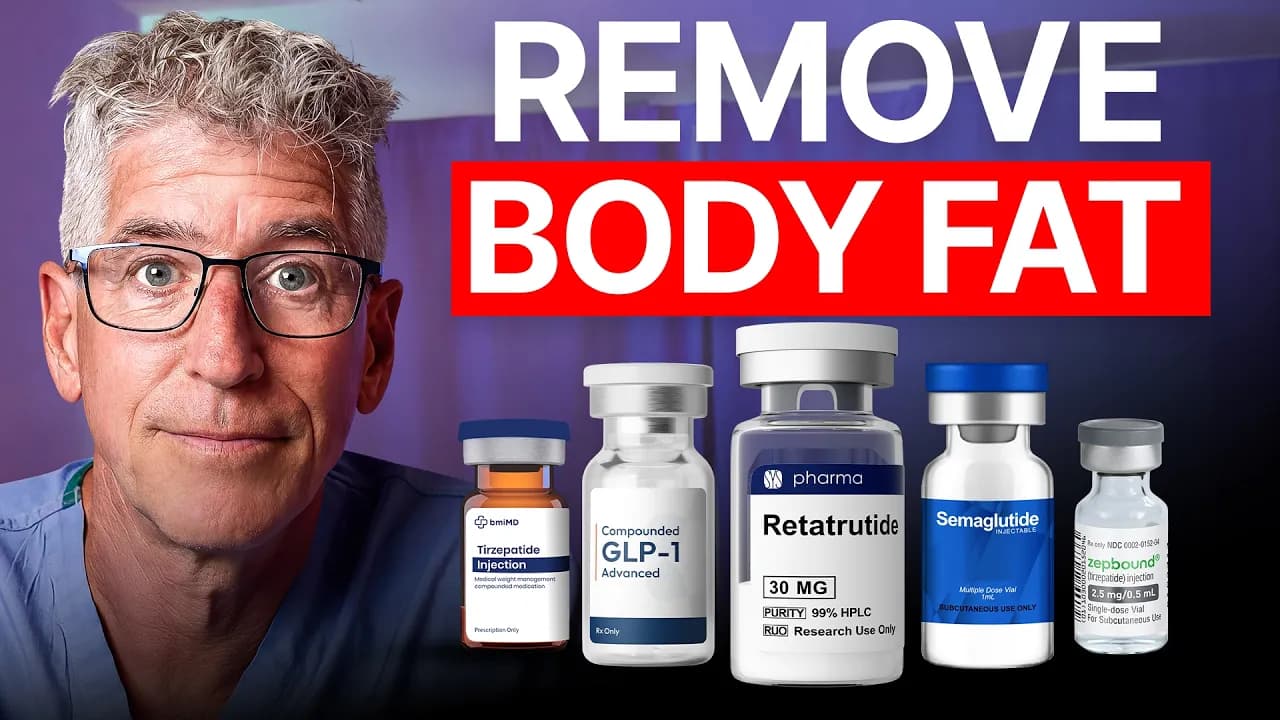
While manufacturers in the United States work to get FDA approval for the next generation of GLP-1 drugs, other suppliers in other countries are moving faster toward copying things that the FDA has not yet approved. Retatrutide is the next drug likely to sweep the entire industry, with weight loss of up to 28% in some studies. People have already started using it in the United States on the gray market or black market, though it is not allowed to be sold. People obtain it from hairdressers and gyms, and there are doctors who use it for research purposes. In Los Angeles, there is a whole industry around this.
Retatrutide is called a triple agonist and targets the GLP-1 receptor as well as the glucagon receptor. The products claiming to be retatrutide are not the product that Lilly manufactures and may be chemically similar. Lilly has already filed lawsuits. Retatrutide has not yet been approved in the United States and is unlikely to receive approval before 2027 or 2028. The product being sold as retatrutide is definitely a gray or black market product.
Rates of calls to the US Poison Control Center due to GLP-1 overdoses have increased by about 1500% since 2019. Since gray market products are not usually available in pens, people must determine the dose themselves and sometimes confuse milligrams with milliliters, leading to injection of 10 times the dose and hospitalization. People should talk to their doctor and be extremely cautious with these unapproved products.
GLP-1 drugs may not be just obesity drugs. Studies on mice and humans show these drugs affect cardiovascular diseases, heart attacks, strokes, mental illness, fertility, and have better outcomes for COVID. Testosterone levels rise, likely secondarily from weight loss. One study showed GLP-1 drugs associated with a 30% reduction in breast cancer incidence in women aged 45 to 80. Obesity exacerbates certain cancers, particularly estrogen-responsive cancers like breast cancer, making weight loss protective.
There is evidence suggesting GLP-1 drugs may contribute to lower incidence of Alzheimer's disease and other dementias. Since these drugs have been used for diabetics for a long time, other health pathways could be tracked. Usage indicators are expanding, and may eventually include aging itself. GLP-1 drugs will historically be viewed as drugs originally created for diabetes and obesity, but taken by millions worldwide to slow diseases of aging.
GLP-1 drugs in early studies appear to make animals live longer. Danny Cachman from Berkeley studied semaglutide in elderly female Black-6 mice. Males were not used because they fight. The drug reduces calorie intake, but the effect is not just calorie restriction. GLP-1 receptors are found in the brain and control many different centers. The brain may respond by releasing other peptides that help the body be healthy beyond weight loss.
A concurrent experiment restricted calories in mice, but semaglutide performed somewhat better than calorie restriction. The hypothalamus at the base of the brain releases a range of substances into the bloodstream. Manipulating the hypothalamus by reducing inflammation allows mice to live longer. GLP-1 drugs may work through the brain, which then tells the body to fight aging.
Traditional weight scales tell very little about weight loss. The Withings Body Scan scale measures body fat, muscle mass, visceral fat, and includes an FDA-approved ECG device. Users can monitor decreases in body fat while maintaining muscle mass. Withings products have been used for over 10 years, including the Silver ScanWatch Nova that tracks heart rate, sleep, activity, temperature trends, and blood oxygen. Withings also makes blood pressure monitors, sleep analyzers, and smart thermometers.
A new study on HIV patients showed that those taking semaglutide experienced a slowing of biological aging across multiple genetic clocks. The GrimAge, PhenoAge, and Dunedin Pace clocks were measured. The rate of aging was 9% slower in semaglutide patients.
A study published in Nature found reductions in inflammation, decreases in cell aging, decreases in stem cell deterioration, and improvements in mitochondrial function. The loss of protein balance during aging was also slowed. At least half of the aging hallmarks examined were slowed by this drug. Liraglutide has been known for almost a decade to activate AMPK and SIRT1, which are classic longevity pathways.
The three main longevity pathways affected by GLP-1 drugs are AMPK (targeted by metformin), mTOR (targeted by rapamycin), and sirtuins (activated by polyphenols such as resveratrol or NAD boosters). This may explain how GLP-1 drugs slow the pace of aging.
GLP-1 drugs in the United States are only available to people with severe obesity, diabetes, and a few other conditions. In other countries, they are often not available at all. Many people in great physical shape use precise doses as a means of preventing disease or prolonging life. The peptide market has opened up wide, and people in optimal health take these drugs similar to rapamycin and NAD boosters.
With decreased cost, these drugs may eventually cost less than $100 per month's dose, potentially only a few dollars. They could become cheap enough to take daily like aspirin. Precise, small doses may achieve anti-inflammatory, cardioprotective, and anti-aging benefits with little or no weight loss. The first dose starts very low and is gradually increased over several weeks to avoid nausea or diarrhea. Once reaching peak dose for weight loss, doctors may put patients on maintenance or precise doses that are sometimes ten times less than the maximum dose.
There is at least one recorded experiment in Ann Arbor, Michigan, monitoring results of low doses for 150 patients. Executives from Novo Nordisk, Eli Lilly, and Boehringer are now attending longevity conferences and reporting on these effects, with many calling these drugs longevity drugs.
About 20% of children in the United States are obese. The FDA is working to allow use of these drugs at younger ages. Semaglutide is currently permitted for those aged 12 years and over. Between 2020 and 2023, the monthly number of people aged 12 to 25 who received GLP-1 prescriptions increased sixfold. These medications were designed as lifelong drugs, with stopping often leading to significant weight regain.
There is still no well-thought-out and tested exit plan. Doctors are trying gradual dose reduction, rotation, maintaining low doses, and switching from triple to double doses. The best advice is to change lifestyle, diet, and do more exercise including weightlifting, walking, running, and rowing to maintain long-term benefits. Some muscle loss may reflect carrying a lighter body, as muscles are subjected to less mechanical load. To maintain muscle mass, training regimens should be maintained or started.
The next generation of GLP-1 drugs targets two other pathways. A drug targeting the amylin receptor in addition to GLP-1 controls stomach emptying and the feeling of fullness. This drug, produced by Novo Nordisk, showed patients losing 13% of their weight in just 12 weeks, or 1% of body weight each week. In the future, drugs may be specifically designed for particular needs such as appetite, reward system, and insulin resistance. People have started combining medications with other drugs such as metformin after stopping GLP-1 therapy.
GLP-1 drugs were not designed to be life-extending drugs. History will record that the longevity-prolonging drug was discovered by chance by people working on type 2 diabetes who looked at the salivary glands of a particular lizard. These drugs pave the way for what is to come, similar to how aspirin from willow bark led to very effective pain-relieving drugs.
The WHOOP bracelet tracks heart rate variability, resting heart rate, and recovery score. A 2022 study published in Sensors by Miller and colleagues compared six leading wearable devices with clinical measurements of sleep, heart rate, and heart rate variability. WHOOP was among the most accurate for measuring heart rate and heart rate variability during the night.
Gene therapy is transitioning from daily or weekly pills to single injections that could provide lifelong protection. A drug under development for LDL cholesterol uses a single injection to protect against heart disease or delay it for decades. The same principle may apply to GLP-1 therapies, where an injection using a virus could confer immunity to obesity and diabetes.
RJV A001 from Fractal Health is entering human trials as the first gene therapy (GLP-1) treatment. This uses adeno-associated viruses (AAVs) as the delivery mechanism. The delivery system consists of a ball containing proteins on its surface that target different locations, with DNA inside for gene transfer.
Future gene therapy injections could allow expression of retrotide or improved compounds, potentially transforming metabolic profiles from obesity-prone to obesity-resistant states where individuals can eat without gaining weight.
Gene therapies for aging are becoming more understandable to the public through their application to obesity, as most people accept obesity as a problem to solve. This acceptance may normalize gene therapies before they arrive for aging treatment. Ten years ago, millions of Americans would not have considered weekly self-injections, but the desire to eliminate obesity and improve health has made people willing to overcome needle phobia.
GLP-1 drugs are gaining acceptance as treatments with multiple effects on age-related diseases. This market success may make it easier to bring longevity drugs to market by establishing regulatory pathways. More treatment options are now available than a decade ago.
Compounded semaglutide obtained online comes in small brown vials containing approximately 2 ml. Administration requires insulin syringes (small orange syringes) for precise dosing, with injection into the subcutaneous fat layer of the abdomen, typically performed once weekly. Storage requires refrigeration.
Berberine activates the AMPK protein and helps with diabetes management, functioning as the "poor man's metformin." Sustain the Burn, a DHEA version, increases the body's rate of heat generation and is taken daily. Low-dose daily tadalafil (Cialis) provides increased vascular elasticity, better vascular function, and possible dementia protection.
Los Angeles represents the forefront of peptide medicine, where doctors prescribe low doses of multiple peptides including GLP-1 receptor agonists. Retatrutide appears ubiquitous in Los Angeles wellness circles. Some individuals inject multiple peptides daily seeking longer life, increased muscle mass, and better immunity.
A Canadian border officer asked about peptide recommendations for sleep during a routine passport check, indicating peptides have entered mainstream awareness beyond medical professionals.
All peptide and GLP-1 use requires close medical supervision. Self-administration without monitoring carries risks. Users should track weight to avoid excessive loss and ensure medication efficacy. Any signs of nausea, diarrhea, or serious symptoms require immediate medical consultation.
Proof that these drugs extend human lifespan may take a decade. At age 57, the alternative is waiting another 20 years for definitive evidence. Personal choice involves discussing low-dose options with physicians, particularly for those with family histories of obesity and diabetes.
GLP-1 drugs evolved from diabetes medications to weight-loss drugs, then to dual and triple agonists more effective at controlling bowel function, blood sugar, and appetite. Current approvals include diabetes, weight loss, major cardiovascular events, kidney disease, and obstructive sleep apnea.
A recent study found semaglutide extended mouse lifespan and slowed multiple aging signs. In a randomized trial of people with HIV-associated lipid disorder, semaglutide slowed biological aging rate by approximately 9%. While promising, risks include muscle loss, vomiting, increased blindness chance, and dosing errors with unapproved products.
These medications have normalized self-injection and fueled wellness peptide growth. Healthy individuals now use them for modest weight loss and health improvement, though benefits and risks in this population remain unclear.
Keep David Sinclair in your library
Save the videos and channels worth coming back to, and find them again in one place.