Can Canada Actually Fly A Rocket To Space?
In a Nutshell
North Space, a Canadian startup, is developing the country's first orbital rockets—including the suborbital Taiga demonstrator and the larger Tundra vehicle—while building engines, satellites, and a lunar rover using 3D-printed Inconel components. The company is entirely self-funded by founder Rahul, who overcame significant personal hardships, and recently secured an $8.3M defense grant amid growing calls for Canadian space sovereignty following U.S. political tensions. Key milestones include an engine test explosion that yielded critical data, the upcoming Terranova Edge AI satellite launch on SpaceX, and plans for Canada's first independent lunar surface mission.
These notes were generated by AI and may contain inaccuracies.
North Space experienced its first engine explosion during testing. Everyone remained safe throughout the incident. The event provided valuable data on engine limits despite the dramatic outcome.
Canada contributed to the space age through satellite construction, the Canadarm robotic arm used to service the Hubble Space Telescope, and astronaut Chris Hadfield, known for playing guitar in space. Canada's rocket development has been limited to occasional sounding rockets and one startup that ceased operations in 1998 immediately following its first suborbital launch.
Mathieu Caron serves as CEO of North Space, a Canadian aerospace company developing rockets, satellites, and robotics. The company operates from Area 66, a 50-acre testing facility. North Space was previously displaced from an earlier location and is expanding to a new 60,000 square foot facility with plans to reach approximately 50 employees.
North Space began operations in 2022 on founder Rahul's porch. The company is entirely self-funded by Rahul, who previously built and sold another company after starting from living in his car. An additional $8.3 million grant was received from the Department of National Defense. The company is developing three to four test cells at the current site.
Following comments by Donald Trump regarding potential annexation of Canada, Prime Minister Justin Trudeau responded that Canada does not exist because of the United States. The political situation prompted increased domestic support for Canadian space capabilities. North Space emphasizes the need for sovereign space access and reduced reliance on single-country dependencies.
North Space conducted a test that exceeded expectations, resulting in an engine explosion. The company views such events as necessary for understanding operational limits. Multiple tests are performed to gather data, with the position that companies not experiencing failures may not be seriously engaged in rocket development.
Rahul, the founder, previously lived in his car across approximately 20 U.S. states while building his first company. He worked briefly at NASA until his Canadian citizenship was discovered. He returned to Canada after determining the United States did not need his contributions. He describes his approach as driven by science combined with "delusional optimism."
Canada is developing both light-lift and medium-lift rocket capabilities. Light-lift rockets target 200 kg payloads to low Earth orbit, primarily carrying CubeSats ranging from 10-50 kg, with potential for up to 100 kg satellites. Medium-lift development aims for several tons to low Earth orbit over the next decade, potentially including human-rated capabilities.
North Space uses powder bed fusion 3D printing with Inconel, a metal superalloy, to manufacture rocket engines. The process involves millions of layered welds and takes 50-60 hours per engine, followed by heat treatment and cleaning. All propellant tanks for the Taiga rocket are also metal 3D printed using the same equipment.
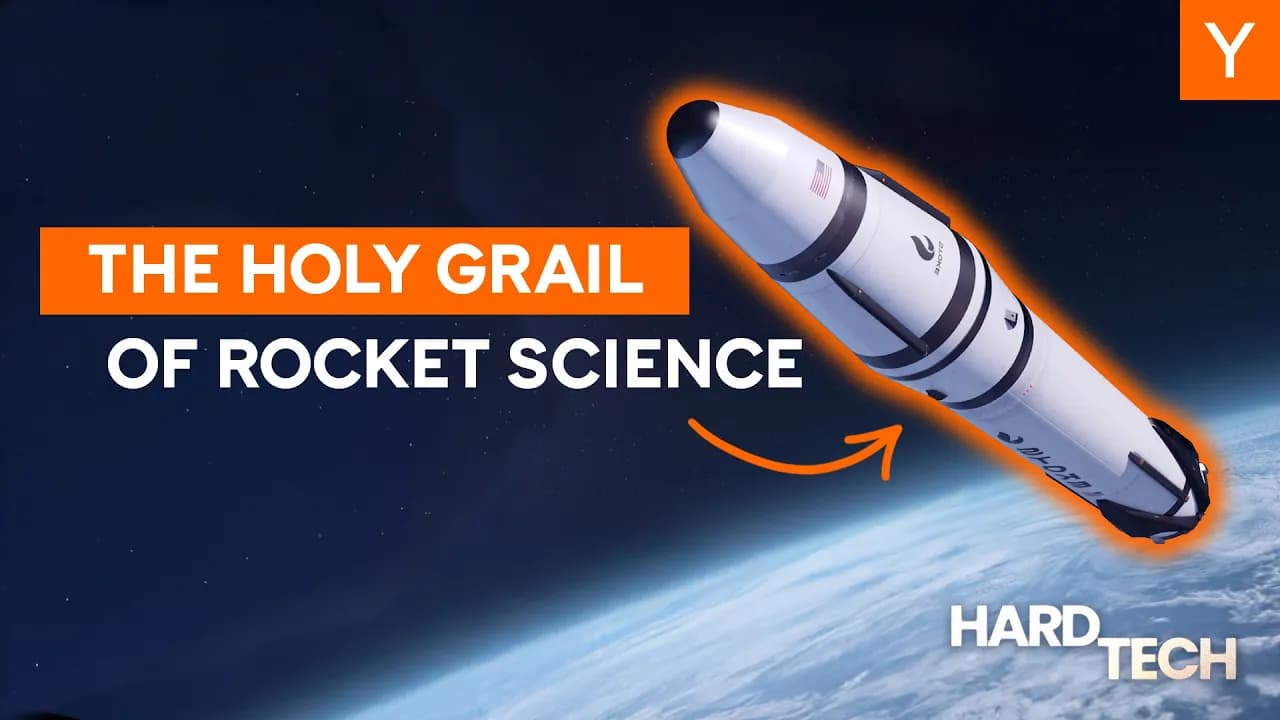
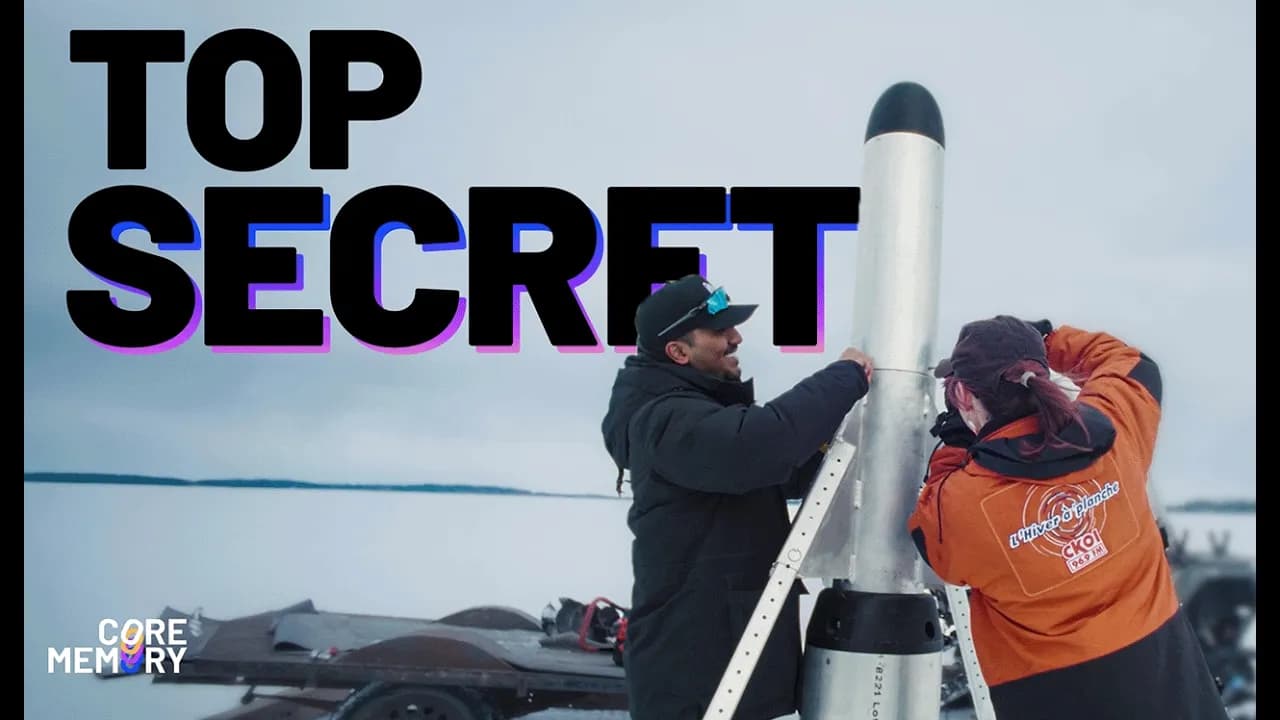
Taiga is North Space's first rocket, serving as a technology demonstrator for a larger orbital vehicle. It features a single-engine, pressure-fed liquid propulsion system. The design is unique in recent Canadian aerospace history. All tanks are 3D printed from metal using the same printer employed for engine production.
The Hadfield engine is North Space's engine family, named after Commander Chris Hadfield. The orbital-scale Hadfield engine under development will be the largest engine ever created in Canadian history. Tundra, the orbital rocket, measures 2 meters in diameter and approximately 30 meters in length. It requires turbopumps rather than pressure-fed systems due to scale requirements.
The Tundra nose cone section is large enough to accommodate multiple people. No comparable orbital rocket development has occurred previously in Canada. The company acknowledges the high difficulty and expense of rocket development and the prevalence of failed rocket startups in the industry.
Terranova is North Space's satellite scheduled for launch aboard SpaceX's Transporter 18 mission in October-November. The mission focuses on Edge AI capabilities in low Earth orbit. The satellite will demonstrate AI processing applications for space-based operations.
Sentinel is North Space's in-house mission control platform, inspired by systems like Anduril's Lattice. The platform includes an integrated AI agent capable of generating graphs, accessing mission details, and enabling direct operator communication with satellites. The AI functionality resembles Claude or Codex in operation.
New Zealand has developed the second-most successful commercial rocket company globally. Multiple nations including China, India, South Korea, Japan, and Australia are actively building space capabilities. Space infrastructure is described as equally critical to land, sea, and air domains.
Rahul was born and raised in Toronto's Jane and Finch neighborhood. His family lived in a small home shared with two other families as part of typical immigrant circumstances. His mother supported his ambitions despite financial constraints and passed away one year before the family purchased their first home. He maintains several childhood books including "Goodnight Moon."
North Space is developing Canada's first lunar rover mission, planned for launch the following year. The mission would mark the first time Canada has independently sent hardware to the lunar surface or into lunar orbit. The rover will permanently engrave the names of all team members and their families into its metal structure.
Rahul and his partner welcomed a child named Kylie. The family remains near the Toronto area where Rahul grew up. He plans to share childhood books including "Goodnight Moon" with his child. The child will grow up surrounded by rocket and satellite development activities.
Keep Core Memory in your library
Save the videos and channels worth coming back to, and find them again in one place.