The Startup Trying to Make Space Launch 15x Cheaper | Longshot Space
In a Nutshell
Long Shot is developing giant gas cannons to launch 100 kg payloads into space at Mach 5, targeting 15x cost reduction over rockets. The company has built the world's largest cannon and fired it 150 times, securing $8 million in military contracts while proving the technology through rapid ground testing. The approach leverages existing hypersonic technology rather than new rocket innovations, with the goal of making space accessible to ordinary people rather than just billionaires.
These notes were generated by AI and may contain inaccuracies.
Long Shot is developing giant space cannons that throw objects into space, rather than using rockets. The company has built the largest cannon on the planet, which is part of a missile system. This accelerator has been fired 150 times. The goal is to reduce space launch costs by 15x. The current speed record achieved is Mach 4.2. The company has secured approximately $8 million in contracts with the Ministry of War.
Mike Grace, CEO and co-founder, left SpaceX to pursue this technology. The company is named "Long Shot" because the technology uses many small gas injections over a long firing distance. The plan is to build a half-kilometer long cannon in Barstow, Southern California, capable of accelerating 100 kg payloads to Mach 5.
"If you have a very slim chance of owning the solar system, it's worth it."
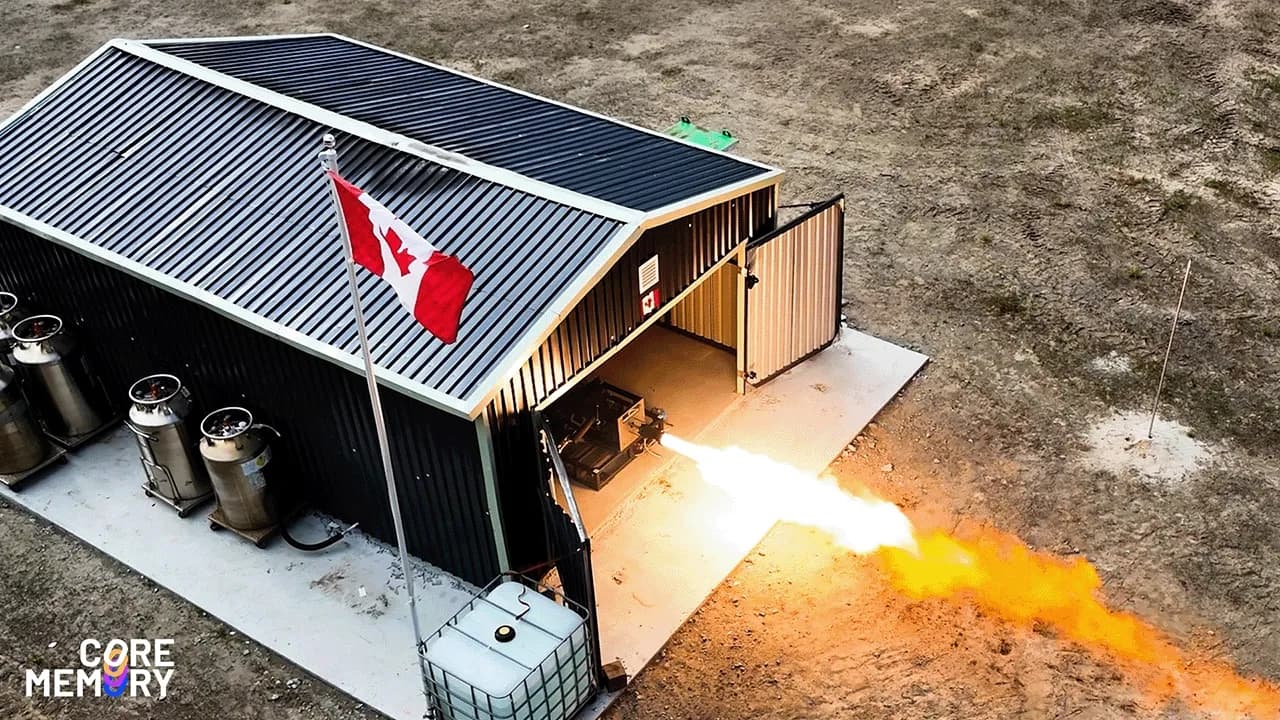
The testing facility was originally built by the United States to develop the Phalanx gun, a 20mm cannon used on every U.S. warship. It serves as an internal testing ground for naval guns. The cannon diameter shown represents the minimum size needed for space launch applications.
The comparison is made to Hawaii, where each resident must import 10 tons of goods annually. The argument states that without ships, trains, and trucks, civilization would be forced to transport everything by airplane, which would be prohibitively expensive. The space cannon is positioned as the equivalent of ships for transporting massive quantities of materials to space.
Mike Grace was born in Los Angeles and experienced financial instability, with his parents going bankrupt approximately every 7 years. He lived in hotels and trailer parks. He did not learn to read until age twelve. He describes himself as an eccentric child who made a conscious decision not to conform to societal expectations. This rebellious personality trait is described as necessary for starting a company like Long Shot.
Grace argues that starting a company means confirming that everyone else is wrong. He acknowledges that most rebellious people do not succeed, but suggests this rebellious trait may be necessary for the type of success Long Shot aims to achieve.
Grace was the first employee at Long Shot. The original pitch was to work for free to build a space cannon. Another co-founder and technical director wanted to wait to build a prototype because they were embarrassed by the PVC model.
The argument is presented that rockets became the dominant space launch method not because they were the best approach, but because after World War II, Americans and Soviets kidnapped rocket scientists to deliver hydrogen bombs. The marginal cost of launch was irrelevant for delivering atomic bombs. The U.S. and Soviet Union invested $4 trillion in this technology, creating infrastructure and workforce around it.
The company built a desktop prototype called a multi-injection supergun. A 6-inch accelerator is used for testing. Projectiles can be prepared for firing in 4 hours for simple tests, while wedge-shaped projectiles take 6-7 hours to manufacture. Simple projectiles cost approximately $200 in materials and time, while more complex projectiles cost around $2,000.
The testing setup includes soundproofing material drilled into the ceiling to be considerate of neighbors. The exit leads to a safe purchased for $200 from Craigslist, filled with concrete. Used carpets from a used carpet store are employed to catch debris, as nylon carpets melt and hold projectiles.
The project began with Mike Grace building potato cannons from PVC pipes in his backyard. The initial prototype was a large pressure vessel with a piston valve, which was catastrophically dangerous as pressure vessels periodically burst. This dangerous prototype was sufficient to convince the U.S. Air Force to provide funding.
The philosophy emphasizes building "bad prototypes" - constructing the worst possible version of a thing. A Mach 1.8 potato cannon was built from irrigation equipment from Home Depot, using black ABS pipes retrieved from a garbage container behind the store.
Silicon Valley investors will not fund decade-long projects. The strategy shifted to pitching an intermediate story about hypersonic work for the Air Force and Army as a market in itself, closer in time to the large space launch system. The first 60 pitches were unsuccessful due to unclear storytelling.
Grace estimates the company came within 3 months of bankruptcy at least three times. He asked his wife for 6 months without income after graduate studies, borrowing money from her bank account. After 5.5 months, investor David Kimson provided $20,000, which sustained the company for approximately one year at $1,000 per month salary for Grace.
All employees know each other's salaries and stock compensation. Salary information is shared as part of the hiring process. During financial distress, employees are informed rather than being surprised by sudden layoffs.
The projectile is placed inside a tube on two rails. Four pictures are taken for documentation. The accelerator has been fired at least 150 times, with failures occurring in various ways. One incident involved a pressure sensor plug flying off during a critical test with many observers present, causing expensive helium to leak.
Today's test serves as a baseline to determine projectile speed when propelled with carbon dioxide. The maximum speed achievable with gas cannons is 13-14 kilometers per second. The primary technical challenge is whether vehicles can survive traveling through the lower atmosphere at these speeds.
Alexander Stroud, head of engineering and employee number two, previously worked at SpaceX on life support systems for Crew Dragon. The challenge is creating a thermal protection system that can handle Mach 25 at sea level, as no vehicle has ever flown in this flight regime.
The cannon is positioned flat on the ground. The vehicle exits the nozzle and takes off using lift like an airplane. The vehicle will need to be 5-10 times larger for space launch. Unlike rockets, the maximum dynamic pressure (Max Q) occurs immediately after exiting the cannon rather than during ascent.
Ground testing eliminates the need for flight permits. Vehicles can be launched daily for rapid iteration. The system provides the cheapest and easiest way to test high-speed vehicles.
The test fires a dumbbell projectile to evaluate high-speed data collection. Pressure is increased incrementally: 200, 400, 500, 600, 700, 725, 740, then 756 psi. The countdown proceeds: 5, 4, 3, 2, 1.
The projectile split and pierced the target. Disintegration upon impact with carpet is normal. The front and back parts separated, with the front becoming stuck inside while the back fell out. The test was considered a complete success as the projectile went through the pipe and crashed as intended.
Grace has a degree in economics and approaches space from an economist's perspective, focusing on incentives and markets rather than engineering. The goal is to find technology that solves specific problems while minimizing new technology required.
Elon Musk is described as an economist by training. The Falcon 9 contains nothing that could not have been built in the 1970s. Musk's contribution was being the first to relentlessly attack prices and cut costs in the rocket industry. The argument states that combining technological novelty with difficult problems like space launch is a mistake - companies should either tackle difficult problems or introduce innovation, not both simultaneously.
That would be a failure because what I care about is space. Therefore, I would have failed in my primary task. I may become ridiculously rich and be able to wipe away my tears with huge bundles of money, but I don't consider that a success. This is a failure for me.
I hope that there will be a real option for my children, if not for me, to go to space if they want to. Not as an astronaut, and not as a billionaire, is that right? But as a human being, he just wants to decide to do something dangerous and crazy and go try to start a new life on Enceladus or somewhere else.
This may sound crazy, but I believe there is a real future where human industry leaves the surface of the earth, and the earth can become a garden. The only thing that's unique about this planet is that we evolved here. That's all.
Keep EO in your library
Save the videos and channels worth coming back to, and find them again in one place.