Grizzlies | 60 Minutes Archive
In a Nutshell
Grizzly bears in the lower 48 states have recovered from a few hundred in the 1960s to nearly 2,000 today through Endangered Species Act protections, with their range more than doubling since 1975. Montana's growing human population has increased conflicts as bears raid livestock, crops, garbage, and chicken coops, prompting electric fencing and other mitigation efforts. Problem bears are relocated or euthanized when they become food-conditioned threats, with nearly 50 killed last year, while survivors like attack victim Andrew Broy accept coexistence as essential to keeping the ecosystem wild.
These notes were generated by AI and may contain inaccuracies.
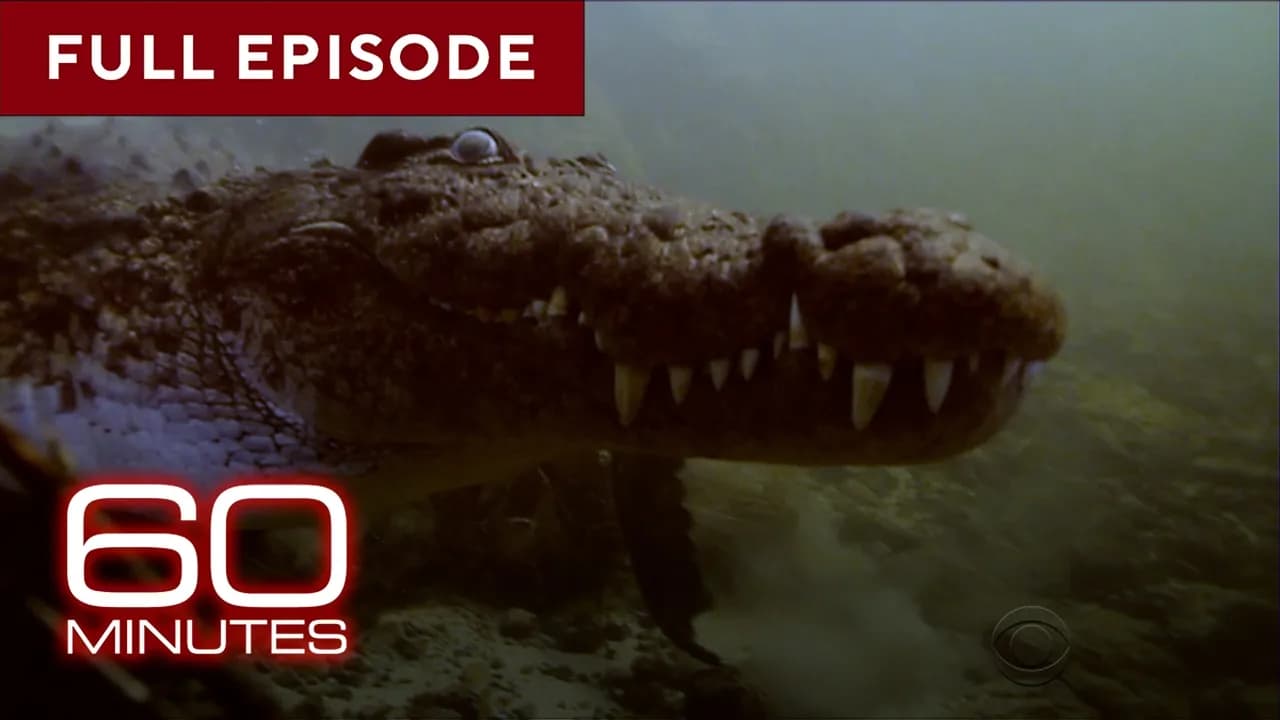
When Lewis and Clark first encountered grizzly bears, there may have been 100,000 of them in the American West from what is now Canada all the way down to Mexico. Grizzlies are among the most fearsome predators on the planet. For the next 150 years, they were systematically exterminated by settlers, ranchers, and farmers who saw them as a threat to their lives and livelihoods. By the 1960s, there were just a few hundred left in the lower 48 states. In 1975, grizzly bears were among the first animals to be protected under the Endangered Species Act.
In the Swan Mountains of Northwestern Montana, state bear specialist Eric Wenham and colleague Milan Vinks check snares baited with beaver meat. A grizzly bear is captured in a wire snare around its wrist. The team estimates the bear weighs around 300 lb, which is midsize for a grizzly. Grizzlies can weigh as much as 1,000 lb and stand 9 ft tall on their hind legs. Wenham and Vinks mix a cocktail of veterinary sedatives and load them into a dart gun. Vinks carries a shotgun loaded with lethal ammunition as backup. Wenham states that neither the tranquilizer nor the snare cause lasting harm, and both are needed to attach radio collars and track population recovery.
Hillary Kulie, wildlife biologist in charge of grizzly bear recovery for the US Fish and Wildlife Service, explains that grizzly bears were listed in 1975 as a threatened species in the lower 48 states. Their range had been reduced by about 98%. Two places grizzlies survived were Glacier and Yellowstone National Parks. Starting 45 years ago, recovery efforts focused on millions of acres around those parks. The population has more than tripled and their range is now more than double what it was at the time of listing.
Montana's human population has grown by 250,000 since grizzlies were protected in 1975. Most people live on valley floors or foothills near bear country. Bryce Andrews, rancher, author, and field director for People and Carnivores, notes that telemetry shows bears walk through areas within 100 ft of his house at night. Grizzlies are true omnivores and emerge from hibernation hungry. They eat anything with caloric value including bird seed and barbecue residue.
Bears kill livestock. Some producers lose 20-30 cows per year to grizzly bears. Greg Shock farms in Montana's Mission Valley and reports that grizzlies knock down 20-25% of his corn each year. He once had 18 bears in his 100-acre cornfield. With nearly 2,000 grizzlies now present, the federal government wants to remove some populations from the endangered species list, but court challenges from environmental groups and Native Americans have blocked this.
Bryce Andrews states coexistence is necessary because neither bears nor humans are leaving. His organization installs high-voltage electric fences around fields such as a 30-acre melon farm. Grizzlies are smart enough to test fences and sometimes bypass them. Andrews has an electric fence around his backyard chicken coop. He notes that unprotected chickens in grizzly habitat lead to conflict. Grizzlies have phenomenal noses and smell everything, including neighborhood trash cans.
If a grizzly develops a taste for garbage and teaches bad habits to cubs, the outcome can be fatal. Problem bears are first trapped and relocated to remote regions. If they return, federal official Hillary Kulie may authorize killing them. She states it is the worst part of the job but necessary when there is a threat to human safety. A food-conditioned bear poses risks because bears can kill people. Last year she authorized the killing of nearly 50 grizzlies.
The captured male grizzly is estimated to be 5 years old based on incisor cusping. Researchers attach monitors, an oxygen bottle, measure every part of the bear, draw blood, and pull hair for DNA analysis. The bear's oxygen level is monitored at 88%, with a target of 90-95%. The bear begins to stir after less than an hour and researchers exit the area.
Andrew Broy was attacked by a grizzly while hunting deer and elk north of his Montana home on November 11, 2018. The bear bit his arm, thrashed it, bit his leg, and tossed him around before running off. Broy suffered a broken arm, broken thumb, dislocated hand, and a foot held to the ankle only by soft tissue. He spent 6 days in the hospital and had three surgeries. DNA matched the bear to one previously trapped and released by state managers. Broy accepts the incident, stating he was intruding and the bear's response was not inappropriate. He and his hunting partner plan to hunt again on the anniversary of the attack.
"If we didn't have grizzly bears, like it'd be a little less wild. They're a part of our ecosystem."
Keep 60 Minutes in your library
Save the videos and channels worth coming back to, and find them again in one place.