Inside the 2011 raid on Osama bin Laden's compound in Pakistan | 60 Minutes Archive
In a Nutshell
Mark Owen, a SEAL Team 6 operator, provides the first detailed account of the 2011 raid that killed Osama bin Laden, describing how his helicopter crashed into the Abbottabad compound yet the team still completed the mission in 38 minutes. The operation was a "kill or capture" mission that succeeded through rapid adaptation after the crash, precise room-clearing that eliminated bin Laden on the third floor, and extensive intelligence collection. The raid's success hinged on the skill of Army helicopter pilots who executed an emergency landing, the team's ability to improvise when plans failed, and years of CIA intelligence that correctly identified bin Laden's location despite having zero knowledge of the compound's interior layout.
These notes were generated by AI and may contain inaccuracies.
Mark Owen is not his real name. It is the name he used to write a new book about the assault on Bin Laden's compound called No Easy Day. Owen was on the helicopter that crashed into the compound. He was the second man in Bin Laden's bedroom, and he took the pictures of the body that the world has never seen. Owen received a silver star for valor and a purple heart for a wound suffered in the raid. Despite all that, Owen told in his only interview that No Easy Day is not about him. He says it's a tribute to the hundreds of Americans who gathered intelligence, planned, and trained in the 10-year pursuit of the world's most wanted man. Seal Team 6, he told, just took care of the last 40 minutes.
The mission was absolutely not a kill only mission. It was made very clear throughout training that if given the opportunity, this is not an assassination. The team would capture him alive if feasible. That was the preferred thing. The team was not there to assassinate somebody. They weren't sent in to murder him. This was kill or capture.
When Owen first joined the Navy, he had read about the SEALs in junior high school and set his sights. Chief Petty Officer Owen was in the Navy 14 years. He had done 13 combat deployments since 9/11 in Afghanistan, Iraq, all over. There are several SEAL teams, but Owen rose to the very top, a unit called the Naval Special Warfare Development Group, SEAL Team 6. SEAL Team 6 is made up of a number of squadrons.
Nothing special about Owen. Nothing special about the 24 guys that were chosen. Nothing special about the squadron. It really could have been any number of guys. Owen just happened to be available for training.
In April 2011, they had just returned from Afghanistan when they were told to report to North Carolina for an exercise. Owen walked into a top secret briefing room, saw a model of a compound, and heard from his buddies that they found Bin Laden or they think they found Bin Laden and they want them to come up, rehearse and come up with a plan. If there's going to be a ground option approved, they want them to rehearse for one.
The mission was Operation Neptune Spear under the authority of the CIA. The agency had tracked a bin Laden courier to a curious compound in Abbottabad, Pakistan. They'd been watching the compound with satellites. The house seemed too big for the neighborhood. There was no telephone connection. The people there burned their trash. There was a wall 12 ft high and a walled-in balcony. They briefed on the individual they were calling the pacer. The pacer would come out of the house and kind of walk around the yard to what was assessed to just be getting exercise. The pacer had been in Abbottabad about 5 years. It's a well-to-do city of 1 million people. The compound was about a mile from the Pakistani military academy.
The pacer would walk around the yard. Sometimes he'd walk what they assessed to be a female. They'd just walk around the yard. They never stopped to help anybody do any work. If there was other people in the yard working, he never seemed to do any of that. He was the boss, whoever he was. In terms of the inside of the house, they knew zero. Once they went through the door, they didn't know what they were going to be facing.
The tricky part was getting there. The US wasn't telling Pakistan so the helicopters could be shot down by Pakistan's modern air defenses. The pilots were from the Army's 160th special operations aviation regiment. Two modified Blackhawks, call signs Chalk 1 and Chalk 2 would drop 24 SEALs and a Belgian Malinois combat dog named Cairo. Chalk one, which is the one Owen was on, was going to hover over the compound. They would drop the two fast ropes, slide down the ropes into the courtyard, and then go about their business while Chalk 2 would land out by the road, drop the external containment team off. They would provide security external. They'd have two men and their combat assault dog would do a quick patrol of the perimeter down to the south and around to make sure that there was no tunnels underneath the walls if somebody did hear them coming and had time to escape. After dropping those guys off, the second helicopter was going to come up, hover over the third floor, drop off the remaining guys. They would then hop right down into the balcony, assaulting from the top down, and the guys would assault from the bottom up.
A few days after getting the mission, they had their plan. And so began weeks of rehearsals on a full-size version of the compound built in North Carolina. Between when they got the mission and when they left for Afghanistan, they probably did a good 100 times. This kind of training was very unusual. Owen had never had all the mock-ups. He'd never rehearsed for something for three weeks.
One rehearsal had an audience: the nation's highest ranking officer, Admiral Mike Mullen, chairman of the Joint Chiefs, the head of special operations, Admiral Eric Olsen, and observers from the White House. Admiral Mullen came by and talked to each one of them. Admiral Olsen as well. They walked by, shook each of their hands, and said, "Hey, are you guys ready? Can you guys pull this off?" And Owen is pretty sure to a man they all said, "Yes, absolutely."
The team got several days off at home around Easter. Then in late April, about a month after they got the mission, they loaded on a plane bound for a US base in Afghanistan. The president wasn't convinced yet. No one confirmed that Bin Laden was the pacer. So, Seal Team 6 was on standby. One of the passengers on their plane was a CIA analyst who had spent 5 years on Bin Laden's trail. Owen can't give her enough credit. In his opinion, she kind of teed up this whole thing. She was wicked smart, kind of feisty. They'd always talk back and forth, "Hey, what do you think the odds of this are? What do you think the odds of that are?" And she'd say, "100%. 100% he's there." And Owen thought, "We'll see."
Three days later on April 30th, the president was telling jokes at the annual White House correspondents dinner. CIA Director Leon Panetta's belly laugh was heard all across the room. Reporters in ball gowns and tuxedos had no idea that just a few hours before President Obama had ordered Panetta to launch the raid. Mr. Obama kept to his schedule, thinking that on this night, it was better to have reporters drinking and laughing than asking questions. When Owen first heard that the president had approved the mission, the commanding officer of their command walked in and said, "Hey, just got off the phone. The mission's approved." Owen thought, "This is big. This is cool. I'm glad I'm a part of it."
The raid was supposed to be April 30th, but the weather was bad. The next night, Vice Admiral William McRaven saw the men off. He was a SEAL, and he had planned the mission as head of the Joint Special Operations Command. Just before midnight, the Blackhawks started the sprint from the US base in Jalalabad, Afghanistan to Abbottabad, about 150 miles away. The helicopters were blacked out against a clear moonless night. The army pilots guided by night vision goggles flew high-speed, treetop level under Pakistani radar. This was roughly an hour and a half. Owen remembers they took off, shut the doors and the radio call he heard was, "Hey, we're over the border. We're crossing the border into Pakistan." And Owen remembers thinking, "Wow, this is okay. This is happening." And he swears he glanced around the helicopter and half the guys were sitting there asleep on the ride in. Guys got to catch a few Z's on the way in. It's their time to just kind of shut their eyes, relax, mentally walk through whatever they need to walk through.
It was about 1:00 in the morning, 66 degrees, 65% humidity with calm winds. At one minute, they opened the door and Owen just kind of swung his legs out and he's sitting there looking down. He's thinking, "Wow, you know, this is a beautiful spot." Houses with pools in the backyard, well lit, manicured yards. "Wow, this is definitely not the mud huts of Afghanistan." Somehow, there was a blackout in the neighborhood. No one will say whether that was luck or design, but it meant ideal darkness for the SEALs with their night vision goggles.
You could see the compound coming. Owen had the door to the Blackhawk open and his legs were swung outside. Make a little more room, be faster for everybody to get out and fast rope out of the helicopter. So, everybody's getting ready to fast rope. And then all of a sudden, they banked hard 90 degrees. Once they went hard 90, it was very apparent that something was wrong. Owen doesn't know what went wrong. But pilots say that a chopper can lose lift when it drops into the turbulence of its own downdraft. And the turbulence would have been much worse because the downdraft was being magnified and reflected by the compound's walls. These pilots are the best in the world. You don't get better than these guys. And typically they just boom, they move right in and they stick it. It's like parking a car for these guys. And it was a rough ride. They were pretty low. Tail rotor and everything happened to miss this wall. And then they were just kind of sliding and falling out of the sky. Owen was now in the front of the helicopter. Although he was sitting on the left side, he was now the front. His buddy right behind him pretty much should have fallen out. If it weren't for him hanging on to Owen, there's a good chance Owen would have been thrown from the helicopter.
As the helicopter is going down, Owen was thinking, "This is going to suck." The carefully rehearsed plan was out the window before the first boot hit the ground. With one helicopter and half the seals crashing, the second helicopter abandoned the roof assault as too risky, and the SEALs began to improvise. One thing was sure now, the people in the house knew they were coming.
The pilot had mentioned in the rehearsals, "If I have to ditch this thing, I'm going to try and put it down in the courtyard." So that's exactly what he did. You could tell, you could hear the helicopter winding up. He was putting all the power on it he could, but it wasn't helping. Nothing. Came in and impacted. Boom. Had the angle been more, the rotors would have hit the ground, snapped off, and caused them to roll. Had the tail rotor hit, obviously would have broken and caused them to break and roll. The load bearing section of the tail landed precisely on the wall. The strongest part of the tail just happened to land on the wall. And the angle happened to be perfect. It all came down to inches either way. They stopped. The main rotor blades are still turning. Owen doesn't think you could recreate that if you tried. It was lucky. But again, huge props to these pilots. Everybody wants to meet the guy who shot Bin Laden. Owen wants to meet the pilot. He wouldn't be here if it weren't for him. If the pilot had not brought their helicopter down intact, the mission would not have failed because Chalk 2 was on the ground and as soon as they saw them crash land, that Chalk 2 helicopter pilot saw that happen, decided not to push the position to go to the roof. Admiral McRaven said in one of their very last rehearsals, briefs, dry runs right there in Afghanistan before they launched, he stood up and said, "Hey, listen. Don't try any fancy stuff. Just get the guys on the ground and they'll figure it out."
Owen mentioned in the book that one of the Army pilots that was flying their team looked to him to be about 50 years old. He was definitely a little older. In this line of work, it's experience that matters. He's probably been flying longer than Owen's been alive. Nothing wrong with that.
They had planned to be on the ground 30 minutes, but now they were running late. Owen's team landed in the courtyard, walled off from the house. Owen ran out and turned around and looked and saw the guys on the left side of the helicopter. They're sitting right there staring at the front door. So, they simply hop out and go right to the front door like nothing happened. The other helicopter landed outside the perimeter wall, dropped all of its seals, and took off. Their objective was clearing and securing the southern compound. They expected to find people in that building and wanted to clear that building so the rest of the team can do what they need to do in the main house.
What Seals are good at is what Owen considers pickup basketball. They all know how to play the game. The saying in the teams is can you shoot, move, and communicate. They all know how to shoot. They all know how to move efficiently and tactically, and they can communicate clearly. So when something goes sideways, they're able to play that pickup basketball and just kind of read off each other. Now, the SEALs were in several groups. One group was outside the perimeter wall to make sure no one escaped. The group that was supposed to rope to the roof was outside the wall looking for a way in. Owen led his team to the outer building where they expected to find one of Bin Laden's couriers.
They got to the door. Obviously, they made tons of noise at this point. It had taken a little longer to get there. So the element of surprise is slipping away quickly. They got to the double doors. Owen tried it once real quick. It was locked. His buddy was with him, he's carrying a sledgehammer. Pulls it out, gives it a couple good swings. Nothing. Door's not going anywhere. Kind of solid metal. So Owen said, "Okay, we're going explosive. We all carry explosive charges." Owen pulled one off, got on his knee, and started setting it. And right as he was attaching it, a round started coming through the door at them. Somebody started shooting at them from inside the house and the bullets were coming through the door. Immediately his buddy who was standing up started returning fire. Owen rolled away from the door. Blindly returned fire back through. You couldn't see what was on the other side and then it went quiet. Thankfully the SEAL that was there with him that initially returned fire with him spoke Arabic. So he immediately started calling out to the people inside. They started hearing the metal latch on the inside of the door. Door opens up, a female holding the kid, couple kids right behind her. Owen had his finger on his trigger and was looking at a woman with her children. They had just received fire. His buddy speaking Arabic asked her, "Hey, where's your husband? What's going on?" And she replies back to him, "He's dead. You shot him."
Owen didn't notice until later, but he was bleeding, a shoulder wound from a fragment of something in the firefight. He just got a little piece of frag in his shoulder from some of the rounds that came through. It really wasn't a major wound at all. Owen carries a set of bolt cutters to cut locks with. When he got back, he was checking his gear, any holes or anything, and he pulls out the bolt cutters and he's got the bullet stuck in the handle. So the bullet just missed him by a little bit. The handle stuck up either side of his head. Right by his neck, but he doesn't consider that to be a big deal. Plenty of other guys have suffered much worse. So it's not a big deal. Within 5 minutes, Owen's team cleared the outer house.
More SEALs entered the compound and converged on the first floor of the main building. Inside, they found another courier with an assault rifle. Those SEALs were in the process of shooting the second gunman and his wife jumped in front of him. All the women on target were very hostile. Something very different than what they see in Afghanistan or Iraq. They typically don't see the women that are this aggressive and hostile. Even though the females had come out of this building and talked to them, they were still very combative and aggressive. And they saw that throughout the entire compound, even all the way up on the third floor. They secured the ground floor and then the second floor. The team continued to head up these stairs single file. The first seal in line is called the point man. Owen at this point was right behind him, number two, going up to the third floor. The seals had been told they could expect one of Osama bin Laden's sons. Guys start making their way up the stairs and it's quiet. It's pitch black in the house. No lights. All night vision. They get to the second floor. Intel had said, "We think that Khaled, his son, lives on the second floor." The guy in front of Owen, who's point man, sees the head pop out and disappear really quick around the corner. It's like, "Okay, you know what? Who is it? What do you think?" He literally whispers, not amped up, not yelling, not anything. He whispers, "Hey, Khaled. Khaled." Whispers Khaled's name. Doesn't know if it's Khaled or not. Khaled literally looks back around the edge of the hall and he shoots him. It had been 15 minutes since the crash. It was now about 1:15 a.m.
It's not like the movies. Movies make it out to be loud and crazy and everybody's yelling. This is what they do. They're really good at it. And so, it's quiet, calm, like they've done it a million times before. They have a saying, "Don't run to your death." So nice and slow and they head up the stairs. Khaled is dead on this landing. The point man is stepping past Khaled. And now Owen is number two in the stack. He's right behind the point man. Owen is trying to look around him, hears him take a couple shots, kind of sees a head, somebody disappear back into the room. The point man had seen someone stick his head out a door and shot him just the way he'd shot Khaled. Inside the room Owen could see a body laying on the ground. Over him were two females real close to the door. They looked up and saw the point man. He steps into the room, literally rushes the two women, grabs one under each arm and pushes them back against the far wall. So if they did have a suicide vest on and they did blow themselves up, that wouldn't affect the rest of the guys. But it would have killed him.
Owen stepped into the room and saw the man lying on the floor. Himself and the next assaulter in both engaged him several more times and then rolled off and then continued clearing the room. When Owen says they engaged him, he means they fired. They shot him. He's still moving a little bit, but they couldn't see his arms. Couldn't see his hands. So he could have had something, could have had a hand grenade or something underneath his chest. After Osama bin Laden is wounded, he's still moving. They shot him a handful of times. And the seal in the stack behind Owen also shot Osama bin Laden. And at that point, his body was still. They did not recognize it. Everybody thinks it was like, "It's him." No. To them at that time, it could have been anybody. Maybe this is another brother. Maybe this is a bodyguard. Maybe it doesn't matter. The point is to just continue clearing. By now, 20 minutes had passed. Every single thing the woman with the CIA had told them on the plane had been right, but time was running out. Throughout the raid, the remaining helicopter was in the air. It only had enough gas to stay for 30 minutes or so. Pakistani neighbors had discovered the seals posted outside the compound wall and it couldn't be long before the Pakistani military would know they were there. One seal was charged with keeping an eye on his wristwatch and calling out the dwindling time on the radio. 20 minutes, 15, 10.
As time was slipping away, Mark Owen and a couple of other members of Seal Team 6 kneeled around a mangled body on the third floor of the house in Abbottabad, Pakistan. Everything the CIA analyst told them about the raid on Osama bin Laden's house had checked out exactly as she said. But was this Bin Laden? In Owen's mind, he looked way younger than he thought he was going to
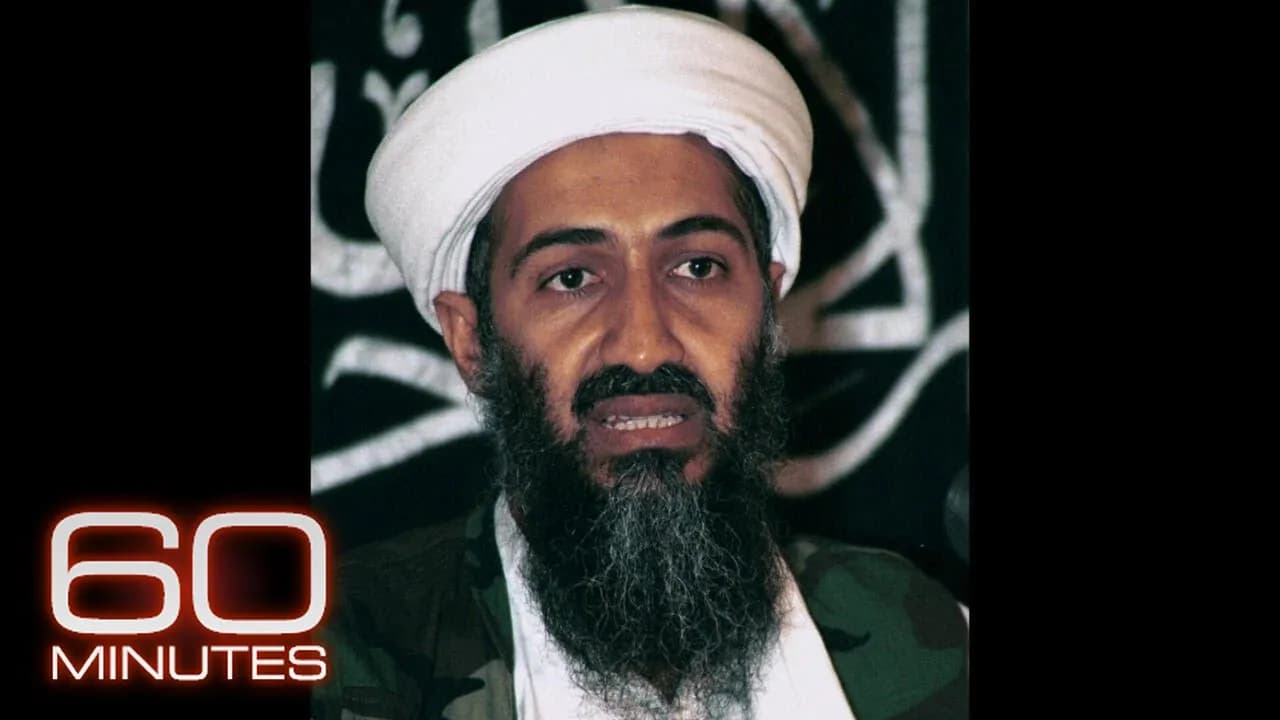
Mark Owen recalled that Bin Laden looked younger than expected, with a dark black beard rather than the gray one seen in previous photos. Bin Laden stood approximately 6'4" tall, making him notably tall. Owen identified him by his nose profile and overall appearance but was not willing to make the definitive call at that point. The SEALs suspected the president was listening at the White House and wanted proof before announcing anything on the radio.
A SEAL who spoke Arabic moved to the women and children and grabbed one of the younger kids. When asked who was inside, the child replied "Osama." When asked "Osama, who?" the child said "Osama bin Laden." The SEAL then grabbed one of the females who also confirmed it was "Osama bin Laden." The commander was called upstairs to look at the body. After being told the women and children had confirmed the identity and that the man was tall, the commander said "Okay, I think that's him."
The commander used the code word "Geronimo" as he passed the message to Admiral McRaven, stating "For God and country, I pass Geronimo." The full message was "Geronimo E K I A," which stands for enemy killed in action. At this point, 20 minutes had passed with 10 minutes left on the schedule.
The SEALs wanted to collect DNA samples, take photographs, and create duplicate copies. They planned to take the body out, but if a helicopter got shot down on the way out, they wanted the other helicopter to have DNA and photos as evidence. One SEAL took blood and saliva samples while Owen took the photographs. He cleaned off Bin Laden's face using water from a camelback to make him as identifiable as possible, then used a sheet from the bed to wipe off the blood before taking photos.
Owen described the photos as pretty gruesome, noting there was a bullet wound in the head. The photos included face shots and profile views. Two SEALs took the body downstairs and zipped Bin Laden into a bag.
In the bedroom, Owen found an assault rifle and a pistol on a shelf. He addressed the question of why the point man took the shots, explaining that his team was engaged by enemy fire through the first door they went to. An AK was found next to Khed on the stairs. All the boxes were checked that indicated a guy sticking his head around the corner could very easily have a gun. Owen noted that you don't wait to get the AK or a grenade thrown down the hall or face a suicide vest.
Owen reflected that Bin Laden had taught many people to martyr themselves and had masterminded the 9/11 attacks, but in the end he wasn't even willing to pick up a gun and put up a fight. The SEALs found an assault rifle and pistol on a shelf in the bedroom, but Bin Laden didn't use them.
Back on the second floor, the SEALs grabbed computers, discs, flash drives, and videotapes—more intelligence than they could carry. They had brought bags with them but filled all the bags up. They found an old gym bag, dumped out whatever was in it, and used that. As they were running out, Owen saw one buddy with a bag of stuff in one hand and a computer terminal in the other.
The plan had been to be on the ground for 30 minutes, but they were running a few minutes late. It was after 1:30 a.m. People had woken up and were coming over to investigate. The neighbors had a lot of questions for the SEALs standing guard outside the wall. The interpreter told them there was a police operation going on and to go back to their homes.
The crashed helicopter needed to be blown up because it was a secret design loaded with secret gear. A message was passed to the explosives expert (the EOD man) to "prep it to blow." However, the EOD guy thought they meant to prep the house to blow. He was running around the first floor setting charges when someone clarified that it was the helicopter in the courtyard, not the house.
The remaining Blackhawk would return for half of the SEALs, while a CH-47 would pick up the rest. The Blackhawk landed first, and they ran through the field carrying the body in the body bag and loaded it onto the Blackhawk. While waiting for the CH-47, the timer on the charges was ticking down. The team leader got the commanding officer on the radio with the CH-47, telling it to do a go-around to the south. As the CH-47 was doing the go-around, the charge went off with a big explosion. The CH-47 came right back around, landed, the guys loaded on, and they were airborne.
The SEALs were on the ground about 38 minutes. During their escape, they noticed flashing red lights in the cockpit indicating they were about to run out of fuel. They were forced to land in Pakistan, where one of the CH-47s was waiting on the ground to refuel their Blackhawk.
When they radioed that they were back in Afghanistan, Owen felt a big sigh of relief and thought they might have actually pulled it off. Once they landed, everybody hugged, high-fived, and took a couple photos. They had their five-minute celebration, then it was back to work.
They loaded the body onto a pickup truck and brought it to a hanger where Vice Admiral McRaven was waiting. They unzipped the bag. Standing nearby was the CIA analyst who had spent years on Bin Laden's trail. When she saw the body, she started crying. Six hours later, President Obama announced the operation to the world. The SEALs watched the announcement live on TVs set up in the hanger, still in their camouflage uniforms.
When they landed back in the United States, Owen found the media coverage surreal. They got on a bus and were driven back to work. He was told he had a couple days off. He grabbed his keys, went and got his truck, hit the Taco Bell drive-thru for a couple tacos and a bean burrito, ate it in his car, and then drove home.
Days after returning from the raid, the squadron boarded an ancient C-130 transport plane for one more mission. The plane had been used in 1980 in the failed attempt to rescue American hostages in Iran. President Obama was making a speech at Fort Campbell, Kentucky, and met with the Bin Laden team privately. All of the men received a Silver Star for valor. When the president asked which ones had shot Osama bin Laden, they told him they wouldn't tell him.
Owen explained that pulling a trigger is easy—it's not about who that one person was, it's about the team, the helicopter pilots, and the intel folks that set up the whole operation. He wasn't worried about fellow SEALs being angry about the book, saying he'd had nothing but support from the guys who knew him.
Owen stated in the preface that if a reader is looking for secrets, this isn't their book. He wasn't talking secrets or tactics. The Pentagon was not happy about "No Easy Day," with spokesman George Little stating that Owen signed a secrecy agreement and should have submitted his book for editing. Owen insisted there was nothing in the book that compromised U.S. secrets or the safety of the SEALs.
The release of the book was timed to the anniversary of 9/11. Owen's worry was that it was a political season and he wanted to keep the book out of politics. He specifically chose September 11th to avoid the political implications.
The Bin Laden raid was Mark Owen's last. A few months later, he went to New York and saw ground zero for the first time. He described it as very emotional, saying it was like full circle and that he was ready to move on. He noted that his team played a small piece in avenging the nearly 3,000 people killed at the World Trade Center.
When word of the book came out, a cable news channel learned Mark Owen's real name. Owen intends to donate most of the profits from the book to charities that support families of fallen troops. He wanted it known that he thinks of what he's written as a public service to get the history straight and as a tribute to every Navy SEAL wherever they may be serving.
Keep 60 Minutes in your library
Save the videos and channels worth coming back to, and find them again in one place.