Insulin Expert: How To 'Drain' Your Liver of Fat (Do This!)
These notes were generated by AI and may contain inaccuracies.
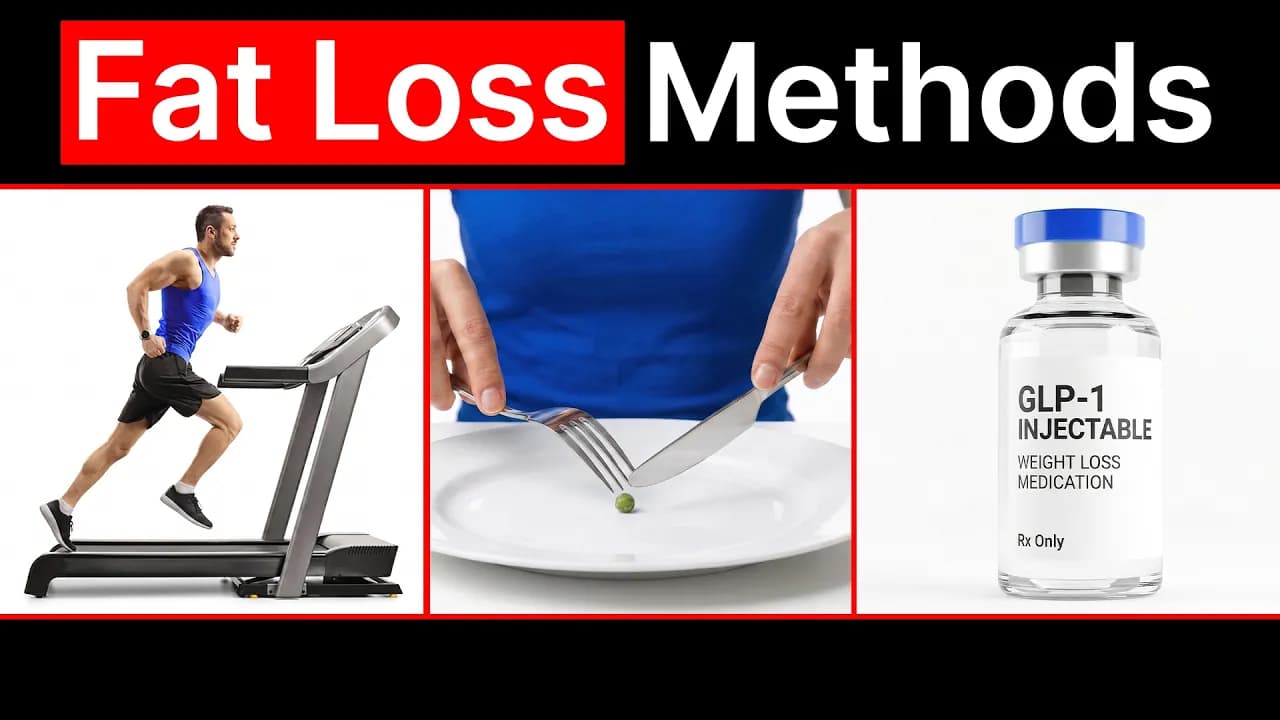
One of the problems with weight loss goals is saying you need to cut calories. Calories matter but are not the most relevant; evidence supports focusing elsewhere.
If someone is listening at home now and they have the goal of losing some weight, they want to be in a better physique, be more healthy. Is this conversation going to help them accomplish those goals? I'll make sure that they get what they need.
Dr. Benjamin Bickman, leading metabolic and fat cell scientist, exposes myths surrounding weight loss and the impact of insulin on weight, brain, and mental health.
Ketogenic Diet as Simplest Weight Loss Strategy
As a metabolic scientist, the most practical and simplest strategy is a ketogenic diet. Cutting carbs lowers insulin. Insulin is the one metabolic hormone to rule them all, directing every cell what to do with energy. Insulin directs calories to be stored in tissues like fat or liver.
to make you fat.
Ketones: Brain's Preferred Fuel and Mental Health Benefits
Ketones are the brain's preferred fuel, controlling anxiety, improving depression, enhancing attention. Benefits are extensive; companies sell exogenous ketone products.
And I have a bunch of different exogenous ketone products here, a variety of different brands... what the hell is this? If someone is interested in a good, smart way of losing weight, try that. This is definitely a prop. It tastes like bleach.
New Year's Health Plan for 2026
For 2026 health goals: structure indulgences smartly amid holiday temptations. Audience focused on sugar, carbs, insulin resistance.
Most Important Advice for Millions Entering 2026
North America shows seasonal rhythm: winter months more weight gain and insulin resistance, echoing hibernating bears. Now is when bad dietary decisions have worse consequences.
Structure your indulgences as smartly as you can. You know that you're going to be faced with foods that are delicious and dare I say addictive. Don't rely on your own intuition to guide you through eating... Give yourself a distinct period of time where you know you're going to indulge in these refined starches and sugars. And then, if necessary, recruit help. Have a family member... be my watchman... on that Monday remind me please be my helper to get back on track.
Constant carbohydrate consumption is hardest to control with disastrous consequences in refined forms.
Structure your indulgences, be mindful... recruit outside help because you will not be able to rely on your own intuition to pull you out of what might become the sort of carb-induced coma.
Listener Poll on 2026 Dietary Changes
Thousands of listeners: 1. keto, 2. cutting sugar, 3. weight loss, 4. fasting, 5. more protein, 6. whole foods, 7. low carb, 8. calorie control.
Thrilled calories at bottom; tide turning from 'eat less, exercise more' thermodynamic paradigm. Complexity of human body can't be reduced to calories in/out.
Thermic Effect of Food and Metabolism
Two isocaloric meals (same calories, same protein, differ in carbs/fats): low-carb higher-fat meal yields higher metabolic rate for hours due to insulin.
Metabolism is sum of every chemical reaction keeping us alive.
After eating, metabolic rate increases (thermic effect of food). Low-carb higher-fat boosts it more.
Insulin's Broad Control Over Energy
Insulin controls energy use in every cell (brain, bone, liver, lung). Not just blood glucose. Insulin slows metabolic rate to store energy.
Audience shifting to controlling macronutrients (carbs, fats) over calories; better metabolic science.
Conversation with Host's Brother
Host's older brother, middle-aged dad, wants long healthy life. Weight loss goal: shrink fat cells (not lose them).
Liposuction removes fat cells/mass but no health improvements (diabetes unchanged).
Calorie deprivation alone causes hunger; The Biggest Loser contestants regain weight.
Dr. David Ludwig's Study
Dr. David Ludwig (Harvard): two isocaloric meals; insulin-spiking meal lowers total energy availability (measured ketones/BHB, lactate, fats, glucose). Insulin directs energy to fat/liver storage.
Brain lacks storage but high metabolic rate; relies on blood glucose/ketones. High insulin lowers both, causing brain fog, hunger.
High-carb breakfast group hungrier sooner.
Mechanism of Post-Carb Hunger
High-sugar/carb meal spikes insulin, stores blood energy in fat/liver. Brain energy-deprived despite full fat cells → hunger in 1-2 hours.
Ketones from fat burning signal brain: no energy deprivation.
Strategy: Lower Insulin Before Calories
First step: lower insulin (not calories, which causes hunger). Impossible to gain fat without insulin (even with all hormones/calories).
Type 1 Diabetes Proves Insulin's Power
Untreated type 1 diabetes: skinny despite eating; polyuria (diabetes means 'much urine'; ancients thought flesh liquefied).
On insulin therapy: eat less, gain fat rapidly (10-15 lbs in hospital days; outgrow clothes).
Some abuse: underdose insulin to stay skinny despite sweets (disastrous consequences).
Practical Advice: Lower Insulin via Carbs
First step: lower insulin by controlling carbs (whole fruits/vegetables OK). Eat unlimited protein/fat (minimal insulin impact). Eat when hungry, not otherwise—no deprivation.
Host's brother: lost 15 lbs effortlessly following this.
Top comment: morbidly obese (280 lbs, pre-diabetic) → cut sugar/flour, 1800 cal high-protein/high-fat/low-carb → normal blood sugar in 68 days.
Not One Way to Lose Weight, But Keto Advantages
Plant-based diets can work short-term (100% carbs) but hard long-term. Calories matter.
Low-insulin advantages: higher metabolic rate; lab studies (petri dish, animals, human belly fat biopsies): ketones triple fat tissue metabolic rate in ketosis.
Ketones wasted (breathed/urinated out; caloric value like glucose) in low-insulin state.
What Are Ketones?
Ketones: body-made (liver), product of fat burning (ketogenesis requires low insulin).
Low insulin → lipolysis (fat cells break triglycerides) → fats to liver → ketones.
Fasting/low-carb → ketones in ~16 hours.
Ketones misunderstood; explosion of research on benefits.
During fasting, after insulin drops (about 16-24 hours after stopping eating), fat burning takes over. Fat cells break down fat, which travels to the liver. Subcutaneous fat (pinchable fat around organs) burns readily and goes quickly to the liver.
The liver acts as the 'soccer mom of nutrient metabolism,' handling lactate, glucose, fats, ketones. When receiving fat from fat cells with low insulin, the liver cannot store it and must burn it.
Fasting Reduces Liver Fat
In fasting (e.g., 2 days) or low-carb/ketogenic diet, liver won't store fat. Human studies show significant fatty liver disease (confirmed by ultrasound) reduced by ~60% in one week on ketogenic/low-carb diet (same calories as high-carb control), proving calories are relevant but not primary.
Liver burns more fat than needed for its energy, produces ketones to share with brain (which can't burn fat). Ketone = product of liver burning fat; high fat burning = ketone production.
Keto Diet Sustainability
Critics say keto unsustainable: applies to any diet (e.g., low-fat/calorie). 'Every diet works until you stop.' Keto works without hunger. Lifelong users for epilepsy/seizures since childhood, migraines.
Brain thrives on ketones. Evidence for improvements in schizophrenia, bipolar, depression, Alzheimer's, multiple sclerosis via ketogenic diet. Central nervous system loves ketones.
Viewer Testimonial
Shanti: 35 days keto (started Jan 2, 2025), <20g carbs/day, lost 8kg (17.5 lbs), feels best since teenager, another 15kg (37 lbs) to go, easy, loves food.
Keto Avoids Hunger
Most practical weight loss: fights hunger (hunger wins). No hunger = sustainable journey without dragging 'luggage' of cravings.
Anecdote: After weeks low-carb/keto, saw cinnamon rolls—no emotional urge, mouth didn't water, felt nothing (indifference).
Ketones Help Eating Disorders
Ketogenic diet aids eating disorders (published case studies). Brain nourished by stable ketones reaches indifference to harmful foods.
Keto: stable ketones/glucose, avoids glucose highs (glycation damages proteins/fats) and lows (rollercoaster abuse). Brain gets consistent energy, resists cravings: 'No, we don't need that. We're fine.'
Heart #2 tissue thriving on ketones (after brain). Refer to Gary Lopas (Univ. Alberta, Edmonton) and others: heart failure shifts to ketones for better function.
Recent Paper on L-BHB
Beta-hydroxybutyrate (BHB) has D- and L- forms (mirror images). Heart failure: heart uses D-BHB. Pig model (close to human): infusing L-BHB increased ejection fraction 40%—not harder heart work, but great vessels (aorta) expanded via nitric oxide vasodilation, lowering pressure.
Heart failure patients should test ketones.
Personal Blood Pressure Anecdote
Speaker: High anxiety, poor sleep, BP 139/90 at dentist (unusual). Continued high. Took L-BHB (few grams, 2025 paper), 1 hour later 110/70. Vessels expanded, lower pressure (N=1, anecdotal).
Endogenous ketogenesis (liver-made) vs. exogenous (drinkable, bypassing strict keto diet). Forms:
- Straight BHB (D- or L-): salts (Na, Ca, K) or free acid.
- Ketone IQ: 1,3-butanediol (liver converts to BHB).
- Esters: BHB + 1,3-butanediol, enzyme-broken bond.
Measuring Ketones
Blood ketone meters (finger prick, like glucose). Continuous ketone monitors (Europe/UK, e.g., SiBio from Germany—straps on, phone app; not FDA-approved in US).
Host has ~100 ketone products, pricks daily.
Demo: Ketone IQ Shot
Host (affiliated investor) takes Ketone IQ (1,3-butanediol, 'kick' like alcohol shot). Baseline blood ketones: 0.3 mmol/L.
Liver absorbs, converts to BHB, releases to blood.
After ~10 min: 0.5 mmol/L; ~20 min: 0.8 mmol/L (climbing). Ketosis: technically ≥0.5, speaker says ≥0.3 (detectable).
BHB in blood: fuel for any cell with mitochondria (all but RBCs). No insulin needed (unlike glucose). Enters freely.
Also signaling molecule (hormone-like): binds receptors, e.g., L-BHB boosts nitric oxide, vasodilates (better than Cialis for blood flow/gym/ED, fewer sides).
Women ≠ small men (hormone differences). Follicular phase (post-menses, rising estrogen, follicles maturing): women fat-burning machines—higher free fatty acids (40-50% > men), faster ketosis/fat burn vs. men.
Luteal phase (post-ovulation, corpus luteum, high progesterone): progesterone = hunger hormone, higher cravings.
Women enter ketosis faster in follicular phase (studies: fasting, female > male).
During the luteal phase after ovulation, women may find it harder to stick to a ketogenic diet due to higher cravings and hunger, making fasting protocols more difficult. Be generous with yourself during this phase.
Some concerns about ketogenic diets in women, particularly cortisol, are misplaced. Dr. Isabella Cooper (UK scientist) published studies: healthy women on long-term keto switched to high-carb UK guidelines (55% carbs) for 21 days, then back to keto for 21 days. Blood tests showed no statistically significant changes in cortisol levels—just noise, no trend (some up, some down, flat line overall).
That takes a lot of wind out of the sails of people who say that a ketogenic diet is a unique stress on women.
Keto is not uniquely stressful for women via cortisol (overblown view despite sex differences).
Dr. Ben shares his routine as a busy metabolic scientist (adapt for your constraints; not for everyone).
Meals: Low-Carb Breakfast/Lunch, Carbs at Dinner
- Zero to little carbs for breakfast and lunch (strict until dinner).
- Morning glucose naturally rises with mild insulin resistance due to cortisol/hormones—avoid adding starchy/sugary foods.
- Protein and fat as much as desired (little/no insulin effect; fat none, protein modest).
- Lunch: biggest meal (helps taper evening cravings).
Sample Breakfast and Routine
- Dr. Ben skips breakfast (not hungry; extends fast).
- Makes breakfast for kids (family ritual: eat together, scriptures, prayer, review day—raised with 9 siblings this way).
- Sips yerba mate (brand: Una Mate; South American tea leaf; GLP-1 effect for satiety; habit, pick-me-up, no coffee).
Workout and Daily Structure
- Early: 5:00 a.m. ruck (weighted vest + 15lb kettlebells; 1 mile up/down hill).
- Personal reflection/meditation.
- Family breakfast (yerba mate).
- 10:30-11:00 a.m.: resistance training (brief, effective; bodyweight; fasted for metabolic focus/longevity, not performance).
- Fasted exercise burns fat, maintains insulin sensitivity (fed for performance goals like athletes).
- Post-workout: sauna 12-15 min.
- Morning ice bath (Morozko Forge; helps sleep, resets clock esp. winter dark mornings).
- Big protein/fat lunch after.
Ice Bath Benefits
Morning ice bath improves evening sleep (jolts body clock; he's a poor sleeper).
Ketone Monitoring Demo
- At 0.9 mmol/L BHB (ketones) ~30 min after ketone shot (precursor converted by liver).
- Brain/heart use ketones (↓ glucose reliance); anxiolytic, improves depression, attention, memory, cognition.
- Promising for dementia; exciting NIH/NSF-funded ketone research era.
Dinner and Evening
- Dinner (5-6 p.m.): family social meal, carbs OK (whatever family eats: pizza, pasta, or meat/veggies; avoids modeling disorders).
- Stop eating early; #1 tip: no evening snacking (weakest time; cookies tempting 7-8 p.m.).
- Evening carbs → bedtime hypoglycemia → activates sympathetic nervous system (fight/flight: ↑HR, temp; opposes parasympathetic for sleep).
Additional Tips for 2026 Goals
- Exogenous ketones (BHB): ease keto transition, retain lean mass during weight loss (recent lab paper confirms in humans).
- Non-physical: read more books (ketones fuel brain; challenge vs. dementia; learn new things).
Mrs. L (LinkedIn): Husband tried keto, unconscious after 8 hours—diagnosed insulinoma (neuroendocrine cancer, insulin-secreting pancreas tumor). Paramedics gave glucose. He's recovered, volunteers 50+ hrs/week, 3 kids.
- Shares thoughtfully: keto not for everyone; nuance, growth mindset.
Insulinoma Explanation
- Tumor of beta cells → constant high insulin.
- Low-carb → severe hypoglycemia (drives glucose/ketones low; deprives brain fuels).
- Test: fast 12-24 hrs, monitor glucose (normal stays stable; insulinoma drops).
- Diagnosis: radiolabeled glucose PET scan (cancer glucose-avid → lights up tumor).
Cancers rely on glucose/glutamine (Warburg effect; revived by Dr. Thomas Seyfried).
- Deprive fuel → chemo more effective.
- Dr. Ben's keto motivation: mom died of cancer (boyhood); ↑ risk via family history; starves budding cells (outlived mom).
- BBC called Seyfried episode misinformation (unfortunate; he's world-leading on cancer metabolism).
Thrilled to see what Dr. Thomas Seyfried had done at a convention, disrupting conventional views on cancer. Cancer rates and mortality continue to climb, showing old views aren't working.
- Traditional view: Cancer is a disease of nuclear mutations (genes in the nucleus, the 'brain' of the cell).
- Experiment: Took nucleus from cancer cell, inserted into healthy cell → resulted in a totally normal cell. Nuclear mutations didn't cause cancer.
- Reverse: Took mitochondria (energy factory, disrupted in cancer) from cancer cell, inserted into normal cell → turned it into a cancer cell.
This proves cancer is a mitochondrial problem more than a nuclear one, adding evidence that cancer is a metabolic problem.
When publications like BBC attack guests for claiming cancer is metabolic or for hosting them, calling it misinformation or dangerous:
- Discouraging; echoes pandemic-era suppression where science inconveniences institutions.
- Scientists compromise for funding and adoration.
- Science is the pursuit of truth.
PhD dissertation story with advisor Lionus Dome (on fat and insulin resistance):
When data didn't support hypothesis: "Ben, don't be upset. That's truth. We are seekers of truth."
- Glorious to get paid to seek truth.
- Dr. Seyfried states peer-reviewed findings; should have every platform.
- Scientists must be humble, ready to dump hypotheses if wrong.
"Believe the science" is anti-scientific.
- Important to platform ideas for scrutiny, especially in cancer where current approaches fail.
- Broader opposition to low-carb views; mentioning ketones provokes dogmatic dieticians.
- More education can rigidify ideas; scientists should remain humble.
BBC journalist contacted about story on misinformation from guests:
- Focused on 0.001% of total recorded hours/transcripts they disputed.
- Wrote big breaking news story anyway.
- Host replied highlighting the 0.001% → BBC removed response as it was too damaging.
Another guest BBC criticized: BBC had hosted them too, without rebuttal, while host read out rebuttals (e.g., British Heart Foundation).
That was the day I understood how the system works; peeked behind the curtain.
- BBC seen as rigorous/big brand, but not.
- Becoming disruptive as embodiment of new media.
- Platforms threaten traditional media; in US, tied to drug ad revenue (less in UK).
Strategy: Distinguish signal from noise; focus on mission to provide great info for health, fitness, business, etc.
- takeaway: Provide more context in science discussions.
- New feature: On-screen studies/pop-ups during conversations (first in podcasting).
- Links in descriptions.
- Every cloud has a silver lining; iterate to do better.
Daily protocol covers most; common goal: weight loss.
- Exogenous ketones: Advocate.
- Omega-3: If gaining muscle via resistance training and not eating fish, supplement; aids muscle building (not just heart health).
Rancher anecdote on livestock:
- Normal feed: 6 lbs feed → 1 lb growth.
- With B vitamin complexes: Down to 3 lbs feed → 1 lb, up to 2 lbs feed → 1 lb (tripled efficiency for fat gain).
Concern: Obesity epidemic partly due to excess B vitamins (especially B complexes).
- People take for 'efficient metabolism', but for weight loss, want inefficiency.
Engine analogy:
-
Efficient: In drive, RPMs up → moving/work done.
-
Inefficient (better for loss): RPMs up in neutral → burning fuel, no work.
-
B vitamins make mitochondria/cells too efficient → store more energy/fat vs. wasting/burning.
-
Human studies: High-dose niacin (B vitamin) → weight gain.
-
Food fortified (e.g., flour); overload with processed carbs.
-
Unlikely from steak/eggs.
Ozempic pen shown.
GLP-1 primarily satiety hormone:
- Signals brain 'done eating'.
- Slows intestines (normal: 4-6 hrs stomach; on drug: 24 hrs) → Ozempic burps (belching gas).
- Reduces appetite, especially carbs/sweets.
2-year study:
- 6 months: Sweet cravings drop significantly.
- 12 months: Still reduced.
- 24 months: Back to baseline.
Diminishing returns: Body adapts (like antibiotic resistance).
- ~70% stop at 2 years (tired of constant nausea).
- Another 2-year study: Of weight lost, 60% fat, 40% fat-free mass (muscle, bone, water).
- Risk: Fat returns post-drug, lean mass doesn't (e.g., 60yo woman).
Recommendations:
- Not for standalone weight loss (lose lean mass).
- Best: Micro-dose (low dose), cycle on/off (e.g., 90 days on + low-carb coaching → wean off; habits stick).
- Cures carb addiction/cravings.
- If cravings return, cycle again.
- Upcoming report (insulinIQ.com): Clinic in Idaho used low-dose cycled GLP-1 + low-carb counseling → better fat loss, muscle retention vs. drug alone (2-3 years data).
- Low-carb counseling: Coaching like this conversation.
AI tool for speaking ideas → synthesizes/grammatically corrects/writes (4x faster than typing). Investor/sponsor.
Game-changer for 35-40% of team (focus, energy, productivity). Co-owner/sponsor. ketone.com/stephven (30% off, free gift 2nd shipment). At Target (1st shot free).
White powder prop labeled allulose (sweetener, ~less sweet than sugar):
- Tastes like bleach/cleaning product → actually baking powder.
Allulose is a rare sugar that exists in nature, tastes sweet, is non-metabolizable, and provides no calories. It travels further in the intestines, eliciting a significant increase in GLP-1 production. For those on GLP-1 drugs seeking an exit due to cost, side effects like nausea, or misery, using allulose as a sweetener in coffee, tea, baking, or yerba mate can naturally increase GLP-1. Published reports confirm yerba mate with allulose works. Allulose is added to foods like some yogurts and supplements; it's a good sweetener to encourage.
Collagen peptides increase GLP-1 and are recommended for smart weight loss. A recent paper found a mix of collagen and amino acids enhances skin integrity and collagen in skin. Other supplements: goBHB (exogenous ketone), collagen (brand: iron feather), omega-3, and habits like yerba mate.
Creatine Benefits for Muscle and Brain
Creatine creates a pool of creatine phosphate for rapid ATP recycling: ATP (triphosphate) splits to ADP (diphosphate) during muscle/nerve contraction; creatine phosphate donates phosphate to regenerate ATP, allowing quicker energy restoration.
- Enables more work from muscle in less time (shorter rests in 30-min workouts).
- Brain: increases brain energy; human studies show improved cognition in cognitive decline/early dementia over weeks.
- Doses: 5g creatine monohydrate for muscle; 10-15g to saturate brain.
Creatine for Sleep Deprivation and Cognition
Human study: sleep-deprived people on creatine performed better on cognitive tests vs. placebo. Take creatine when jetlagged/underslept. Women should prioritize for cognition, especially middle-aged+, as Alzheimer's affects women 2-3x more than men; use higher doses for brain.
Creatine increases strength by up to 10%, power output by up to 15%, reduces muscle damage by 20-40% after intense exercise.
Creatine energizes muscle, changes gene transcription, stimulates myogenic genes for muscle protein synthesis/growth. Women won't get "big" due to sex hormones; they'll gain healthy strong muscles.
Creatine for Vegetarians/Vegans and Safety
Vegetarians/vegans need more creatine as it's from red meat; supplement if not eating red meat. No impact on blood sugar levels/spikes (unless maltodextrin in powder). High creatinine (creatine metabolite) in kidneys/urine is normal from supplementation, not damage; kidneys excrete it.
- 5-year study: zero kidney changes in athletes taking up to 20g/day. No evidence of kidney damage; high creatinine is an artifact.
Have a reason beyond self (e.g., kids) for change; internal motivations (feel/look better) may not suffice—external like living for child.
- Control cravings/addictions: change one simple habit (e.g., stop evening alcohol).
- Diet: eat a big lunch.
- Small changes interconnect: cutting alcohol improves sleep (falls asleep faster but sleeps worse otherwise), lowers cortisol, reduces insulin resistance, curbs cravings, less fat storage per calorie.
Stress, Sleep, and Insulin Resistance
Sleep deprivation (leading cause of stress) causes fast insulin resistance (hours). Stress hard to reduce directly; use adaptogens like ashwagandha (gummies for therapeutic dose, improve sleep latency/architecture, suppress cortisol). Avoid eating before bed to prevent hypoglycemia.
Ketones (BHB) are anxiolytic: reduce anxiety/stress hormone signaling in brain.
Testosterone and Andropause
Check testosterone levels if tired/gaining weight; men have andropause (steady decline). Lose weight to boost; supplements before TRT. Ice baths/cold plunge + workout doubled testosterone in some.
- Insulin: not at-home easily (cumbersome); doctor visit. Fasted <7 μU/mL ideal. With glucose, compute HOMA score for insulin resistance.
- Testosterone: mail-order kits (e.g., Blok and Joy; phlebotomy kit or finger-prick device shipped back).
- CGM (continuous glucose monitor, $20-30, 14 days on arm): highly recommended—see real-time glucose on phone, motivates changes (e.g., test ketchup, Coke Zero, cheese, bananas). Stack with Whoop/HRV: link stress to glucose spikes/hypoglycemia for better sleep.
Policy change: add insulin to standard blood panels (glucose/lipids).
If anything forever (not family): scriptures (holy scriptures read daily) for happiness via religious conviction, faith in higher power/God. Faith underlies all actions.
Purpose of life: Show heavenly father capability of more; premortal existence, mortal bodies test power over life/death/temptations/addictions. Like father hoping kids become wonderful parents, pattern after examples.
The speaker believes we have a heavenly father and heavenly mother—divine parents who want nothing more than for their children to grow up and be like them.
Analogy to Raising Children
I think this is just like my children will have to leave the home. If I coddled them and protected them and only let them stay in my home, they'd never learn anything. They'd never grow up because mom and dad are doing everything.
Mortal life is our divine parents' opportunity to help us grow up. The time will come to pass on and return to them, hopefully showing we are ready to continue learning, progressing, and becoming more like them.
To what end? For what reason?
To mimic what our heavenly parents have been able to do where they have been able to create a world and populate it with their spirit children. I want to do that too.
Personal Longing for Eternal Family
Before recording, the speaker joked about missing babies desperately—it's an ache in his soul that his children are no longer little cuddly babies, though they are still darling. To him, heaven means he and his wife, whom he loves, having a family that never ends, giving life to a countless number of future children who will someday be born on a world just like them. This is a cosmic, grand view.
The purpose of life is to show Heavenly Father that we are worthy of more and not just end into a nihilistic blackness when we die.
Thank you. We're done.
My pleasure.
If there's anything we need, it is connection, especially in today's world. That's why they created conversation cards.
On the show, deep, intimate conversations with guests create deep connection. At the end of every episode, the guest leaves a question for the next guest, and they've turned them into these conversation cards.
Added twist cards to make conversations even more interesting, with many more twists along the way.
This is the brand new edition. For the first time, added a gold card—an exclusive question from the host—but only in the first run of conversation cards (limited edition gold cards).
Head to the link in the description below to get yours now before the limited edition gold cards are all gone.
Keep The Diary Of A CEO in your library
Save the videos and channels worth coming back to, and find them again in one place.