Lower Blood Pressure NATURALLY Doctor Explains
In a Nutshell
Lowering blood pressure requires cutting sodium below 1,500 mg daily, eating potassium-rich foods, and doing isometric exercises like wall squats or planks that can drop systolic pressure by up to 8 points. Losing 10 lbs, halving alcohol intake, and getting 6-7 hours of sleep each provide additional 4-5 point reductions. The evidence shows these lifestyle changes work—Finland cut population blood pressure over 10 points and heart deaths by 75%—but medication remains the right step if numbers stay high.
These notes were generated by AI and may contain inaccuracies.
Right now, your blood pressure could be damaging your arteries and you would feel absolutely nothing. No pain, no warning, no sign at all. That's what makes it dangerous. And that's why 90% of us will develop high blood pressure at some point in our lives. Most of us without ever seeing it coming.
For blood to move from the heart to the rest of your body, it needs to push against the wall of your blood vessels all the time. Just like water in a hose, but that pressure is constantly changing. When your heart contracts, the blood pumps out and your blood pressure rises. That's the top number called systolic. Think of it as the pressure during the squeeze. It's the one that matters most for heart disease risk. When your heart relaxes between beats, the pressure drops. That's the bottom number called diastolic, the pressure during the rest.
Regardless of the cause, high blood pressure over time is extremely dangerous because it can damage your blood vessels. In fact, high blood pressure is the single biggest risk factor for heart disease and stroke behind roughly one in five cardiovascular events worldwide and an even bigger share of strokes.
Diet plays a big role in your blood pressure. There's one particular diet that's proven to lower your blood pressure by an impressive five to six points on your top number: the DASH diet, which is basically what most people think of as a healthy diet. Eat more whole foods and lean proteins, and eat less salt and processed foods.
One of the important recommendations on the DASH diet is to lower your sodium intake. If your blood pressure is high and you want to fix it naturally, you need to lower your sodium intake to less than 1500 milligrams a day. That's roughly less than 3/4 of a teaspoon a day.
A common mistake a lot of people make when they are trying to focus on decreasing their salt intake is focusing on the salt shaker. But believe it or not, around 70% of your salt intake comes from processed foods and eating out, not from added salt.
Finland did something different. Starting in the 1970s, they didn't just ask people to eat less salt. They worked with food companies to cut it from processed foods. And in 1993, they required warning labels on high salt foods. Over the next few decades, salt intake dropped by about a third and average blood pressure fell by more than 10 points. Deaths from heart attacks and strokes in people under 65 dropped by about 75% or more. Now, salt wasn't the only thing that changed. Finland was also tackling cholesterol and smoking at the same time. So, salt doesn't get all the credit, but lower blood pressure was a big part of the story, and that's the part you can use.
It wasn't just sodium reduction Finland focused on. They also promoted foods high in potassium, which is really important. Think of potassium like the antidote to sodium. Sodium stiffens your blood vessels and tells your kidneys to hold on to water, both of which push your blood pressure up. Potassium relaxes your blood vessels and helps your kidneys flush out excess sodium, which brings blood pressure down.
Studies show that getting more potassium can lower your top number by about four to five points on average and by about as much as seven points or so if you have high blood pressure and eat a lot of salt. But loading up on potassium isn't for everyone. If you have kidney problems or if you're taking medications that cause you to hold on to potassium, this may not be the strategy for you. So talk with your doctor before you load up on potassium.
Diet is half the equation. Up until recently, it seemed like cardio was the best way to lower your blood pressure. But emerging research is showing that other types of training may be even more effective.
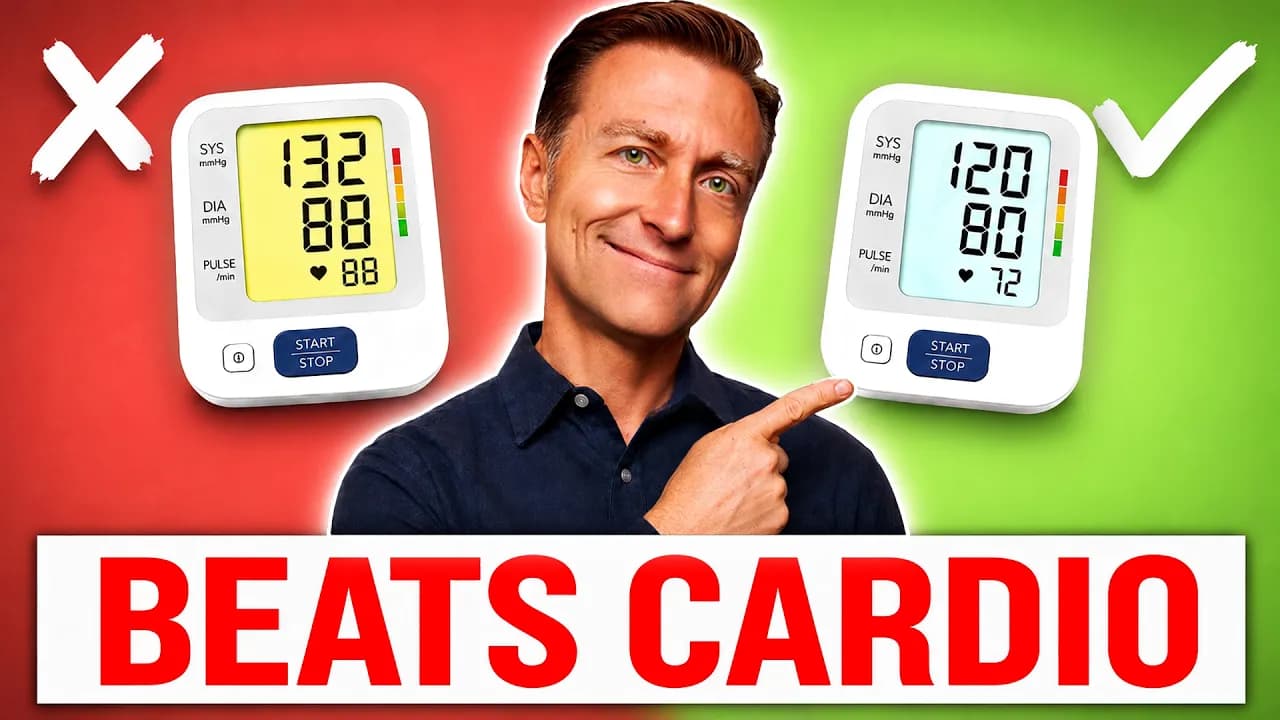
In a meta-analysis published in the British Journal of Sports Medicine in 2023, they looked at 270 different trials to try and figure out which exercises were the most effective at lowering blood pressure naturally. And the clear winner was isometric exercises - exercises where you squeeze or hold still instead of moving. Things like wall squats or planks which lower the systolic blood pressure up to eight points.
If doing planks and wall sits don't appeal to you, this study also showed that any type of exercise will do and help you lower your blood pressure. High intensity, low intensity, cardio, strength training, it all makes a difference. So, find what works for you. Just remember, channel surfing doesn't count as exercise!
If you're following the DASH diet and you're exercising regularly, there's a good chance you're going to lose some weight, which is a great thing because weight loss is another powerful tool. For every kilogram, about 2.2 lbs, of weight you lose, your blood pressure typically drops by about one point. That means losing just 10 lbs could take four to five points off your top number. Stack that up with the diet and exercise changes and you're already moving multiple levers at once.
Alcohol is a bit of a sneaky one. It might make you feel a bit more relaxed, but it actually raises your blood pressure. In a review of 36 trials, people who drank six or more drinks a day and cut back by about half saw their top number fall by about 5 1/2 points. And that change can happen within 2 to 4 weeks of cutting back.
The 2025 blood pressure guidelines go further than the older advice. Ideally, avoid alcohol. If you do drink, limit it to no more than two drinks a day for men and one a day for women. One safety note: If you drink heavily, don't stop suddenly on your own. That can be very dangerous, so talk with your doctor first.
Getting less than 6 to 7 hours of sleep a night has been shown to increase the risk of high blood pressure. If you sleep the entire night and still feel exhausted the next day, this can be a sign of obstructive sleep apnea, a condition where your breathing starts and stops throughout the night, and it's actually one of the major causes of blood pressure that won't come down even on several medications.
If you're already tired during the day, even after getting a lot of sleep, or if your partner tells you that you're choking, gasping, or snoring really loudly at night, those would be the reasons to talk with your doctor about getting tested.
In a small study published in the journal Hypertension, people with high blood pressure who adopted a dog or a cat had much smaller blood pressure spikes when they were stressed. The medication was still doing a lot of the heavy lifting with resting blood pressure, but a pet seemed to genuinely help with the stress response.
Overall, short bursts of stress do spike your blood pressure temporarily, but chronic stress, the kind that never lets up, doesn't have as direct an effect on blood pressure as most people assume. The bigger issue is what we do to cope with it. Eating worse, drinking more, smoking - those behaviors are what drive blood pressure up over time. So managing stress matters, but it matters most because of the choices it leads to. Mindfulness, exercise, and social connections, all of these help with coping, not just the feeling.
In the SPRINT trial, researchers tested how low is low enough. They followed adults aged 50 and older who had high blood pressure and a higher risk of heart disease, but not diabetes or a previous stroke. Doctors treated one group to get the top number below 120 and the other group below 140.
The lower target group had about 25% fewer serious cardiovascular events, heart attacks, strokes, heart failure, or dying from heart disease. They also had about 27% fewer deaths from any cause. But there were trade-offs. The group whose goal was less than 120 had more low blood pressure, fainting, and kidney problems from the treatment.
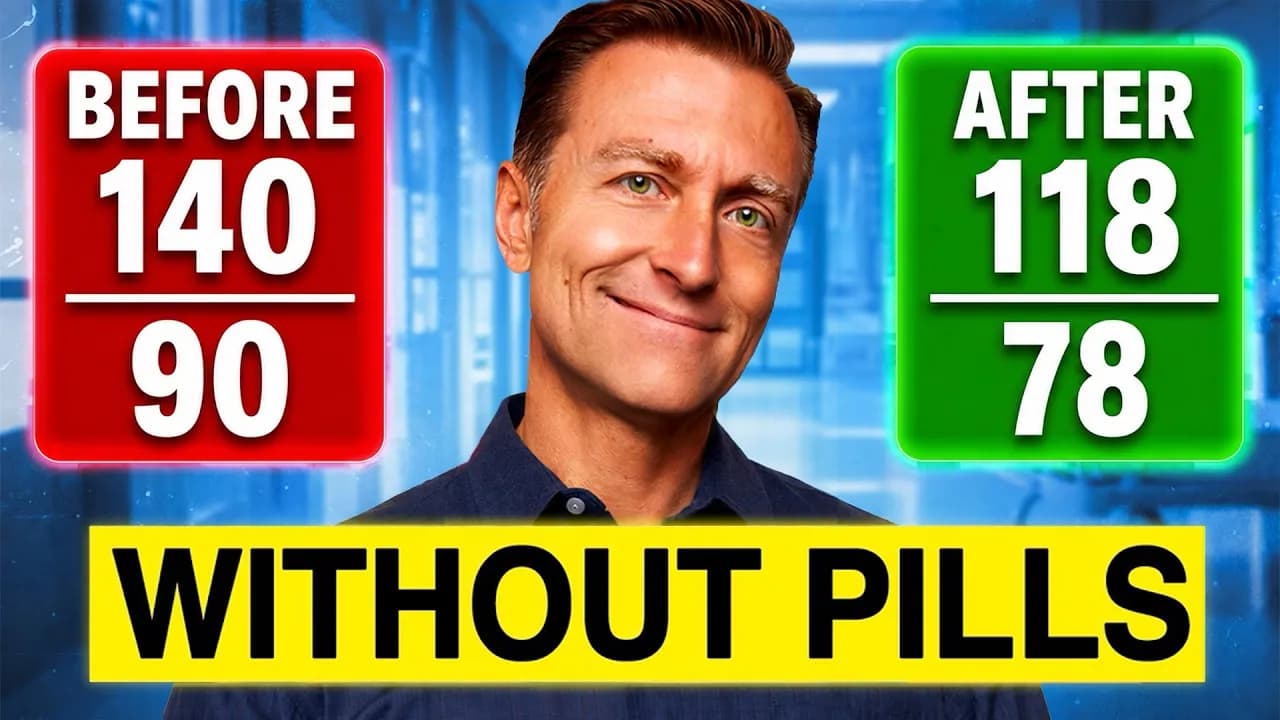
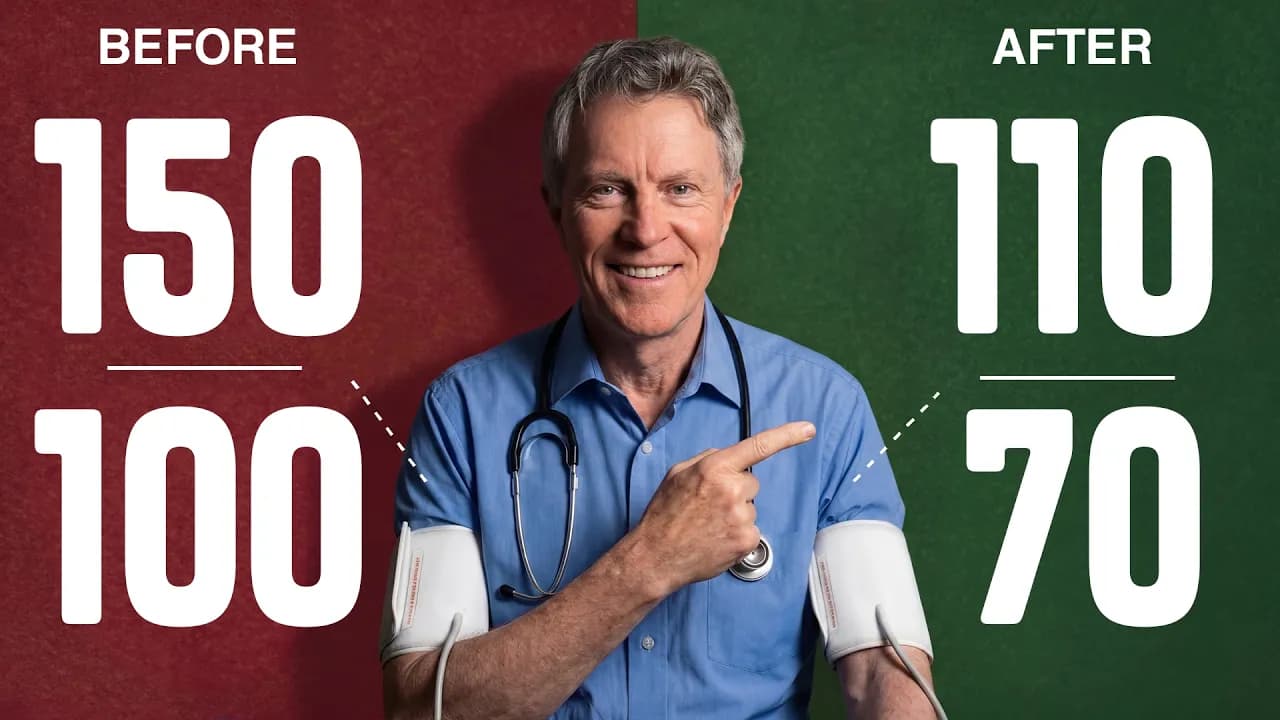
It's one reason the guidelines moved the cutoff from 140 over 90 to 130 over 80. And it's why your target blood pressure is a conversation you need to have with your doctor, not a video.
Your blood pressure is changeable. Not just with medications, with choices. The Finland study showed it at a population level. The SPRINT trial showed that getting the number lower actually saves lives. And the isometric exercise finding showed that the strategies that work aren't always what you'd expect.
You don't have to do all seven of these things at once. Pick one tonight. Check the sodium on something in your pantry. Do a 2-minute wall squat. Take a walk after dinner. Small things stack up. And even if you do everything right and your blood pressure stays high, that's not failure. That's when the conversation with your doctor about medication becomes the next correct step.
Keep Kabir Harricharan Singh, MD in your library
Save the videos and channels worth coming back to, and find them again in one place.