New Study Proves Vitamin K2 Slows Heart Disease (Really?)
In a Nutshell
The study found that vitamin K2 plus D3 slowed coronary calcium progression in patients with high calcium scores, but the critical plaque analysis only covered 143 of 398 participants, leaving more than half unanalyzed. The study did not distinguish between regular non-calcified plaque and the dangerous low-density non-calcified plaque, and showed no reduction in soft plaque volume despite slower calcification. Lifestyle factors remain more important than supplementation, though vitamin K2 may still offer modest benefits.
These notes were generated by AI and may contain inaccuracies.
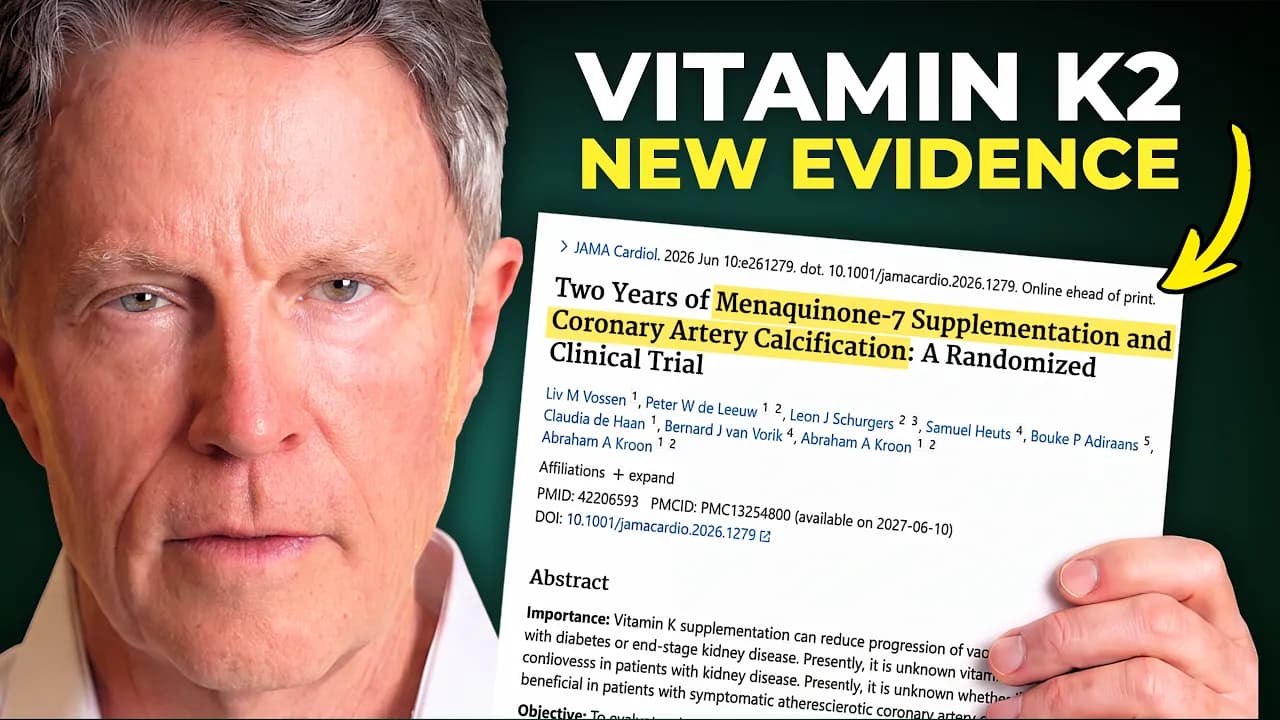
A recent study published in Circulation examined vitamin K2 and its effects on coronary artery calcification. The study used a double-blind, placebo-controlled, randomized trial design with 400 participants who had calcium scores of 400 or more. Participants were assigned to receive either vitamin K2 at 720 micrograms plus vitamin D3 at 25 micrograms, or placebo. The trial duration was approximately one year, with non-contrast CT scans performed at baseline and follow-up to measure calcium score changes.
A subset of participants with calcium scores less than 1000 underwent CT angiography with contrast dye for detailed plaque composition analysis. This subset included 143 participants out of the original 400. The study specifically measured progression of calcium scores and changes in non-calcified plaque volume.
The study concluded that among patients with severe coronary arterial calcification, supplementation with vitamin K2 and vitamin D3 reduced the progression of calcium scores over 24 months. Importantly, this reduction in calcification progression was not associated with an increase in non-calcified plaque volume.
This finding addresses a previous concern raised by the VitK trial, where some theorized that slower calcification might lead to increased soft plaque formation. The current study suggests this is not occurring.
The study was conducted by the same research group responsible for the Aortic Valve Decalcification (DANCODE) study. A significant limitation identified is that only 143 of 398 participants underwent the detailed plaque analysis via CT angiography. The selection criteria for this subset were based on image quality and baseline calcium score less than 1000.
This means more than half the participants (255 individuals) did not receive the detailed plaque analysis. The concern is that if a significant number of these 255 participants experienced worsening plaque, the overall study conclusions would be different.
The analysis identified three distinct types of plaque visible on imaging reports: calcified plaque, non-calcified plaque, and low-density non-calcified plaque. The study did not specifically distinguish between general non-calcified plaque and low-density non-calcified plaque, which represents the soft, dangerous, inflamed plaque that confers the greatest cardiovascular risk.
A key debate emerged regarding whether the study findings actually demonstrate clinical benefit. If non-calcified plaque levels remained stable (neither increased nor decreased) while calcification slowed, this raises questions about whether vitamin K2 provides meaningful clinical benefit beyond simply slowing the natural progression of plaque calcification.
The discussion acknowledged that non-calcified plaque is often equated with soft plaque in research literature, though this equivalence may not be entirely accurate since low-attenuation plaque represents the truly dangerous soft plaque category.
The question remains whether slowing calcification progression without reducing soft plaque volume represents a meaningful clinical benefit. If the natural progression of plaque involves soft plaque eventually becoming calcified, then preventing calcification might theoretically stall the entire plaque development process.
However, this interpretation doesn't align with the observed facts, as the study showed no compensatory increase in calcification that would be expected if the process were merely being delayed.
The discussion concluded that vitamin K2 cannot overcome the effects of a poor diet, and lifestyle factors remain more important than any supplement. Evidence suggests vitamin K2 may improve insulin resistance and support arterial wall health, but lifestyle interventions have greater impact than supplements.
The recommendation is to continue using vitamin K2, as current evidence is insufficient to disprove its benefits. However, lifestyle factors including diet, exercise, and sleep should take priority over any supplementation strategy.
Keep Dr. Ford Brewer MD MPH in your library
Save the videos and channels worth coming back to, and find them again in one place.