This Changes Everything About Vitamin K2 & Clogged Arteries (New Study)
In a Nutshell
A 2-year study found that 360 mcg daily of vitamin K2 (MK7) slowed arterial calcium buildup by about 30% in people with existing heart disease, though it did not stop or reverse it. Vitamin K2 works best as a metabolic add-on that improves insulin sensitivity and reduces inflammation, not as a standalone fix or a way to chase lower calcium scores. The real driver of risk is lifestyle: diet, exercise, sleep, and metabolic health determine whether calcification is dangerous and unstable or protective and stabilizing.
These notes were generated by AI and may contain inaccuracies.
If you're in your 60s or 70s, and even some people in their 50s, plaque and calcium are almost certainly building inside your arteries right now. This buildup doesn't announce itself. You don't feel it. It builds quietly for years. The dangerous kind, the plaque without calcium, can rupture without warning. That's the heart attack that nobody saw coming.
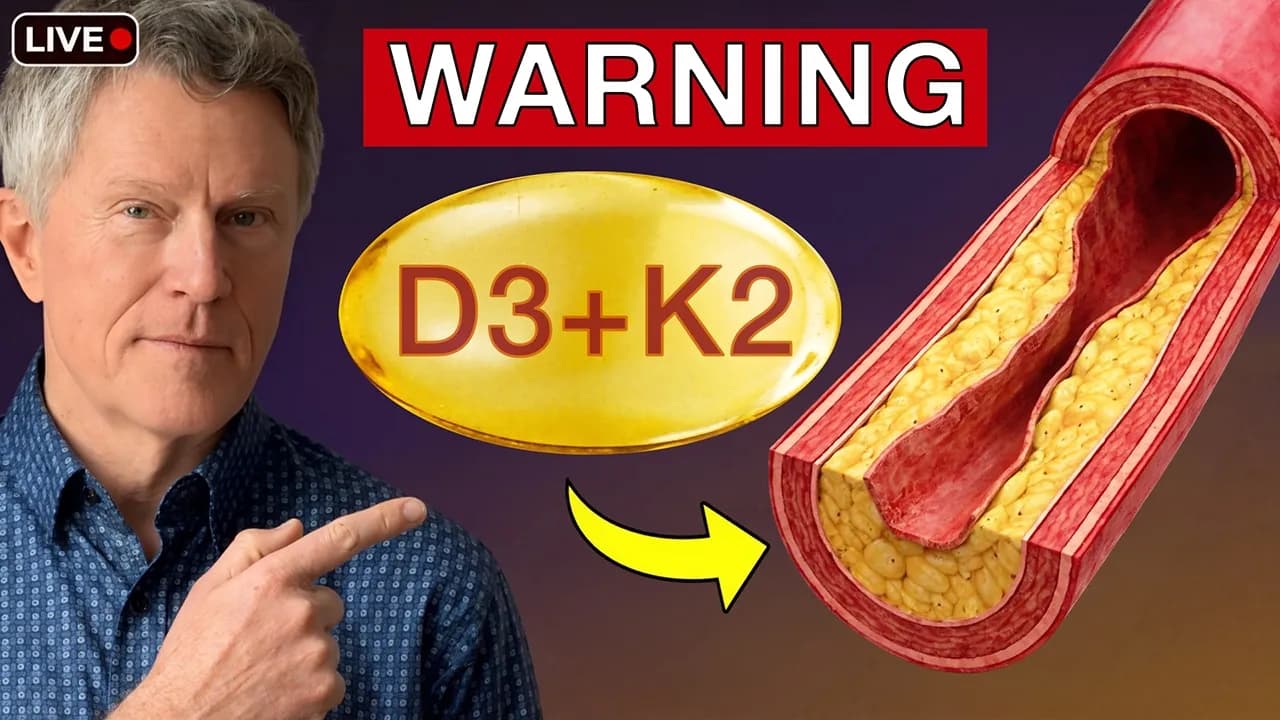
There's a 50-cent vitamin, K2, that recent evidence shows can slow artery calcium buildup by nearly a third. The calcification in your arteries is not one simple thing. There's mostly two kinds, and they're nearly opposites, and one of them may actually be protecting you. A low calcium score isn't automatically good news, and a high one isn't automatically bad.
Vitamin K2 is a fat-soluble vitamin. Your body uses it to manage calcium, where the calcium goes and where it doesn't. Vitamin K is all about blood clotting. Vitamin K2 isn't at all the same. It's about calcium. When it was discovered, it looked very much like vitamin K1. That's why you see it as K2. It's a historical artifact.
K2 comes in a few forms, but the one you'll see on supplement labels, there's one of two that you'll see, MK4 and MK7. Both are good. MK7 is usually considered by most people to be the one with more evidence behind it for healing arteries. It's because it stays in your bloodstream longer and does steadier work. The increased number of studies on MK7 is the reason we're talking about it in the study today.
K2 pulls calcium out of your artery walls and moves it into your bones where it belongs. K2 does switch on a protein that helps tell calcium where to go. But that's not really the whole story and it's nowhere near as simple as arteries bad, bones good.
The study that started all the noise is called VitaK2 CAC. Researchers took 167 people who already had heart disease, most of them already on a statin. They gave half of them MK7, 360 micrograms a day, and the other half a sugar pill for 2 years. The dosage of 360 micrograms is significant because most supplement dosages are 100 micrograms, which are not adequate.
The placebo group watched their calcium score climb from 145 up to 214. The K2 group, they climbed slower. It still went up, but 135 up to 184. That's about 29, 30% less calcium buildup. Both groups still calcified. Nobody's plaque disappeared. This study measured a number on a scan. It was never built to count a single heart attack, stroke, or death.
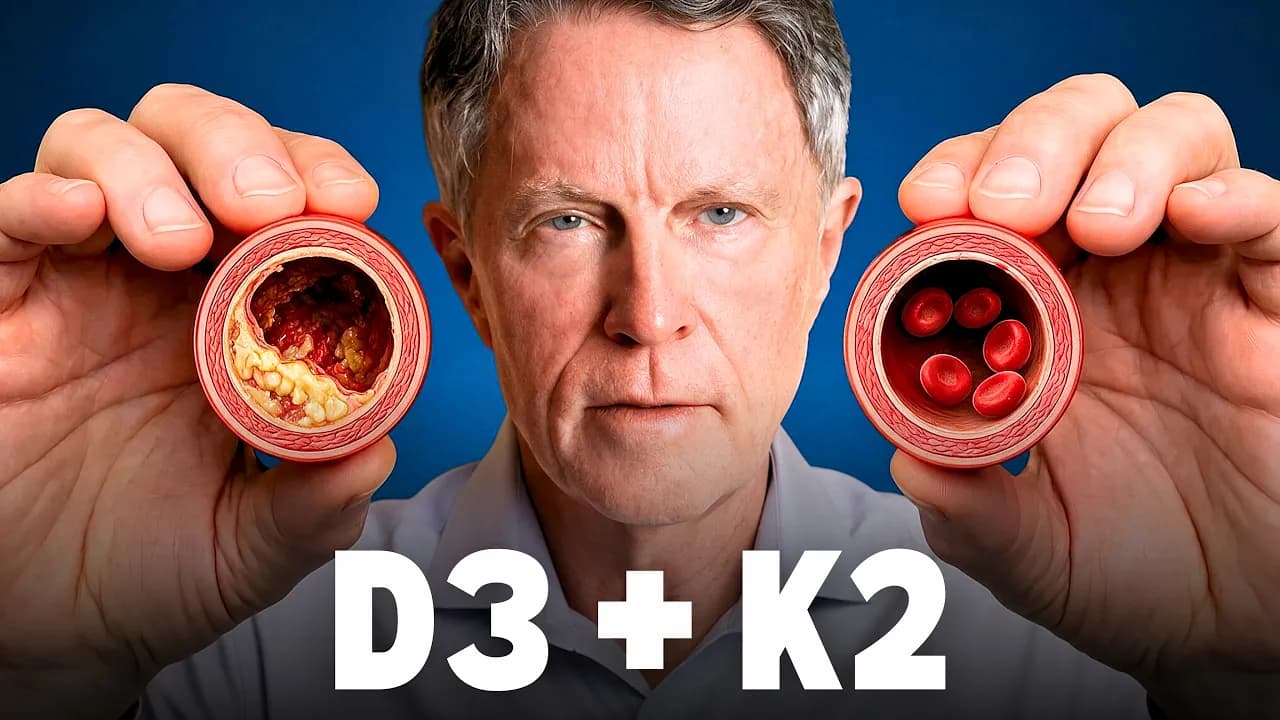
There are two kinds of calcification. They're nearly opposites. The first is small, scattered, patchy calcium, tiny specks sitting inside young, angry, inflamed plaque. That kind puts stress right where the wall is thinnest. It makes the cap even more likely to crack open. That's the dangerous kind of calcification.
The second is big, dense, solid calcium, thick and hard like scar tissue over a wound that already healed. That kind is usually the artery sealing off an old injury and settling it down, sealing it away, protecting you. The calcium was never the enemy, really. The inflammation underneath that calcium is the enemy. The big, solid calcification can actually be a sign that the worst part has already passed.
A big part of what decides which kind of calcification you get is how you live, lifestyle. Unhealthy calcification, the small, patchy, and dangerous kind, shows up in the men eating a poor diet, living on processed carbs, barely moving. That's the inflamed environment where soft plaque festers and those dangerous specs form.
Healthy calcification, the dense stabilizing kind, shows up in men and women doing the opposite. They're cutting the processed carbs. They're eating enough protein. Lifting and moving their bodies. They're sleeping well. When you calm the whole system down, the plaque you already have can settle down. It hardens and walls itself off.
A high calcium score isn't automatically bad news. In a man who's living right, or a woman who's living right, it means the body already did the hard work of locking down that old damage, that risk. The score counts the scars, but it can't tell you which wounds are still open.
Vitamin K2 can still help heal your plaque. Plaque doesn't only heal by getting harder, it also heals by getting quieter. When the inflammation drops, the cap over the plaque grows thicker, and the muscle cells in the wall lay down collagen and reinforce it. It's like putting new studs behind a weak wall. That's your body making a plaque far less likely to rupture with adding one speck of calcium.
K2 helps direct calcium deposits. But the more interesting thing is the reason it helps is metabolic. K2 appears to improve insulin sensitivity. K2 is impacting insulin resistance. It's impacting insulin resistance upstream. It's the upstream fire that we're calming here. It drives the inflammation that turns plaque unstable in the first place.
If K2 is helping you, it's probably calming that inflammatory metabolic fire, not editing your calcium score. That's exactly why we use it the way we do. As an add-on that supports the foundation, never as the foundation itself, because it just can't be the foundation. The foundation is the work that changes your whole system, the food, the movement, the exercise, the leg work, the sleep, the management of stress, the metabolic health, the lifestyle.
For men and women generally working to heal your arteries, K2 is recommended. The recommendation is 3 to 400 micrograms of K2 a day. It should be taken as an add-on to the real work, not as a shortcut and never as a way to chase a lower score.
A lower calcium score doesn't automatically mean lower risk. It usually means the opposite. Once you have a calcium score, it's going to go up as you calcify that soft plaque that you didn't pick up on the original calcium score.
People will get a calcium score, they'll get motivated, they'll get afraid, they'll say, "I'm going to clean up my act." They will improve dramatically. Then they'll go back and get another calcium score. The calcium score goes up because your K2 and most of all your lifestyle have cleaned up your metabolic risk. Your body's able to heal those plaques. As part of healing those plaques, the calcium score goes up because you're calcifying that plaque, that soft plaque that was causing the risk in the first place.
If you get your act together and you improve your lifestyle, you lose some weight, you make a lot of improvements in your metabolic health, don't assume that your calcium score's automatically going to go down. It does occasionally, but very, very rarely. Usually that calcium score is going to go up.
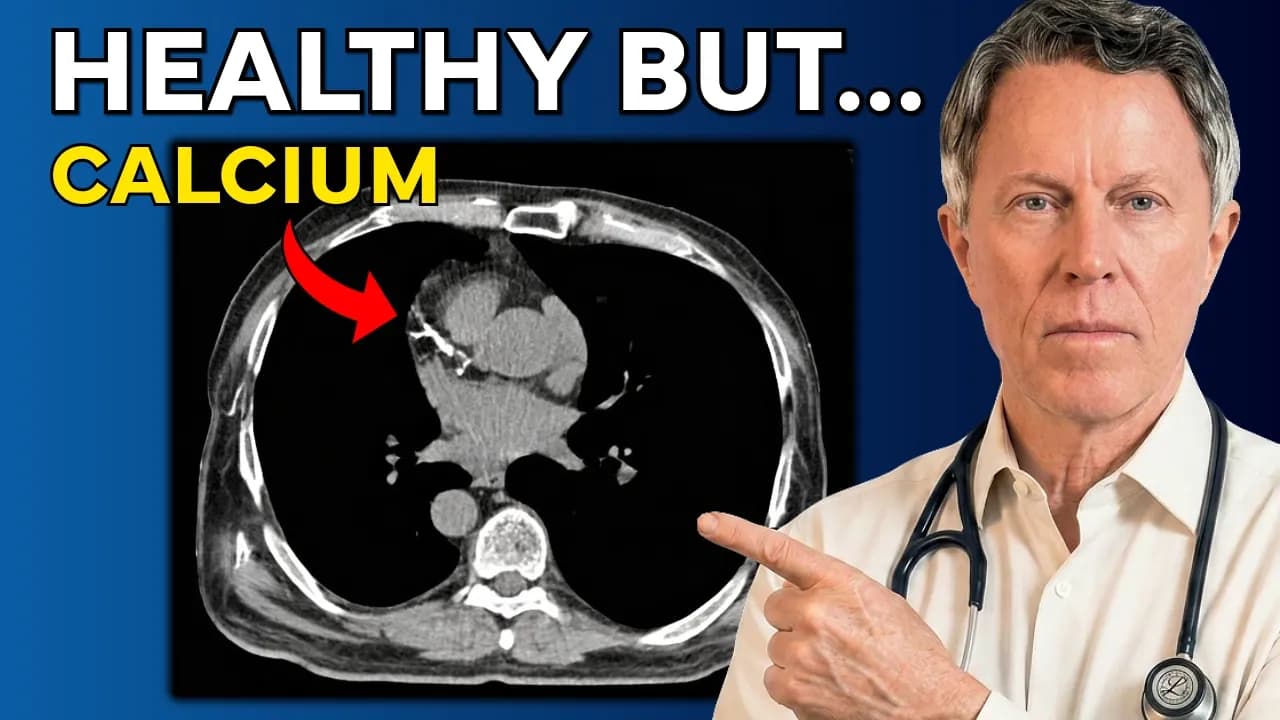
Nothing that was described, the inflammation, the soft plaque, the thickness of the cap, shows up on a calcium score. That scan counts hard calcium, but goes blind to everything else. It won't see the soft plaque. You need a CIMT, which will do that. It measures the artery wall directly. To see what's really in there, you need a CT angiogram read with AI, artificial intelligence.
There's one last thing that decides whether K2 or any of this actually helps you. A scan by itself will never show it to you. It's the reason that two people can walk in with the exact same calcium score and walk out with completely different futures, risk profiles. It'll change what you do the very next morning.
If you've been staring at a single number, wondering what's really going on, that's exactly what they do at PrevMed. Give their clinic a call to discuss your care plan or the care plans that they can offer for you. They can customize what you need or click the link in the description below to book a time with their team. They can go through whether they're even the right fit for you, and then if you join, which tests you need based on you and your history and what you need.
Growing old it's not for sissies. It just turned 69, but it's a lot healthier, lot easier, a lot better when you got healthy arteries.
Keep Thomas Fordham Brewer MD MPH in your library
Save the videos and channels worth coming back to, and find them again in one place.