Salman Rushdie recounts getting stabbed (2024)
In a Nutshell
Salman Rushdie, 76, survived a 27-second knife attack in August 2022 at a New York literary festival that cost him his right eye and left 15 wounds; the attacker was a 24-year-old New Jersey man who admitted he had barely read *The Satanic Verses* yet acted on the 1989 fatwa. Rushdie refuses to name his assailant and instead uses the memoir *Knife* to reclaim the narrative, treating language itself as the weapon he wielded in response. Nearly two years later, he lives with the lingering “shadow” of death but insists the attack was the final convulsion of a decades-old story, not its redefinition.
These notes were generated by AI and may contain inaccuracies.
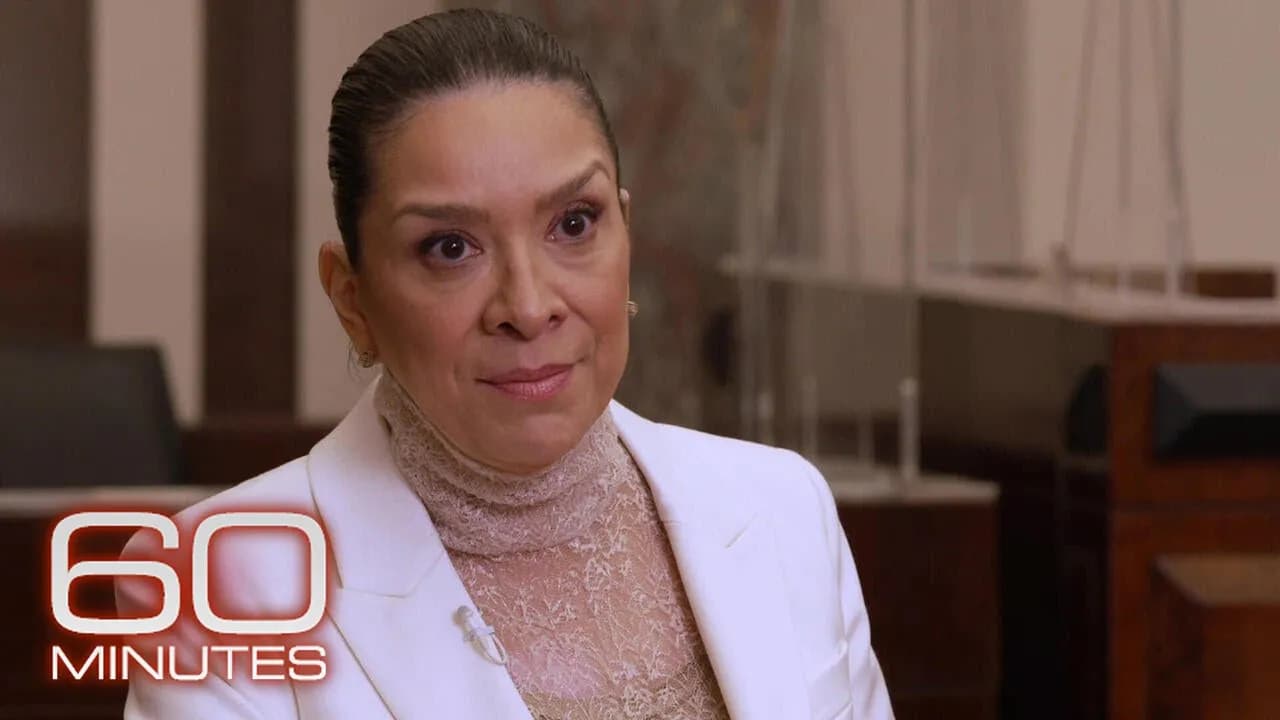
Salman Rushdie had been a marked man for nearly half his life. In 1989, Iran's leader Ayatollah Khomeini declared his novel The Satanic Verses blasphemous, an insult to Islam, and called for the Indian-born writer's assassination. Rushdie went into hiding with around-the-clock police protection for 10 years. He eventually moved to the US and thought he was safe. In August 2022, as he was about to speak at a literary festival in Chautauqua, New York, Salman Rushdie was attacked by a Muslim man with a knife. Rushdie, who's now 76, lost his right eye and came close to dying. He's come to terms with the attempt on his life by writing a book about it called Knife, which comes out Tuesday. This is his first television interview since the attack.
Rushdie had a dream two days before the attack. He had a premonition dream of being attacked in an amphitheater, a kind of Roman Empire dream as if he was in the coliseum and somebody with a spear was stabbing downwards while he was rolling around on the floor trying to get away. He woke up quite shaken by it. He had to go to Chautauqua and said to his wife Eliza that he didn't want to go because of the dream. Then he thought, "don't be silly, it's a dream."
Rushdie had been invited to the town of Chautauqua, close to Lake Erie, to speak about a subject he knows all too well: the importance of protecting writers whose lives are under threat. He did not have any anxiety being in such a public space because in the more than 20 years that he's been living in America, he's done a lot of these things. He hadn't had security around him, a close protection detail, for a long time. In many places that he goes to lecture, they're used to having a certain degree of security, venue security, but in this case there wasn't any. The irony is that he was there to talk about writers in danger and the need for writers from other countries to have safe spaces in America, and it turned out not to be a safe space for him.
For years no place was safe for Salman Rushdie whose sprawling 600-page novel The Satanic Verses offended some Muslims for its depiction of the prophet Muhammad. Iran's Ayatollah Khomeini issued a fatwa, a religious decree calling for Rushdie's death in 1989. There were worldwide protests from London to Lahore. The Satanic Verses was burned and 12 people died in clashes with police. The book's Japanese translator was murdered and others associated with it were attacked.
Rushdie had no idea that the book would cause violence. He thought probably some conservative religious people wouldn't like it, but they didn't like anything he wrote anyway, so he thought they didn't have to read it. He was probably naive, as nothing like this had ever happened to anybody. Almost all the people who attacked the book did so without reading it. He was often told that he had intended to insult or offend people, and his view was that if he needed to insult you, he could do it really quickly without spending five years of his life trying to write a 600-page book to insult you.
Rushdie was living in London when he went into hiding. For the next 10 years, the British government provided him with 24-hour police protection. There were maybe as many as half a dozen serious assassination attempts, which were not random people but state-sponsored terrorism professionals. After diplomatic negotiations, the Iranian state called off its assassins in 1998. Rushdie finally came out of the shadows. He moved to New York and for the next two decades lived openly. He was a man about town, continued writing, and became a celebrated advocate for freedom of expression. When he received the invitation to speak in Chautauqua in August 2022, he gladly accepted.
Rushdie was seated at stage right. In his new book Knife, he described what happened next: "Then, in the corner of my right eye, the last thing my right eye would ever see, I saw the man in black running towards me down the right-hand side of the seating area. Black clothes, black face mask. He was coming in hard and low, a squat missile. I confess I had sometimes imagined my assassin rising up in some public forum or other and coming for me in just this way. So my first thought when I saw this murderous shape rushing towards me was so it's you. Here you are."
It felt like something coming out of the distant past and trying to drag him back in time to kill him. When the attacker got to him, he hit him very hard, and initially Rushdie thought he'd been punched. He didn't see the knife and didn't realize until he saw blood coming out that there had been a knife in his fist.
The first stab was in his neck. Then there were a lot more. The worst wounds were a big slash wound across his neck and a puncture stab wound, and then of course there was the attack on his eye. He doesn't remember being stabbed in the eye. He remembers falling and then not knowing what had happened to his eye. He was also stabbed in his hand, chest, abdomen, and thigh—15 wounds in all. The attacker was both stabbing and slashing, wildly. The attack lasted 27 seconds.
To feel just how long 27 seconds is: "This is what 27 seconds is. That's it." The audience pulling the attacker off him stopped it from being longer. They were strangers to him, and to this day he doesn't know their names. Some of those strangers restrained the attacker while others desperately tried to stem the flow of Rushdie's blood. There was really a lot of blood, and he was watching it spread. Then he remembers thinking that he was probably dying, and it was interesting because it was quite matter of fact. It wasn't like he was terrified of it. There was nothing—no heavenly choirs, no pearly gates. He's not a supernatural person and believes that death comes as the end. There was nothing that happened that made him change his mind about that. He has not had any revelation except that there's no revelation to be had.
The attacker, the man in black, was hustled off the stage. In the book, Rushdie does not use the attacker's name. He thought he didn't want his name in his book and doesn't use it in conversation either. This is important to him—not to give him space in his brain. They had 27 seconds together, and he doesn't need to give him any more of his time.
Paramedics flew Rushdie to a hospital in Erie, Pennsylvania, 40 miles away, where a team of doctors battled for 8 hours to save his life. When he finally came out of surgery, his wife Eliza, a poet and novelist, was waiting. He looked half dead to her. He was a different color, he was cold, and his face was stapled, just staples holding his face together. Rushdie was on a ventilator, unable to speak. Eliza and the doctors had no idea whether the knife that had penetrated his eye had damaged his brain. Someone from the staff said that they would use a system of wiggling the toes to communicate. The first questions were basic simple questions because you can't express yourself with any subtlety with your toes. After 18 days in the hospital and 3 weeks in rehab, Rushdie was discharged.
One of the surgeons who had saved his life said to him, "First you were really unlucky and then you were really lucky." Rushdie asked what the lucky part was, and the surgeon said, "Well, the lucky part was that the man who attacked you had no idea how to kill a man with a knife." Rushdie is not a believer in miracles, but the fact that he survived, he writes in the book, is a miracle. This is a contradiction. How does somebody who doesn't believe in the supernatural account for the fact that something has happened which feels like a miracle? He certainly doesn't feel that some hand reached down from the skies and guarded him, but he does think something happened which wasn't supposed to happen, and he has no explanation for it.
The attacker was a 24-year-old from New Jersey who lived in his mother's basement. He's believed to be a lone wolf. He's pleaded not guilty to attempted murder and is awaiting trial. In an interview, he told the New York Post he'd only read a couple pages of The Satanic Verses and seen some clips of Rushdie on YouTube. He said he didn't like him very much because Rushdie had attacked Islam. It's interesting to Rushdie because it's a mystery. If he had written a character who knew so little about his proposed victim and yet was willing to commit the crime of murder, his publishers might well say to him that that's under-motivated. Not enough of a reason, not convincing, but yet that's what he did.
Rushdie's Knife, his 22nd book, is one he initially did not want to write. That was the last thing he wanted to do because he didn't want this to yet again define him. It was very difficult for him after The Satanic Verses was published that the only thing anybody knew about him was this death threat. But it became clear to him that he couldn't write anything else. He had to write this first. He just thought he needed to focus on, to use the cliché, the elephant in the room. The moment he thought that, something changed in his head and it then became a book he really very much wanted to write.
He says the language was his knife. If he had unexpectedly been caught in an unwanted knife fight, maybe this was the knife he could use to fight back, to take charge of what had happened to him, to own it, make it his. Language is a way of breaking open the world. He doesn't have any other weapons, but he's been using this particular tool for quite a long time, so he thought this was his way of dealing with it.
It's been almost 2 years since the attack and Rushdie is back home now in New York, slowly getting used to navigating the world with one eye. He's still readjusting. He doesn't feel he's very different, but he does feel that it has left a shadow. He thinks that shadow is just there, and some days it's dark and some days it's not. He doesn't feel less than he was before, but he just feels more the presence of death.
In an interview almost 25 years ago, he said of the fatwa, "I want to find an end to this story. It is the one story I must find an end to." He thought he had found that ending, and then it turned out he hadn't. He's hoping this is just a last twitch of that story.
Keep 60 Minutes in your library
Save the videos and channels worth coming back to, and find them again in one place.