What I'm Buying And Selling In my $1.3 Million Portfolio
These notes were generated by AI and may contain inaccuracies.
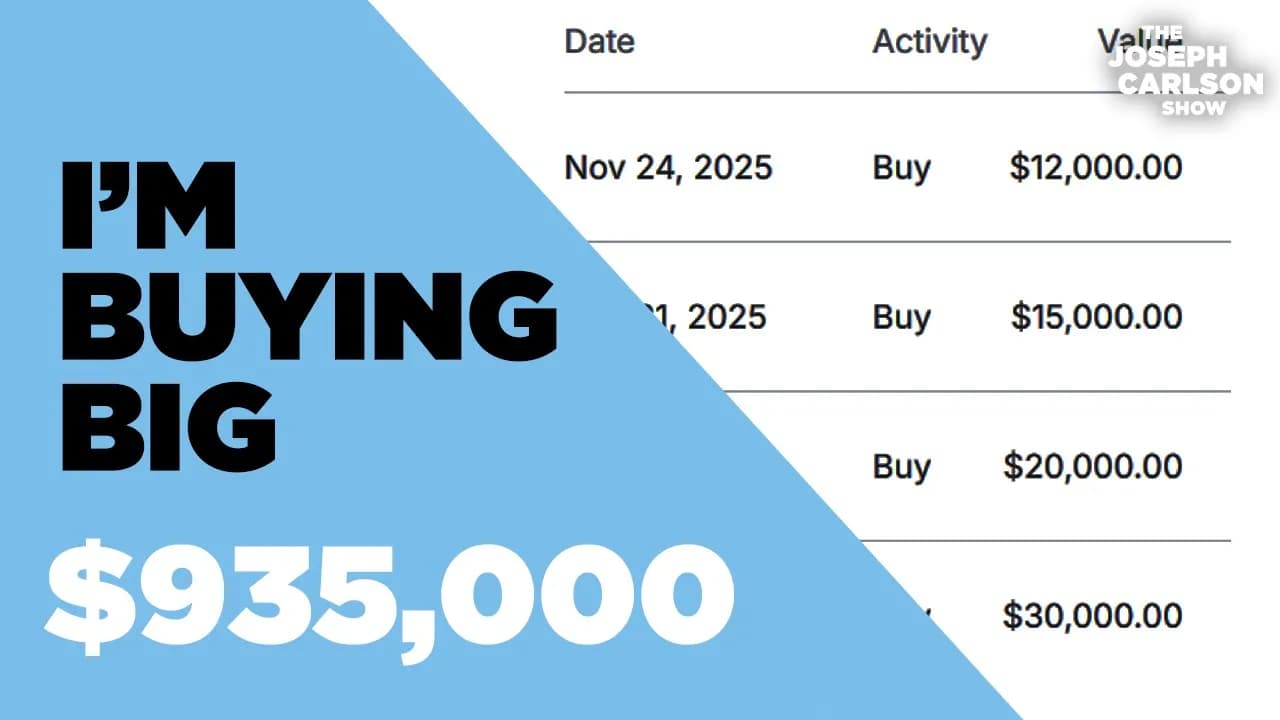
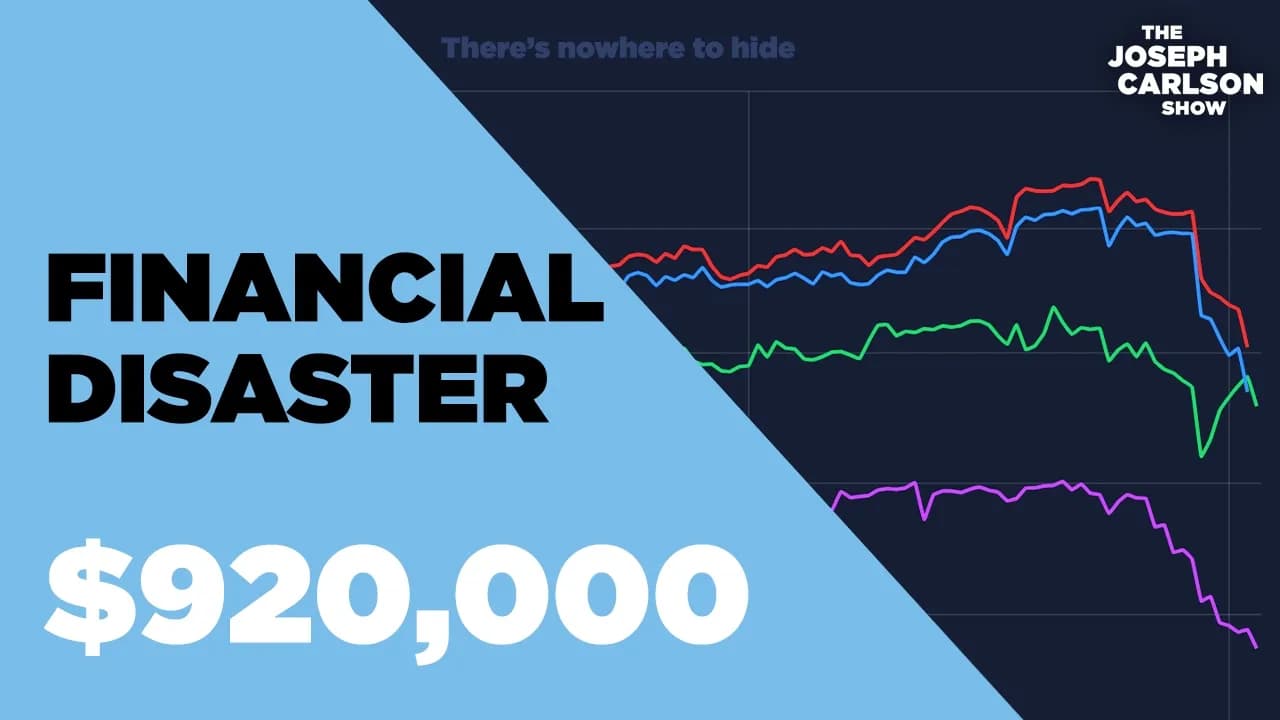
Joseph Carlson's $1.3 million portfolio consists of passive income portfolio at $927,000 and story fund at $44,000. Review of each holding with sentiment: buys, sells, holds, strong buys, soft buys. Covers thesis, most bullish and least bullish companies, portfolio management insights.
News on Fed, economy, market. Steve Eisman on market going up. Tom Lee on federal interest rate cuts and market response. David Ter on federal interest rate cuts and stock market. Jimmy Kimmel's show indefinitely suspended, arguments on free speech, company responsibilities, government regulation, internal company discussions, timelines. Argues both sides: free speech censorship issue and business decision. Reveals real reason for suspension. LinkedIn post on tax-saving strategy to pay no taxes on $30,000 of gains.
Alternatives: index funds, ETFs like SPY (S&P 500), SPG (S&P 500 growth fund), SCHG (large cap growth fund) for passive investors. Active management intellectually rewarding, potential to outperform index significantly or destroy capital if poor decisions. Rules: buy, hold, maintain portfolio of compounding machines with disciplined long-term approach. Never speculate, gamble, or invest out of fear, FOMO, hype. Decisions based on rational judgments about company future. Stock selection key. Holds monopolies, oligopolies (shared monopolies) that raise prices, have operating leverage, great cost control, organic growth via prices and new products, mostly capital light with returns to investors, smart CEO capital allocation. Avoid temptation of lower quality stocks at cheaper prices.
Temperament in Portfolio Management
Temperament: behavior in situations. Analogy: pilot in aircraft with engine out or storm stays calm, disciplined, follows procedures. Portfolio managers risk capital, need good temperament under stress. Portfolio management important but less discussed than stock selection.
Mastercard: $40,000 gains. Phenomenal returns, not exciting, rarely in news, boring. Healthy PE ratio, free cash flow yield. Neither stale nor overvalued. Great company at reasonable price.
S&P Global: $30,000 gains in passive income portfolio, $5,000 gains in story fund ($21,000 position), total ~$35,000 gains after 6% sell-off. FactSet (Faxet) fiscal 2025 results September 18th issued underwhelming guidance amid higher technology spend, shares fell >10%. FactSet competes with S&P Global and Moody's market intelligence segment. Not doom for S&P Global. Trading at 3.5% free cash flow yield, 28 P/E ratio for ultra high-quality, diversified company (credit ratings, data, indices, ultra wide moats). Nice entry point.
Intuit (In it): High-quality, refuse to sell despite higher valuation. Investor day September 18th reaffirmed full-year guidance: 12-13% revenue growth, 13-14% non-GAAP EPS growth, online ecosystem growth accelerating to ~19%. Hold.
Moody's: Sold off due to FactSet, fears overstated. Unique data FactSet lacks. Wonderful long-term, expect well over next 5 years. Hold at current valuation.
Equifax: Newer position, up $4,000, bought in tariff dip. Super defensive, wide moat, diversified, highly profitable subscription/data business. Buy at attractive price, more upside than downside. All data companies: wide moat, subscription-based, large cap. Intentional low-risk approach, almost no long-term risk of losing money.
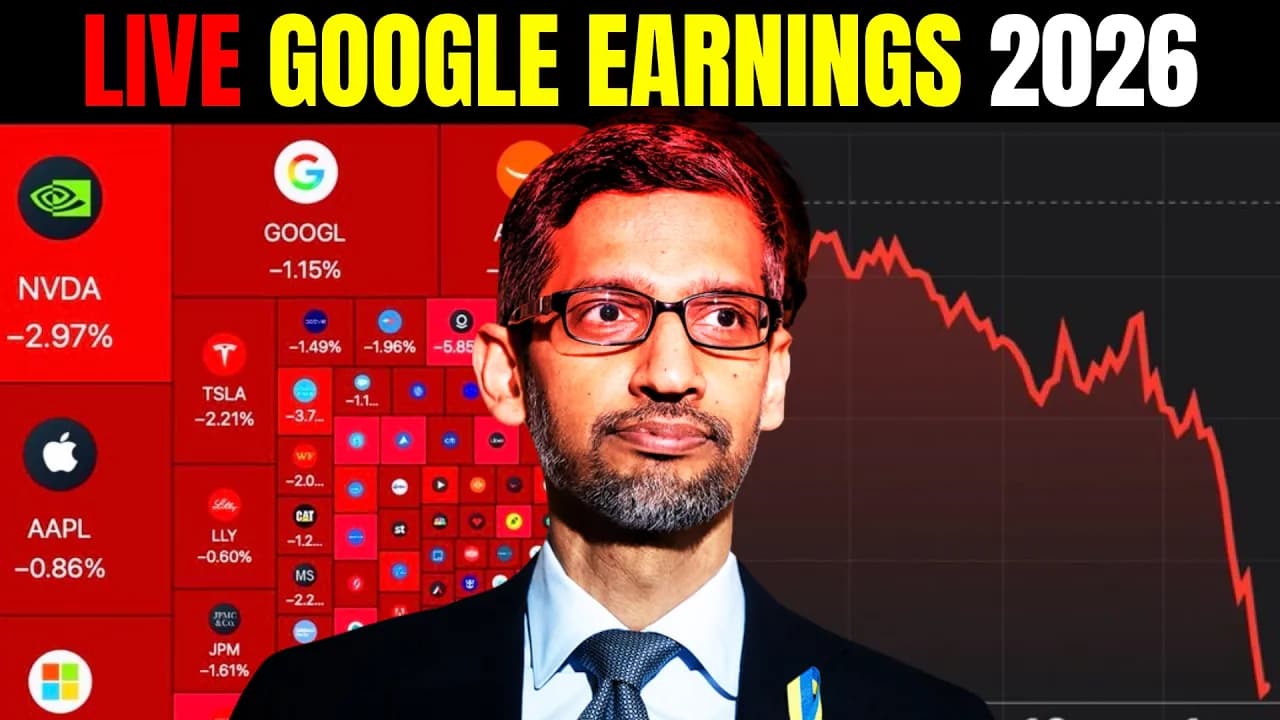
Google: Most bullish past 4 months, talked annoyingly often. $91,000 in passive ($25,000 gains), $54,000 in story fund ($31,000 gains), total $56,000 gains. Asymmetric reward: high upside, limited downside, high-quality company down on false narrative, undervalued dislocation. Trades at 25 P/E. Big gains likely gone but will compound. Shifts from strong buy to soft buy.
Microsoft: Super good, premium valuation (lower free cash flow yield, higher PE, P/S). Buy when discounted, hold when expensive.
ASML: Undervalued monopolistic position. Now $931/share (was $700). From strong buy to soft buy, still undervalued but approaching hold.
Salesforce: In red, dreaded. Want every investment profitable, not VC approach. Diversified to avoid all-in risks, no hubris. Hold, not adding, not selling. Chance for quality/margins up, revenue reacceleration.
Costco: $82,000 position, $47,600 gains (>half gains), massive/special dividends. Awesome company. Buy history: no sells. Last buy July 25, 2023 at 40 PE ratio (10-year trailing). Stopped buying when valuation up 15-20 PE points. Manage solid companies: stop buying when unattractive, slow to sell. Hold for long-term holders in green.
Booking Holdings: $74,000 position, $23,000 gains. Monopolistic, capital light. Fair price, hold.
Texas Roadhouse: Took gains (rare for great companies) as valuation increased, revenue growth slowed, commodity/inflation concerns. Over doubled money. Bright future but prudent to trim vs. other restaurants.
Smaller portfolio, better recent performance, overlap with passive. Unique: Netflix top position, hold to soft buy. Massive operating leverage, incredibly managed long-term, high expectations.
Amazon: $141,000, $48,000 gains. Robotics play: autonomous/factory robots, drones (zuks) from van to doorstep. Massive revenue, incremental margins = enormous free cash flow. Long game.
Duolingo: $20,000 smallest position, $3-4,000 red. Fundamental investor, hold if fundamentals good. Metrics up/right: revenue, subscription revenue, DAU, MAU, paid subscribers, EBITDA (negative to positive), net income (negative to positive), free cash flow, EPS (negative to positive, nearly doubled yearly), balance sheet stronger, no long-term debt. Not in distress despite narratives. Hold 2-3 years, replace if fundamentals worsen.
Broad side benign. Economy good, employment weak. AI story unstoppable (Oracle powerful last week). Fed marginal, may help housing. Bullish. Fed cuts max 100 basis points total, not aggressive, not Moses with tablets, not make or break.
Fed most powerful institution. Tight monetary policy kept ISM below 50 for 31 months, corporate caution. Fed easing = green light for confidence. ISM >50 revives economy, rejuvenates sluggish labor market (>12 months). Companies hire with cheap capital access.
Easing after LTCM into Y2K: good economy but market nuts, other side disaster (2000). This easing little restrictive, careful not too easy/hot to avoid 2000 repeat (hyper bullish, 60-70 PE, stocks never down, cheap money).
Jimmy Kimmel Live off ABC (Disney), indefinite. Free speech/censorship vs. business decision. FCC regulates public airways (ABC different from Netflix, YouTube, HBO, Paramount streaming, Warner Media, cable TV). Compare to Greg Gutfeld (conservative Jimmy Kimmel version, mocks liberals).
Greg Gutfeld's show is on Fox cable news, not public airways, unlike Jimmy Kimmel's show, which is broadcast on public airways under FCC regulatory scrutiny. FCC Chairman Brendan Carr blasted Kimmel over remarks related to the killing of conservative activist Charlie Kirk. Executives at ABC and parent company Disney faced issues from FCC concerns, advertisers, and affiliates. Sinclair and Nextstar, owners of over 60 local ABC stations and distribution partners of Disney, indefinitely preempted the show starting that night.
Advertisers contacted ABC, furious over Kimmel's statements. ABC faced problems from distribution partners pulling the show, advertiser backlash, and FCC concerns about not serving the public good.
Kimmel planned to address Carr's comments on the next show. Dana Walden, co-chairman of Disney Entertainment, spoke to Kimmel beforehand. Executives believed Kimmel's approach—doubling down by claiming conservatives mischaracterized his words and lampooning the MAGA movement—would worsen the situation, inflaming advertisers and partners. Instead of apologizing or correcting his misstatement (falsely characterizing the killer as MAGA-associated), he planned to escalate.
Walden consulted with Disney CEO Bob Iger; they decided to temporarily take Jimmy Kimmel Live off the air. The show is currently off-air, possibly cancelled, with meetings ongoing about its future.
Censorship and Free Speech Infringement Argument
FCC applied soft pressure by threatening to review ABC's broadcast license, influencing private companies to silence Kimmel. Government under a president weighing in on a joke or opinion constitutes censorship, even if wrong. Carr uniquely targeted Kimmel without scrutinizing other networks, violating First Amendment protections against government threats of retaliation.
Not Censorship: Private Business Decision Argument
FCC took no official action against ABC, Nextstar, or Disney—only expressed concern. Disney executives Walden and Iger suspended the show. Distribution partners like Nextstar stated their decision was independent of FCC.
Kimmel's job is to entertain and boost earnings; his inflammatory, false statements post-assassination upset half the country, stained ABC's brand, and drove away advertisers and partners. Disney could have defied FCC but chose to act. Freedom of speech doesn't guarantee a platform without consequences, especially on regulated public broadcast TV (unlike Greg Gutfeld, Ben Shapiro, Charlie Kirk, or Bill Maher on cable/Netflix).
FCC can express concerns over defamatory content on public waves. Kimmel could move to Netflix or Spotify.
The true cause is Google and YouTube. YouTube ads grow double-digits year-over-year; YouTube Premium/subscriptions grow 15% combined annually. Late-night shows like Kimmel's are increasingly risky with falling ratings and divisive content, poor risk-reward for Disney.
Late-night TV is a dying breed, unsuited for the 21st century. Conan O'Brien moved to podcasts; Stephen Colbert was cancelled due to ratings/profitability. Jimmy Fallon's show ratings are declining and likely next.
All late-night shows have plummeting ratings yearly:
- Jimmy Kimmel Live: 4x viewership 10 years ago, steady decline.
- Late Show with Stephen Colbert (formerly Letterman): plummeting, leading to cancellation.
- Tonight Show with Jimmy Fallon: declining.
Production is expensive: writers, NYC sets, camera crews, staff, hosts paid tens of millions yearly.
YouTube channels achieve 2-3 million views/episode (ratings late-night shows crave) with 3-4 employees, no writers—hosts often solo. Viewers prefer YouTube for long-form podcasts, interviews over expensive late-night formats with occasional celebrities. All these shows will end due to YouTube, not politics.
Michael Henley, founder/CEO of Brandywine Oak Private, shared upstream gifting:
You bought Nvidia at $300, now worth $30,000. 94-year-old grandmother has ~1 month to live. Want to pass to son without massive capital gains taxes.
Steps:
- Transfer stock to grandma's brokerage account.
- Set transfer on death beneficiary as your son.
- Grandma passes; son inherits at stepped-up basis (capital gains wiped clean at death).
- Son sells immediately tax-free.
Works because son (not original owner) inherits; no 12-month restriction if gifter isn't beneficiary. Focuses on keeping what you earn over returns.
Disturbing (treats grandma like shell company), conniving, but brilliant if she's aware/conservative anti-tax. Avoid if she's unaware or not fully consenting, especially over 90.
Keep Joseph Carlson in your library
Save the videos and channels worth coming back to, and find them again in one place.