How to Remove Calcium Plaque From Your Arteries (Backed by 2 Clinical Trials)
In a Nutshell
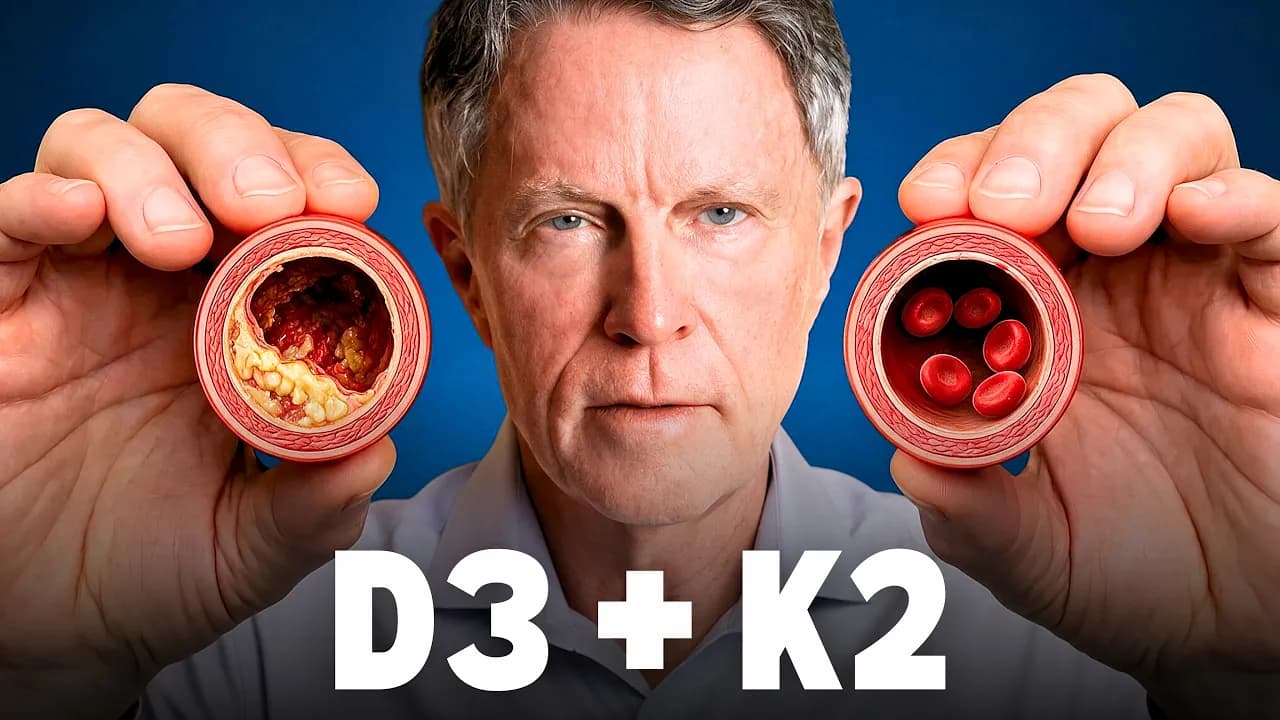
Two clinical trials show that vitamin D3 (10,000 IU) paired with K2 (100 mcg MK-7) daily can shrink coronary artery calcium by 21-24.5% and cut major cardiovascular events by 71.6% within two years. The mechanism works by first repairing the damaged endothelial layer through lowering insulin resistance via carbohydrate restriction, then directing calcium out of arteries with K2 while D3 boosts nitric oxide to keep vessel walls tight. Adding magnesium glycinate supports arterial relaxation, and early physical signs include diagonal earlobe creases and calf cramping during uphill walking.
These notes were generated by AI and may contain inaccuracies.
If you just got your coronary artery calcium scan back and your numbers are way too high, but your doctor said, listen, there's nothing that could be done. This is a permanent condition, and then they handed you a statin cholesterol pill. There are two human clinical trials that prove the exact opposite, actually shrinking hard artery plaque by nearly a quarter while slashing major cardiovascular events simply by activating your body's own calcium cleanup crew.
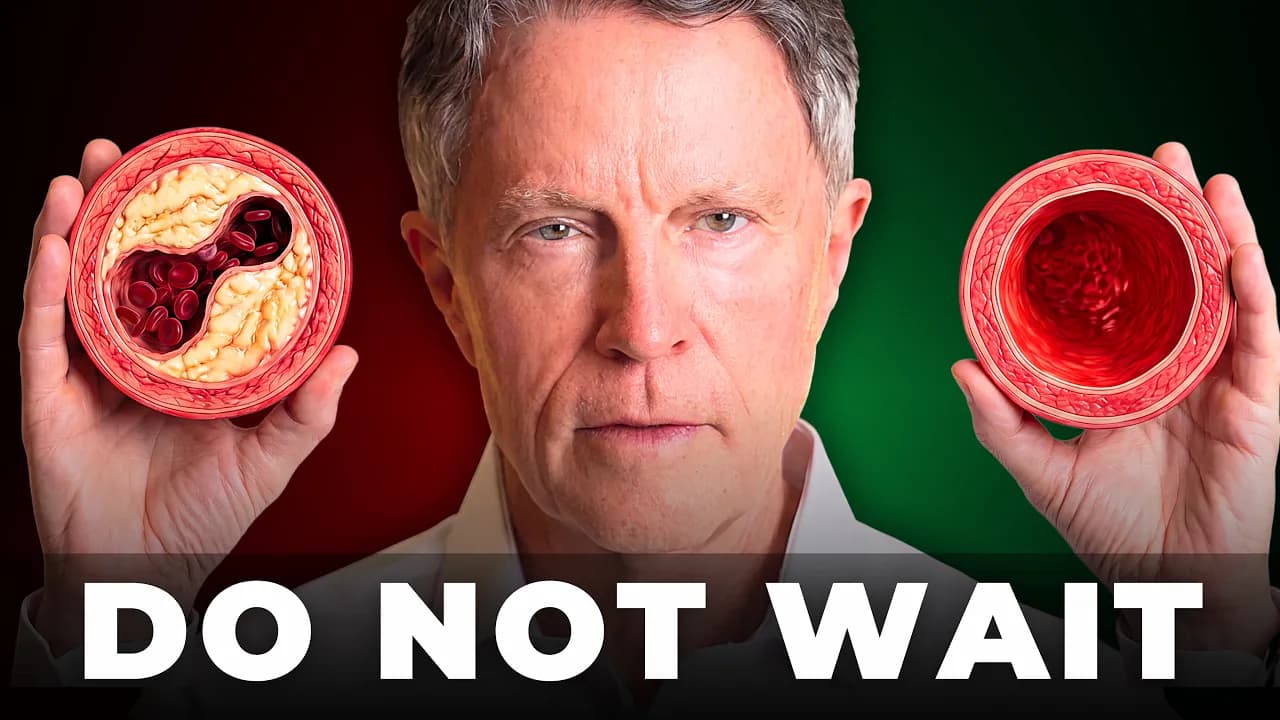
There are two types of plaque: hard plaque and soft plaque. The arteries are lined with a super thin layer of cells called the endothelial layer. These are single cells that form a very smooth, waterproof Teflon seal. When we talk about placking and especially calcification or soft plaque, what happens first is this cell layer starts to create gaps in it. There's always damage or inflammation that occurs first, and that's really the big problem.
LDL is basically a protein that is holding cholesterol, and there's two kinds: the small dense size and the large buoyant size. The ones that are really bad are the small dense because they can actually invade the tiny little holes in the walls.
What actually rips these tiny little cracks in the waterproof inside of your arteries in the first place? There are three hidden triggers:
- High blood glucose levels
- Low vitamin D
- High blood pressure
Vitamin D has a lot of tiny receptors in the endothelial layer and is a protective mechanism in that artery because vitamin D also potently increases another protective mechanism called nitric oxide. Nitric oxide is a vasodilator to the arteries, so it helps to open things up and protects against high blood pressure.
Once the endothelial layer is damaged and the small dense LDL particles get in there, then the cholesterol becomes oxidized. An immune reaction occurs where macrophages (big white blood cells) start eating up this oxidized cholesterol and get really really fat, called foam cells stuffed with oxidized cholesterol. Protein comes in there, and calcium comes in there as a patch.
Vitamin K2 is the master vitamin that is part of the cleanup crew with calcium. Vitamin K2 activates a protein to direct calcium from the arteries back into the bone. When you're deficient in K2, you'll tend to have calcium linger in the soft tissues. Vitamin K2 inhibits calcification in the places it shouldn't be like soft tissue.
As far as the arteries go, the most important vitamins are vitamin D3 and K2. Vitamin D3 helps that nitric oxide keep the cells really nice and zip tight.
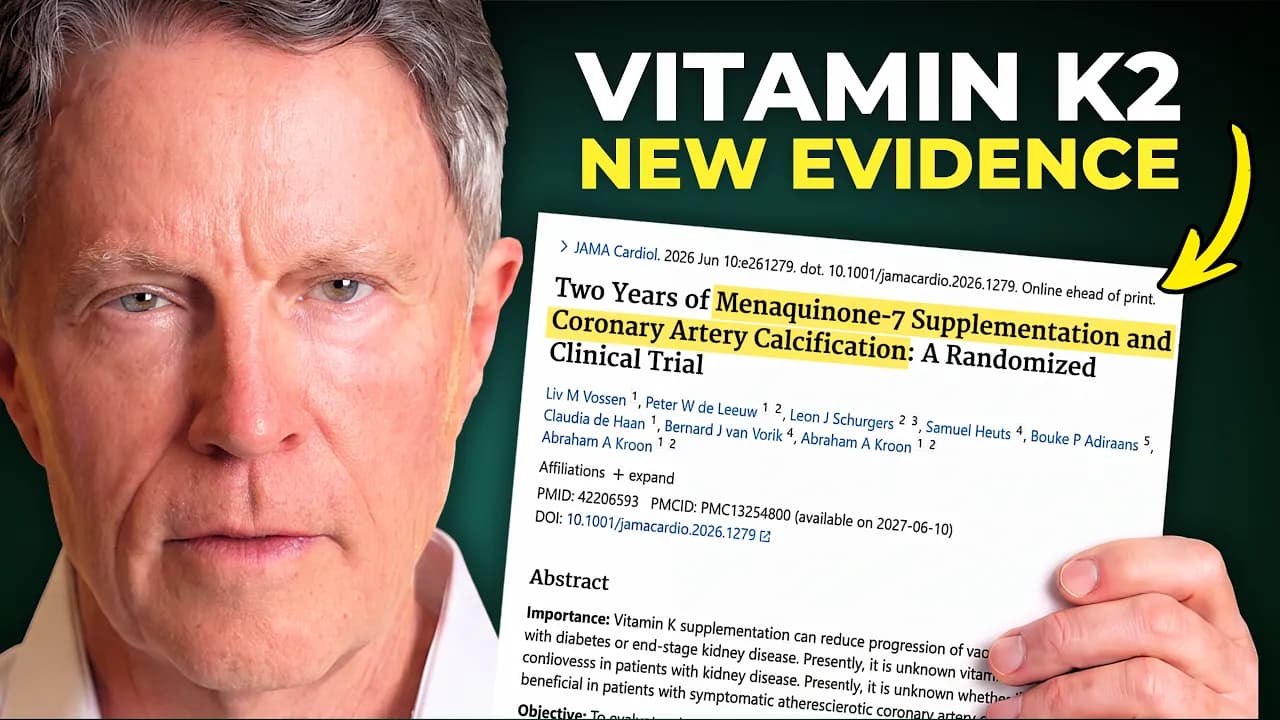
There was a human randomized control trial over two years where they used vitamin K2 and D3, and what they found was a reduction of 21% of hard plaque. In another randomized control trial involving two years with people that had severe plaque in the arteries over 400, they put them on vitamin K2 and D3 and the hard plaque reduced by 24.5%. Not only that, they had significant reduction in adverse events by 71.6%.
Vitamin K2 is in grass-fed butter, aged cheeses, animal organs, and unpasteurized sauerkraut. Vitamin D can be obtained from the sun, cod liver oil, and fatty fish.
Magnesium is important because the outer arteries are smooth muscle and magnesium is necessary for the relaxation of the arteries to keep the blood pressure from going high. The type of magnesium recommended is magnesium glycinate because it's the gold standard with high absorption and minimal GI problems.
Check in the mirror tonight for one fascinating physical clue: a diagonal crease running at a 45° angle across your earlobe. Cardiology studies show that the tiny earlobe crease along with tight cramping calves when you walk up hill or cold feet at night often show up early when microvessels are losing flexibility and calcifying.
The first step is to lower your carbohydrates and the frequency of eating aka snacking. They call that the low carb diet or the ketogenic diet. It would be very helpful also to get a fasting insulin test to be able to know if your insulin is abnormal or not. You want it under five, but the higher it goes, the more insulin resistance you have, the more artery problems you're going to have.
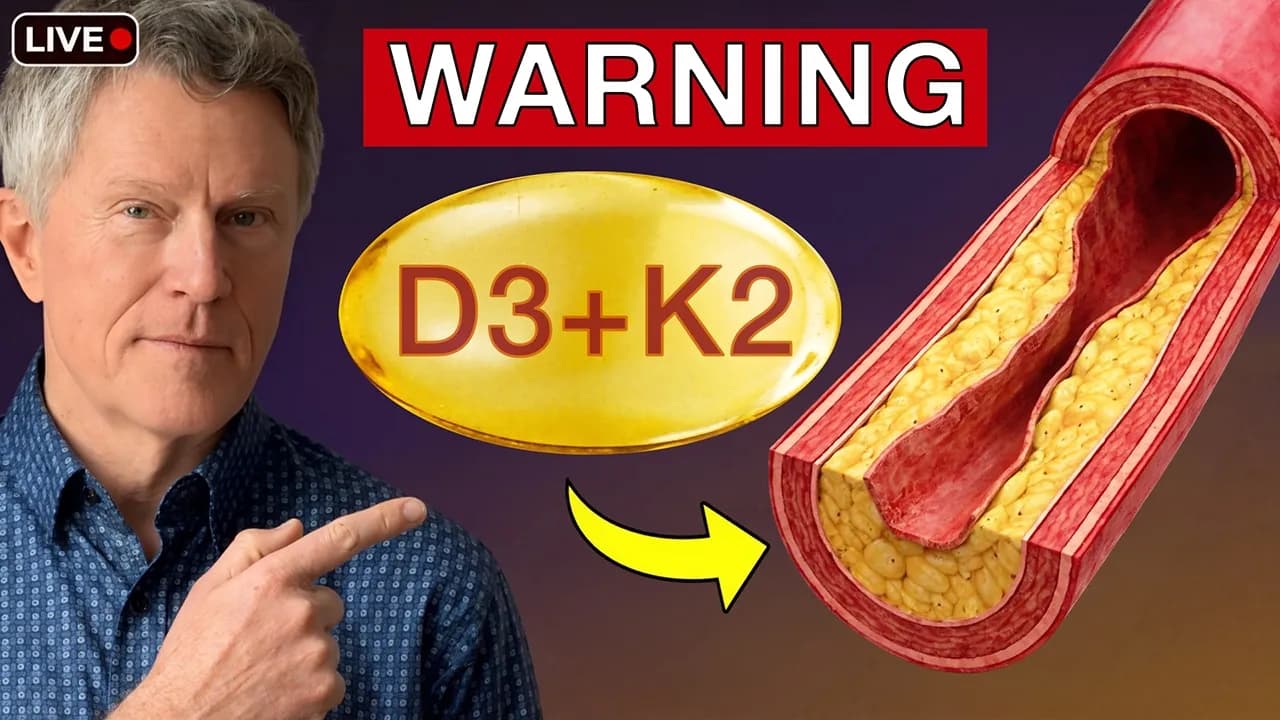
Number two is vitamin D3 at 10,000 IU. Vitamin D3 helps to keep that single cell endothelial wall in very good order and potently stimulates nitric oxide, which is very important to relax the arteries. Don't take vitamin D3 by itself. You want to pair it with K2 because now we want the K2's effect of removing the calcium from the arteries.
For every 10,000 units of vitamin D3, you would want 100 units or micrograms of K2. The MK7 version of K2 is recommended because this is a natural version of K2, while the MK4 is a synthetic version. MK7 has a very long half life and lasts a very long time in the body, whereas MK4 only lasts for like an hour and a half.
The addition to this is to add magnesium. Magnesium is kind of the icing on the cake but it's something that's very important in the control of calcium.
Dr. Philip Ovadia, a heart surgeon, explains that atherosclerotic heart disease is the most common cause of heart disease, resulting in the most common surgery he performs called coronary artery bypass surgery. The important thing to understand is this usually is not a sudden process. The disease, the underlying disease, the atherosclerosis, the plaque that has been building in the heart has been happening for years, decades in many cases.
The first step in the process is the lining of the blood vessel, what we call the endothelium. That needs to be damaged before plaque can start to build up. All of the scientific evidence shows us that cholesterol cannot cross an intact endothelial barrier. It does not get into the blood vessel wall unless the endothelium itself is damaged. That's why when looking at heart disease from a root cause perspective, the question is what's causing the damage to the endothelium.
The most important thing today is what we call metabolic disease. Insulin resistance is the more scientific term. What this essentially means is that the body is no longer able to process the nutrients that it's trying to use, and carbohydrates in particular become most problematic. One of the effects of insulin resistance is that the blood sugar is going to be higher, and we know that high blood sugar levels is directly toxic to the endothelium.
Insulin resistance, even without high blood sugar, can damage the endothelium. Insulin resistance interferes with the production of a substance that is very important to the health of the endothelium, and that is nitric oxide. Insulin resistance also leads to the release of many pro-inflammatory cytokines and lipokines being released from the fat, and this inflammation also ends up damaging the lining of the blood vessels.
Smoking is another factor that damages the endothelium, as some of the chemicals in nicotine and cigarettes are directly toxic to the endothelium as well. But for the average person showing up in the hospital with advanced heart disease, they have had insulin resistance and they probably have had insulin resistance for quite a long time.
In medical training, insulin and insulin resistance are discussed, but there's a disconnect with most traditionally trained heart surgeons. They don't really look at the earlier events and they don't connect the dots. In medical school, insulin was taught as its function as a hormone and its relationship to diabetes, but the early stages of insulin resistance and its connection to endothelial damage that ultimately led to atherosclerosis was never mentioned.
Dr. Ovadia graduated medical school in 1998. By that time, it was accepted as truth that cholesterol was the driving factor that caused heart disease. For the first 20 years of his career, he never really thought to question it because he was just a busy surgeon trying to take care of the people on his operating table.
Dr. Ovadia was morbidly obese and prediabetic as a heart surgeon. He started thinking about following the same path that his patients have followed and realized he was going to end up on his own operating table if he didn't do something about that. He tried eat less, move more, eat a low-fat diet, and none of that worked over the long term. He would have some short-term success, but it wasn't a long-term solution.
Dr. Ovadia was introduced to the concept of low-carb diets at a conference of heart surgeons (Society of Thoracic Surgeons) where Gary Taubes was an invited lecturer. Gary had just written "The Case Against Sugar," and after hearing Gary's talk, Dr. Ovadia immediately read all of his books within a couple of days. This really opened his eyes to metabolic health and insulin resistance.
At first, Dr. Ovadia wasn't focused on heart disease but on figuring out obesity and how to lose weight. But the more he dug into insulin resistance, that's when the connections to heart disease started showing up. The light bulb moment came when he learned about the work of Dr. Joseph Kraft and Dr. Gerald Reaven who specifically tied insulin resistance to heart disease.
Dr. Ovadia recently published a book called "Stay Off My Kitchen Table," which is a sequel to "Stay Off My Operating Table." In that book, he gives practical advice about exactly what to eat to salvage insulin spikes or to keep them stable. The book connects the dots and talks about the concepts of insulin resistance, metabolic disease, and the influence of the foods that we're eating. It goes beyond that to touch on things like gut health, nutrient density, and bioavailability.
The book sets up the framework to optimize metabolic health, which impacts not only the risk of heart disease but the risk of all of the chronic diseases including cancer, neuropsychiatric and neurocognitive disorders, chronic kidney disease, and chronic lung disease. All of these things have the same root cause, which is insulin resistance.
By the time you have a heart attack, it's already been there for at least 15 to 20 years. The good news is if you know what to look for, we can identify it now at the early stages and we can keep it from ever getting to that point.
Now that you understand how to remove calcium from the arteries, the next most important thing to do is to know the details of how to reduce this insulin and exactly what you're going to be eating when you're cutting the carbs.
Keep Dr. Eric Berg DC in your library
Save the videos and channels worth coming back to, and find them again in one place.