Plaque Reversal: Latest Bale-Doneen Recommendations (Ft. Dr. Bale & Dr. Doneen)
In a Nutshell
Plaque growth persists despite optimal cholesterol control because oxidative stress from root causes like insulin resistance, gut dysbiosis, periodontal disease, poor sleep, stress, and pollution transforms artery smooth muscle cells, trapping ApoB-containing particles (LDL, VLDL, remnants) and igniting inflammation. Reversing plaque requires **SOS—Stop Oxidative Stress** through comprehensive management: balanced diet/exercise (antioxidant-boosting), vitamin D optimization, nicotine cessation, hypertension control, psychosocial health, and oral hygiene, stabilizing plaque and preventing heart attacks, strokes, dementia, cancer, and other aging diseases. ApoB predicts risk better than LDL-C alone, but lean mass hyperresponders with high LDL avoid plaque without oxidative stress; imaging (IMT/CTA) and frequent inflammation labs ensure compliance and track reversal.
These notes were generated by AI and may contain inaccuracies.
People take steps to avoid heart attacks: drop LDL, track APOB or calcium score, clean up diet, start fasting, read studies. Yet plaque still grows even when cholesterol numbers look perfect. Reason: not just cholesterol; inflammation and metabolic dysfunction drive heart disease.
Conversation with Dr. Brad Bale and Dr. Amy Doneen on their new research article. They connect oxidation, insulin resistance, and plaque activity. Discuss how inflammation drives arterial damage, why lowering cholesterol alone is not enough, and reversing plaque. Their clinical work aligns with Prevmed observations. Focus on inflammation, metabolism, lifestyle changes arteries and future.
Bale and Doneen have done decades of work in heart disease prevention.
Host met Bale and Doneen years ago via a friend recommending prevention experts. Worked together, learned a lot. Aging requires managing diet, exercise, sleep.
Growing old's not for sissies. If you're going to age properly, you got to do the work.
Article co-authored with David Vigerust, geneticist and lab technologist, formerly at Vanderbilt. Previous article showed periodontal disease causes vascular disease. Most vascular disease from undiagnosed metabolic disease. New article on inflammation, topic they've discussed for 30 years.
Bale gained notice on Larry King show after Tim Russert's sudden cardiac death, emphasizing inflammation over LDL.
Inflammation in artery wall defined as oxidative stress: body's normal break down and rebuild process becomes imbalanced. Article uses oxidative stress lens to explain vascular disease onset, treatments' effects on arterial health, cancer risk, dementia risk, longevity. Goal: health span matches lifespan.
Rust (oxidative stress) shortens lifespan, increases cancer risk, central nervous system diseases.
Oxidation examples: high school chemistry (combining with oxygen), boy scouts (fire), mechanics (rust). Mostly caused by metabolic disease: insulin resistance impairs carb burning; high insulin impairs fat burning.
Arteries: 30,000 miles, from hair-thin to large like aorta. Arteriolog y: health of artery walls to prevent aging diseases (heart attack, stroke, dementia).
Root causes:
- Gut dysbiosis
- Unhealthy diet
- Obesity
- Periodontal/endodontic disease
- Lipids (esp. free fatty acids, remnant cholesterol)
- Nicotine
- Insulin resistance (powerful driver, common in plaque patients)
- High blood pressure
- Autoimmune diseases (rheumatoid arthritis, systemic lupus, atherosclerosis)
- Chronic infections
- Low vitamin D/nutrient deficiencies
- Air pollution
- Sleep disorders/apnea, airway factors
Bidirectional relationships (e.g., insulin resistance worsens blood pressure).
Even perfect lifestyle + air pollution causes oxidative stress: transforms artery wall (endothelium, intima, smooth muscle media). Healthy smooth muscle cells become maladaptive, creating inflammatory environment.
Oxidative stress genetically transforms contractile smooth muscle cells into migratory secretory ones. They move to intima, form substance with negative charge that electrostatically traps ApoB (positive charge protein in bad cholesterol: LDL, IDL, VLDL, remnants; not chylomicrons).
Trapped cholesterol triggers immune response to clean up, starting "fire" in artery wall. Continued trapping enlarges fire, forms disease leading to heart attack/stroke.
ApoB more predictive than LDL-C (40+ years evidence). All bad cholesterol particles small enough to flow through healthy wall; trapping only in diseased wall.
Distinction: oxidative stress causes trapping; ApoB not causal alone. Explains high cholesterol without events, low cholesterol with events.
For patients with plaque (post-heart attack, positive calcium score, IMT): identify why (root causes of oxidative stress). Treat why → inflammation down → plaque stabilizes.
13-year pie chart: end-of-life diseases prevented by healthy arteries (diabetes, heart disease/failure, stroke, dementia, peripheral vascular disease, chronic kidney disease). Matches health span to lifespan, reduces healthcare costs, improves quality of life.
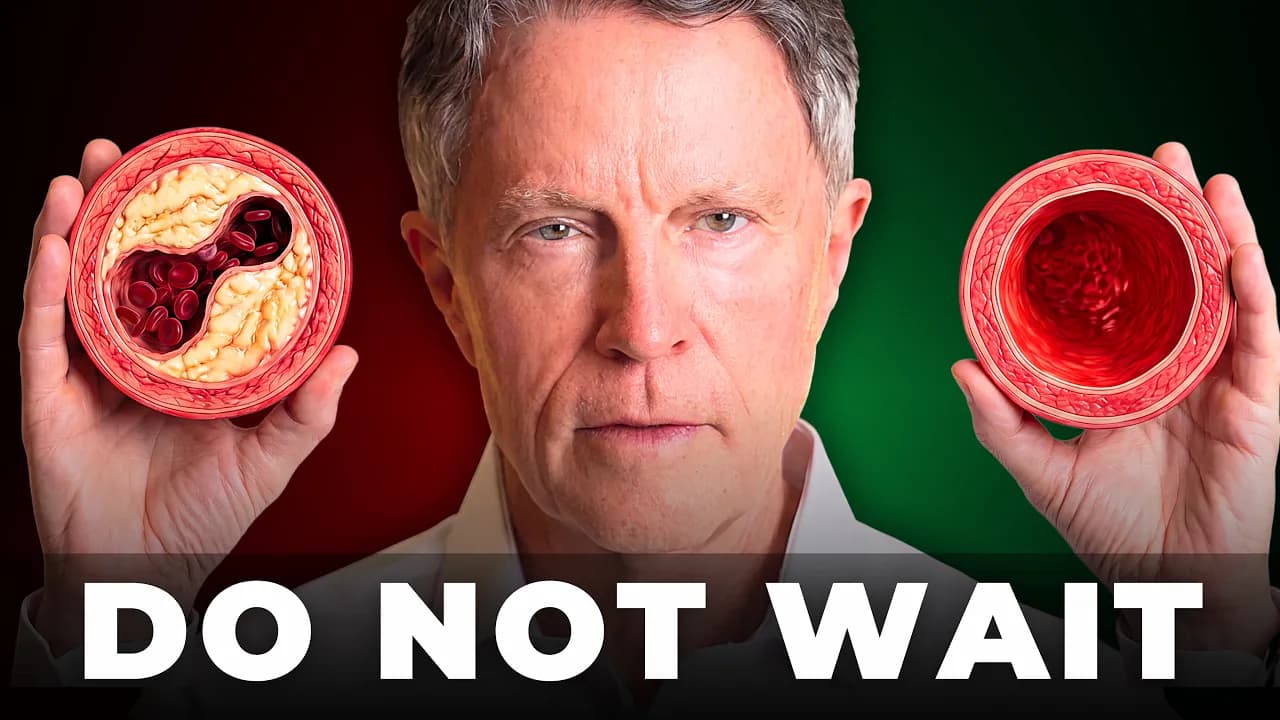
Stop first step: oxidative stress → no smooth muscle transformation → no trapping → disease stops, body heals/regresses plaque.
Manage:
- Sleep
- Vitamin D (easy fix if low)
- Hypertension
- Nicotine
- Insulin resistance
- Diet
- Physical activity (exercise boosts antioxidants)
- Antioxidant diet
All manageable; optimal management shuts down oxidative stress, stops trapping, allows regression.
Diet: healthy foods (vegetables, fruits) are antioxidants balancing reactive oxygen species (from mitochondria/energy creation). Antioxidant potency varies (organic better, fewer chemicals).
Exercise boosts antioxidants; prevents oxidative stress.
Payoff: longer life, lower cancer/dementia risk.
Exercise boosts antioxidants in the body, with studies showing it is as powerful as diet in balancing reactive oxygen species and antioxidants. Balance is essential; overdoing exercise or even healthy foods can cause problems. As Dr. Pierre Lamberer, a professor in Switzerland, stated: > "It's the dose that makes the poison."
Psychosocial health is crucial, as depression, anxiety, and post-traumatic stress disorder drive oxidative stress. Key lifestyle factors include psychosocial health, sleep, balanced diet, movement or exercise, and finding joy to decrease oxidative stress. The brain is the most powerful pharmacy; maintaining emotional health is vital. Healthy coping mechanisms like running, walking, dancing, or mindfulness help. Stress is being in an environment perceived as lacking control, activating the amygdala—the almond-shaped centers in the brain base—that signal danger, as humans are wired to flee tigers, lions, and bears. Prolonged perceived lack of control triggers oxidative stress, transforming smooth muscle cells into secretory migratory ones that release proteoglycan trapping apoB cholesterol. Counseling and stress management techniques change perception of control, calming the amygdala and improving arterial health.
Having a purpose bigger than immediate needs is key, though not popular. Public health experts note diabetes and depression as major comorbidities. Exercise performs as well as or better than antidepressants, addressing fuel burning issues in the brain like in diabetes.
Arrows in the diagram show bidirectional links: insulin resistance or prediabetes causes oxidative stress and vice versa; depression, sleep issues, nicotine use, and periodontal disease cause oxidative stress and associate with diabetes. The paper acts as the Rosetta Stone, explaining these connections. Cold immersion or polar plunge reduces cardiovascular risk by lowering oxidative stress. Filter everything through oxidative stress: > SOS—Stop Oxidative Stress. To live long, avoid cancer, keep mind healthy, and prevent arterial disease, stop rust.
Lean mass hyperresponders have high LDL but no plaque formation. Dave Feldman coined the term; Nick and Adrian Soto work with him. 50% of heart attack patients have normal cholesterol, while some with high cholesterol do not. Plaque requires root causes driving oxidative stress (psychosocial health, periodontal health, insulin resistance) making the artery wall maladaptive, trapping normally passing cholesterol, which then oxidizes, leading to plaque.
Blockage occurs from secondary inflammatory events like an abscessed tooth, causing plaque rupture. The body's injury response sends clotting cascades, red/white blood cells, fibrin—forming a clot like on a cut hand. In heart arteries, it causes heart attack; in brain, stroke. Microvascular manifestations include erectile dysfunction in men (earlier detection), chronic kidney failure or dementia in women. Systemic arterial treatment avoids aging chronic diseases. Aspirin reduces oxidative stress via thromboxane A2, lowering colorectal cancer risk. Statins prevent smooth muscle cell transformation trapping apoB cholesterol and, via autophagy, clear brain amyloid beta plaque and tau protein, reducing dementia and Alzheimer's.
Native LDL cholesterol is not inflammatory; it must trap in the artery wall and oxidize to inflame. Only huge chylomicrons, VLDL, and IDL particles are inflammatory due to free fatty acids causing rust pre-trapping. Lean mass hyperresponder studies confirm high LDL without disease.
Vascular disease prevention addresses stroke (top permanent disability cause), cognitive decline/Alzheimer's, blindness, kidney disease, and erectile dysfunction as a warning sign. Beyond LDL and statins, inflammation and deeper mechanisms matter.
SOS—Stop Oxidative Stress: move, eat correctly, don't smoke, get adequate sleep, ensure adequate vitamin D, maintain healthy mouth.
Meet people where they are: even standing during commercials counts as movement. Lifestyle is global; medications manage disease by preventing smooth muscle trapping of apoB cholesterol, under an antioxidative lifestyle umbrella including mental health.
Patients listen to labs more than doctors. Treat unseen plaque rupture prevention via imaging (carotid IMT or CTA with clear overlay showing vulnerable/stable plaque) and frequent inflammatory labs every 3-4 months. If inflammation persists, identify missing root causes. Understanding via imaging/labs boosts compliance for prevention, which takes time.
Keep Thomas Fordham Brewer MD MPH in your library
Save the videos and channels worth coming back to, and find them again in one place.