The Truth About Vitamin K2 and Clogged Arteries (NEW EVIDENCE)
In a Nutshell
Two recent trials show vitamin K2 (MK7) at 360–720 mcg daily slows coronary artery calcium progression by 21–30%, but neither measured heart attacks or distinguished stable calcified plaque from soft, rupture-prone plaque. The Danish trial found no reduction in non-calcified plaque volume among the subset that received CT angiography, suggesting K2 mainly accelerates calcification of existing lesions rather than preventing soft plaque formation. K2’s more promising benefit may lie in improving insulin resistance, the dominant driver of unstable plaque, while lifestyle changes remain the primary arterial intervention.
These notes were generated by AI and may contain inaccuracies.
If you're thinking about taking vitamin K2, you're probably doing it to keep calcium out of your arteries and prevent heart attacks. Two new trials indicate vitamin K2 slows down calcium scores, but the question remains whether it affects the type of plaque that actually causes heart attacks. A lower calcium score doesn't always mean what people assume, and what these trials didn't measure may matter more than what they measured.
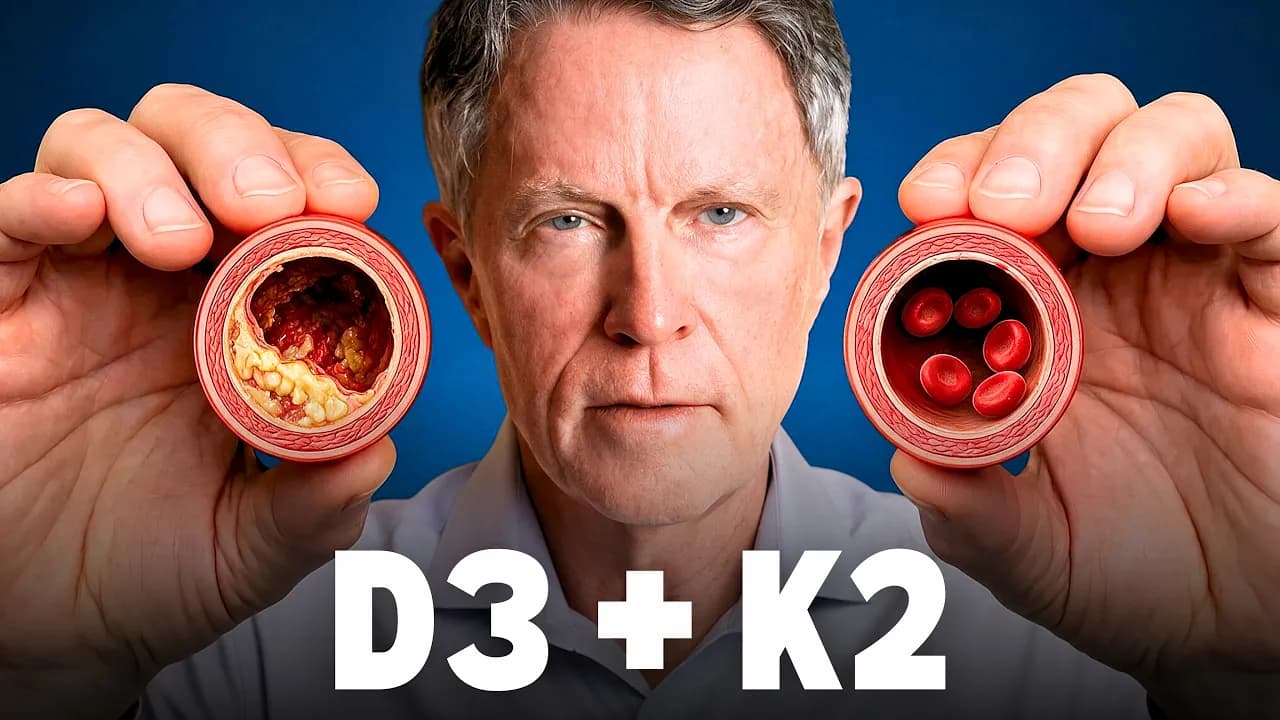
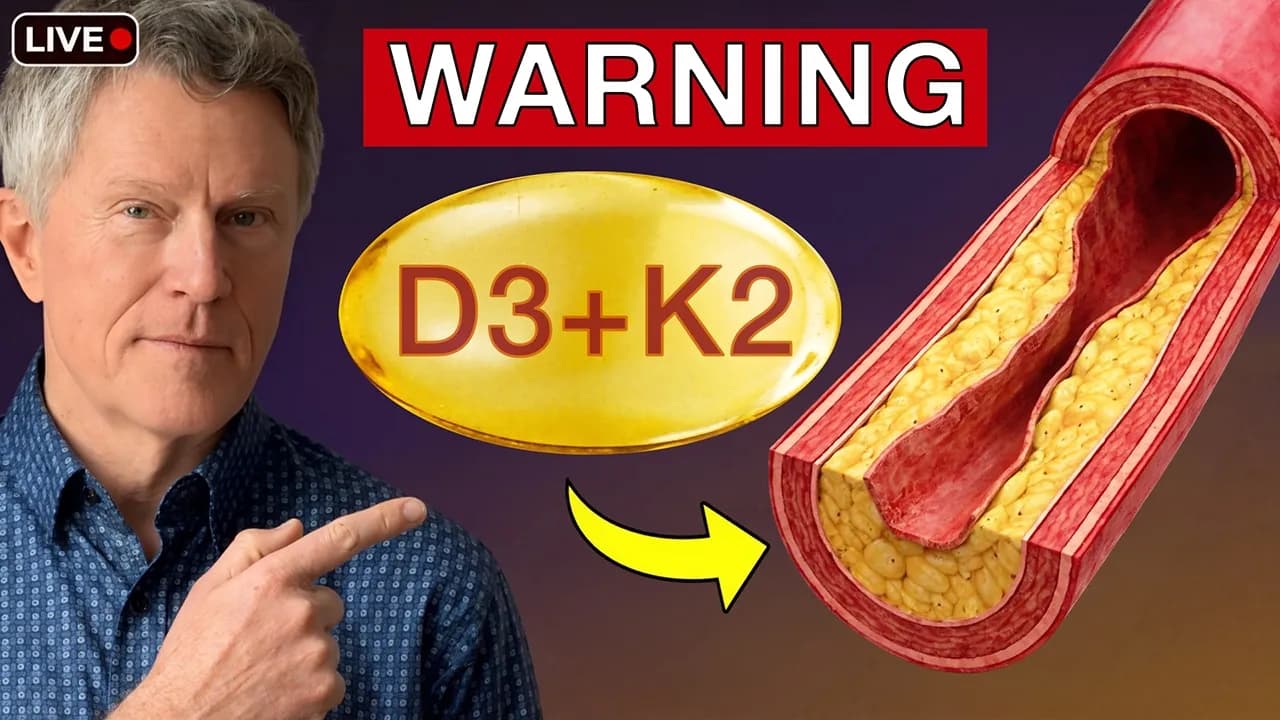
Vitamin K2 activates two proteins. One helps hold calcium in bones. The other is matrix GLA protein, which prevents calcium from settling in artery walls. The outcome is that K2 helps calcium in the bloodstream get used for bones rather than arteries. Most people assume calcium in arteries is always problematic.
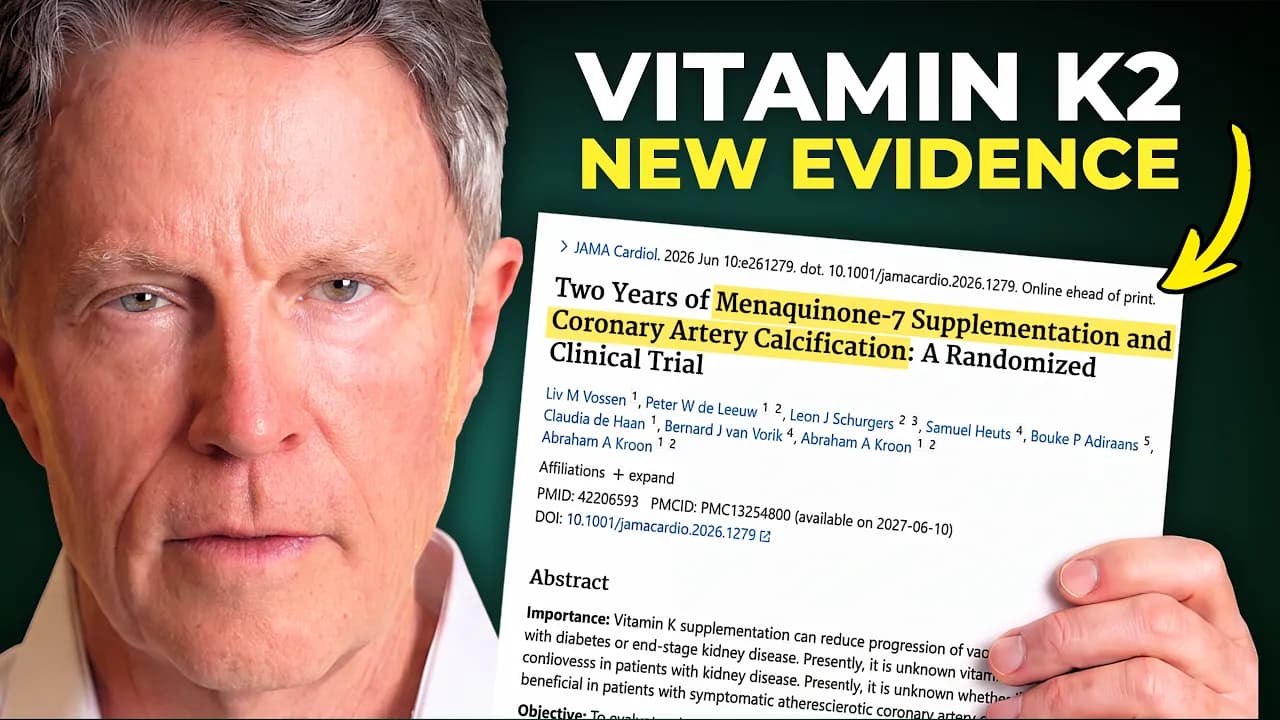
The first trial, called Vitay CAC, was published in JAMA Cardiology in June 2026 from the Netherlands. It included approximately 180 people with existing plaque and calcium scores between 50 and 400. Half received 360 micrograms of K2 daily in the MK7 form, the other half received placebo. No D3 was included. After two years, the placebo group's calcium score rose from 145 to 214, while the K2 group's score rose from 135 to 184. K2 slowed the increase by approximately 30% based on group averages.
The second trial, called Dan Code, was published in Circulation at the end of August 2026 from Denmark. It included about 400 people with calcium scores over 400. Participants received either 720 micrograms of K2 plus a small dose of D3 or placebo for two years. The calcium score rose 21% slower on K2 plus D3. Both trials showed the calcium score still increased, just at a slower rate.
The plaque that causes heart attacks is soft, inflamed, and unstable. When this soft plaque cracks, a clot forms on the crack, causing the heart attack. The body heals plaque first by laying down collagen, then muscle cells reinforce the tissue, and calcium comes last. Calcium represents the scar of healing plaque. A calcium score counts scars but cannot identify which plaques remain soft.
Patients with calcium scores over 1,000, 2,000, 3,000, or even 4,000 who improved their lifestyle saw their soft plaque calcify and their risk decrease significantly. A higher calcium score does not automatically mean higher risk if the plaque has stabilized through calcification.
A calcium score cannot detect soft plaque. The Danish trial performed CT angiograms on only 143 of 398 participants, limited to those with calcium scores under 1,000. In these 143 people, non-calcified plaque showed no difference between K2 and placebo groups. Total plaque grew similarly in both groups. The Danish trial did not report on low-density non-calcified plaque specifically.
The Dutch trial showed calcium scores increased when non-calcified plaques became calcified, and K2 slowed this process. K2 appears to act on developing plaques. However, non-calcified plaque and soft plaque are not identical. The Danish trial did not distinguish between regular non-calcified plaque and low-density non-calcified plaque.
Neither trial was designed to measure heart attacks or strokes. The Circulation editorial accompanying the Danish trial noted the absence of biologically significant endpoints. Dense calcium can indicate more stable plaque, so less calcium is not automatically better.
K2 performs a second function related to insulin resistance. A 2021 12-week trial using 360 micrograms of MK7 daily in people with type 2 diabetes showed improved A1C compared to placebo. A 2023 trial using 90 micrograms of MK7 daily for six months in people with type 2 diabetes demonstrated improvements in glucose, insulin, and A1C compared to controls. Insulin resistance drives soft plaque formation and represents a primary neglected cause of heart disease.
K2 is recommended at a minimum of 400 micrograms daily in the MK7 form. D3 dosage is determined by blood levels, targeting 50-90 nanograms per milliliter. D3 increases calcium absorption and matrix GLA protein production, while K2 activates the protein. The two work synergistically. Most supplement combinations on the market have incorrect dosing ratios. If one pill does not achieve both target levels, take D3 and K2 separately or add extra K2 as needed.
People on warfarin should consult their prescriber before starting, stopping, or changing K2 dosage. If future trials demonstrate K2 worsens soft plaque, the recommendation will change. K2 is a supplement and cannot compensate for poor diet. Carbohydrate reduction, intense exercise, and adequate sleep provide greater arterial benefits than any supplement.
Calcium scores cannot determine soft plaque status. CT angiogram with AI analysis or carotid intima-media thickness (CIMT) ultrasound with analytics are required to assess soft plaque. Most people have never had their plaque directly evaluated beyond cholesterol measurements.
Keep Dr. Ford Brewer MD MPH in your library
Save the videos and channels worth coming back to, and find them again in one place.